

The Hidden Weight of Student Debt on Your Daily Life
You finally get your paycheck, but before you can even enjoy a nice dinner, that student loan notification pops up on your phone. It sucks, right? I have been there, staring at the screen and wondering how I will afford my groceries while paying off this massive bill. But here is the good news: you can actually shrink those monthly payments without eating instant noodles every night. Let's fix this together and get your money back in your pocket.
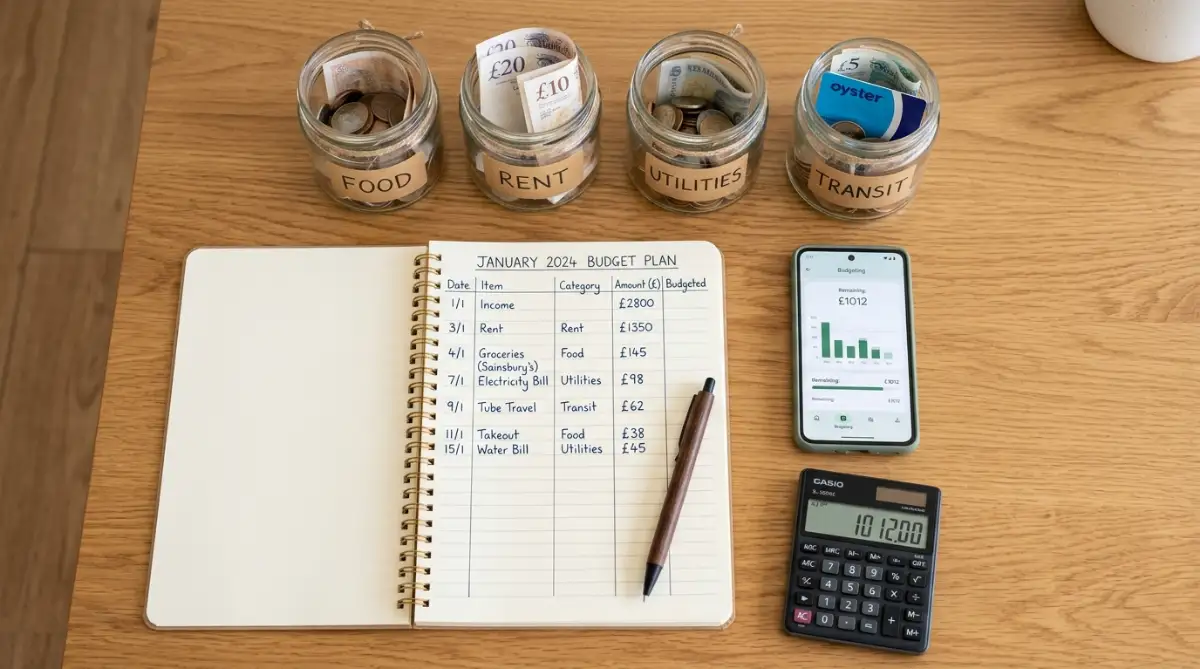
⚡ Quick Takeaways to Save Your Wallet
-
Find Your Numbers: Log into Federal Student Aid today to see your true balance. It is rarely as bad as you imagine.
-
Switch Your Plan: Apply for an Income-Driven Repayment (IDR) plan. Your bill could legally drop to $0 if your income is low enough.
-
Fund Your Life First: Always pay for your rent, food, and utilities before giving a single dime to your student loan servicer.
-
Never Pay for Help: Government loan consolidation and IDR applications are 100% free. Avoid scam callers who ask for fees!
Your Quick Survival Guide
- Find Your Numbers: Always check the official Federal Student Aid website to see exactly who you owe and how much.
- Ditch the Standard Plan: If your bills are too high, look into Income-Driven Repayment (IDR) to match your payment to your actual paycheck.
- Protect Your Four Walls: Always pay for your food, rent, utilities, and transport before sending money to your loan servicer.
- Never Pay for Help: Getting on a payment plan or consolidating your federal loans is 100% free through the government.
Why We Get Stuck in the Misinformation Trap
Many people want to fix their student loans, but they simply do not know where to start. The internet is filled with bad advice and confusing legal terms. Here is why finding a real solution feels almost impossible:
- Scam Calls and Fake Promises: Your phone rings constantly with shady companies promising to erase your debt for a huge upfront fee.
- Confusing Government Portals: Logging into your loan servicer website often feels like reading a foreign language.
- Bad Advice from Friends: Well-meaning friends might tell you to just ignore the debt, which only leads to worse penalties.
- Information Overload: You read ten different articles online, and they all give you completely opposite directions.
- Constantly Changing Rules: The government frequently updates repayment programs, making it hard to know what actually applies to you today.
- What happens if I just ignore my loans?
I get this question all the time. It is tempting to just delete the emails and pretend the debt does not exist. But if you ignore federal loans for 270 days, you go into default. This means the government can actually take money straight out of your paycheck and keep your tax refunds. It is a messy situation, but taking action today prevents all of that headache.
The Silent Destruction of Your Peace and Confidence
Falling behind on student loans does not just hurt your credit score. It deeply damages your sense of self-worth and mental peace. Let’s look at the emotional toll this takes on a person:
- Delaying Big Life Goals: You put off buying a house, getting married, or starting a family because you feel trapped by your debt.
- Imposter Syndrome: Even if you have a great college degree and a good job, the unpaid debt makes you feel like a financial failure.
- Sleepless Nights: The constant worry about money keeps your brain running at maximum speed when you should be resting.
- Isolation and Shame: You stop going out with friends because you cannot afford it, and you feel too embarrassed to tell them why.
Facing the Reality of Your Financial Situation
When you default on a federal student loan, the consequences are severe. The government can take a portion of your paycheck before you even see it. They can also hold back your tax refunds, which might be the exact money you were depending on for emergencies. This creates a dangerous cycle of poverty that is incredibly hard to escape.
But I want you to take a deep breath right now. You are more than a loan number, and this situation is entirely fixable. There are legal, safe, and highly effective ways to bring your payments down to a manageable level. You do not need to make a six-figure salary to take control of your financial future.
By taking small, deliberate actions, you can build a safety net for yourself. We are going to walk through this together, step by step. You have the power to stop the anxiety, organize your money, and completely avoid the disaster of defaulting.

The Expert Blueprint to Secure Your Federal Loans
The best way to eliminate fear is to replace it with a solid plan. You do not need a fancy finance degree to manage your student loans effectively. You just need the right set of instructions and the willingness to take a few small actions today.
Let’s break down the most effective strategies to regain control of your monthly payments. These steps are designed to protect your wallet and give you immediate peace of mind.

Step 1: Track Down Your Servicer and Your Exact Balance
You cannot defeat a monster if you refuse to turn on the lights and look at it. The very first thing you must do is find out exactly who holds your loans and how much you actually owe. Over the last few years, millions of federal student loans were transferred to brand new servicing companies.
This means the company you borrowed from originally might not be the company you owe money to today. Many people miss payments simply because their bills are going to the wrong email address or an old apartment.
Why We Ignore the Envelopes
I recently spoke with a young professional named Sarah who kept all her student loan mail in a shoebox. She was too terrified to open the envelopes because she assumed the monthly payment was thousands of dollars. Fear makes us imagine the absolute worst-case scenario.
When Sarah finally opened the letters, she realized her minimum payment was actually much lower than she feared. Hiding from the numbers only gives the debt more power over your life.
The Magic of Knowing Your Exact Debt
Knowing your exact balance is incredibly empowering. It takes the problem out of your imagination and puts it onto a piece of paper. Once a problem is on paper, you can solve it with basic math.
You need to know your total balance, your interest rates, and your current minimum payment. This data is the foundation of your entire financial recovery plan. Without this clear information, you are basically trying to drive a car while blindfolded.
Your Action Plan for Today
Set a timer for just fifteen minutes. Go directly to the official Federal Student Aid website and log into your dashboard. This is the only completely accurate place to see your federal loan details.
Find the name of your current loan servicer and write down their phone number. Next, log into that specific servicer’s website and update your contact information. Make sure your current phone number and best email address are on file so you never miss an important update.
Step 2: Match Your Monthly Bill to Your Actual Paycheck
One of the biggest mistakes borrowers make is staying on the Standard Repayment Plan. This default plan divides your total balance by ten years, which often results in a massive monthly bill. If your paycheck is small, the standard plan will completely crush your monthly budget.
The government actually offers multiple programs designed to protect low-income earners from defaulting. These are known as Income-Driven Repayment (IDR) plans.
Why Standard Repayment Might Break You
Imagine trying to wear a pair of shoes that are three sizes too small. No matter how hard you try, they are going to hurt your feet and eventually cause permanent damage. The Standard Repayment Plan is exactly like those tiny shoes.
It does not care if you lost your job, had a medical emergency, or had a baby. It demands the exact same high payment every single month. Sticking to a payment plan you cannot afford is a direct path to stress and default.
The Power of Income-Driven Repayment (IDR)
Income-Driven Repayment plans look at exactly how much money you make and how many people are in your family. They calculate a new monthly bill based only on what you can actually afford to pay. In many cases, if your income is low enough, your monthly payment could legally drop to zero dollars.
Yes, you read that correctly. A zero-dollar payment still counts as an on-time payment in the eyes of the government. This prevents you from going into default while you work on increasing your main income.
Let's look at a quick breakdown so you can see why switching plans makes a huge difference:
Quick Look: Myths vs. Facts About IDR Plans
| What People Think (The Myth) | How It Actually Works (The Fact) |
| :--- | :--- |
| "I make too much money to get an IDR plan." | IDR is for everyone! Your payment just scales with your income size. |
| "A $0 payment means I am in default." | False. A $0 payment on an approved IDR plan officially counts as an on-time payment. |
| "The paperwork takes hours to finish." | You can usually fill out the official government form online in about 10 to 15 minutes. |
Your Action Plan for Today
Go back to the Federal Student Aid website and find the Loan Simulator tool. Enter your current salary, your family size, and your tax filing status. The simulator will show you exactly how much your new payment would be under various IDR plans.
If you see a plan that fits your budget perfectly, apply for it immediately. The application is completely free, takes about ten minutes, and can literally save you hundreds of dollars every month.
Step 3: Build a Bare-Bones "Debt Survival" Budget
Managing federal student loans is not just about dealing with the government. It is really about managing the money you already have in your own bank account. You need a very specific budget that protects your basic human needs first.
Many people make the mistake of paying their credit cards and student loans before buying groceries. This is a backward approach that leaves you hungry and desperate. We need to flip your financial priorities around immediately.
Rethinking Your Monthly Cash Flow
Think of your monthly income as a bucket of water. You need to pour that water onto the most important fires first. Your student loans are important, but keeping a roof over your head is an absolute priority.
When you do not have a budget, your money just disappears into random daily expenses like coffee, subscriptions, and fast food. A budget is not a prison that stops you from having fun. It is actually a roadmap that gives you total permission to spend money on the right things.
The "Four Walls" Method
To avoid defaulting while surviving everyday life, you must protect your "Four Walls" before paying any unsecured debt. These four walls are food, shelter, basic utilities, and transportation to your job.
If you do not eat, you cannot work. If you lose your apartment, you cannot keep your job safely. Only after these basic needs are met should you send money to your student loan servicer. If there is no money left after the four walls, that is your signal to apply for the Income-Driven Repayment plans we discussed earlier.
Real-Life Scenario: What if I literally have $0 left?
Q: I paid my rent and bought food, but my bank account is empty. Do I pay my loan with a credit card?
My advice: Please, do not do this! Putting federal student debt onto a credit card just trades one problem for a much worse problem with massive interest rates. If you have nothing left after covering your "Four Walls," call your servicer today. Tell them you are facing financial hardship. They can pause your payments (forbearance) or get you on a zero-dollar income-driven plan fast.
Your Action Plan for Today
Grab a blank piece of paper and write down exactly how much money you expect to make this month. Subtract your rent, your groceries, your electricity bill, and your gas money. Whatever money is left at the bottom of the page is what you can student loans.

If you have a stable budget and enough money left over, log into your servicer’s website and set up automatic payments. Doing this usually gives you a small reduction in your interest rate. More importantly, it removes the mental burden of remembering to pay the bill every single month.
Next-Level Strategies to Outsmart Your Student Debt
Once you have set up a basic budget and matched your monthly bill to your paycheck, you are already ahead of most people. Now, we need to look at long-term strategies that protect your financial health. You can actually use the government's own rules to your advantage.
Managing debt is like playing a board game. When you understand the hidden rules, you stop losing and start winning. Let us explore a few advanced moves that can save you thousands of dollars over time.
Master the Art of Loan Forgiveness
Many people hear about student loan forgiveness on the news and assume it is a lottery they will never win. This is simply not true. There are specific, legally binding programs designed to erase your debt completely after a set period.
The most famous one is the Public Service Loan Forgiveness (PSLF) program. If you work for the government, a public school, or a registered non-profit organization, you are likely eligible. You do not need to be a doctor or a lawyer to qualify.
Even a receptionist at a non-profit hospital or a maintenance worker at a state university can get their loans forgiven. The rule is simple: you must make 120 qualifying monthly payments while working full-time for a qualifying employer. After those 120 payments, the government wipes away every single penny of your remaining balance.
The Secret to Making Forgiveness Work
Here is the catch that trips most people up. You cannot just pay the standard bill and hope for forgiveness in ten years. You must be enrolled in an Income-Driven Repayment (IDR) plan for those payments to count.
Imagine a teacher named David. David makes standard payments for five years, only to realize he was on the wrong plan. None of his payments counted toward his forgiveness goal, and he lost five years of progress. You can easily avoid David's heartbreak by submitting an employment certification form every single year.
This form tells the government exactly where you work and updates your official payment count. It acts as a digital receipt. When you track your progress annually, you protect yourself from bureaucratic errors.
Use the Emergency Pause Button Safely
Life is incredibly unpredictable. You might lose your job, face a sudden medical emergency, or need to take unpaid time off to care for a sick parent. When life hits you hard, your student loan payment should be the least of your worries.
The federal government offers two specific tools for these exact moments: Deferment and Forbearance. Think of these tools as an emergency pause button for your monthly bills. They allow you to legally stop making payments for a few months without going into default.
However, you must ask for this help before you miss a payment. Your loan servicer cannot read your mind. If you lose your job on a Tuesday, you should call your servicer on Wednesday to request an economic hardship forbearance.
The Hidden Cost of Pausing Your Loans
While the emergency pause button is incredibly helpful, it comes with a catch. In most forbearance situations, your loans will continue to grow because interest keeps adding up. This means when you finally resume payments, your total debt will be larger than when you paused it.
This is why forbearance should only be used as a true last resort. If your income drops, it is almost always better to apply for an Income-Driven Repayment plan first. Remember, if your income drops to zero, your IDR payment drops to zero dollars.
A zero-dollar IDR payment is infinitely better than forbearance. It keeps your loans in good standing, often subsidizes your interest, and keeps you moving toward ultimate debt forgiveness.
Consolidate for Ultimate Simplicity
If you logged into your federal portal and saw ten different small loans, you might feel overwhelmed. Having multiple loans means tracking different interest rates and sometimes dealing with multiple servicing companies. Direct Consolidation allows you to combine all these small loans into one single, easy-to-manage loan.
Think of consolidation like cleaning out a messy closet. Instead of having shoes, coats, and boxes scattered everywhere, you put everything neatly into one large storage bin. You only have one item to keep track of.
When Does Consolidation Make Sense?
Consolidation is entirely free to do through the official government website. It replaces your old loans with a new one that has a fixed interest rate based on the average of your previous rates. This simplifies your life because you only have one bill to pay each month.
However, you must be careful if you have already made progress toward forgiveness. Consolidating your loans can sometimes reset your payment count back to zero. Always read the fine print on the Federal Student Aid website before you hit the submit button on a consolidation application.
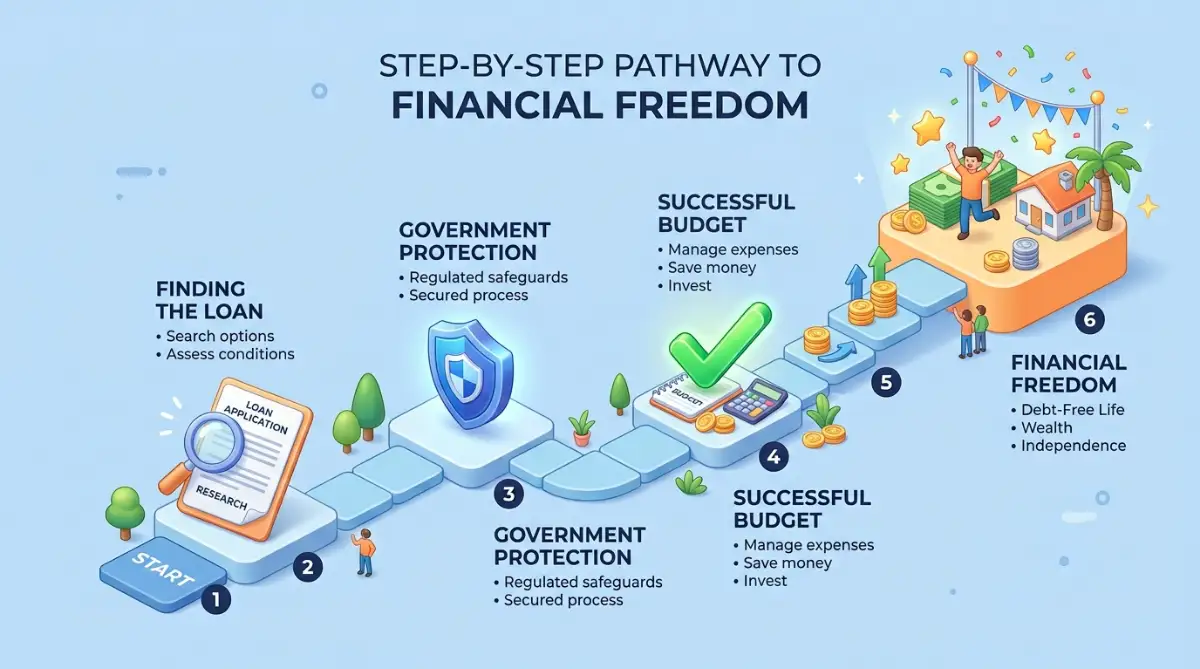
The Dangerous Traps That Lead to Financial Disaster
Even smart, hardworking people can accidentally ruin their financial health if they listen to the wrong advice. The student loan industry is full of hidden traps that can cost you time and money. Avoiding mistakes is just as important as taking the right actions.
Let us look closely at the most common pitfalls borrowers face. If you can dodge these five traps, you will safely navigate your way to financial freedom.
Trap 1: Falling for the "Pay for Help" Scam
If your phone rings and a friendly voice offers to erase your student debt for a $500 processing fee, hang up immediately. It is entirely illegal for any company to charge you an upfront fee for student loan debt relief.
These scam companies use official-sounding names like "Federal Student Relief Department" to trick you. They will ask for your federal login ID and password. Once they have your information, they lock you out of your own account and steal your money.
Everything these companies promise to do—like applying for an IDR plan or consolidation—can be done by you for completely free. You never have