The Terrifying Moment I Almost Lost My Family’s Safety Net
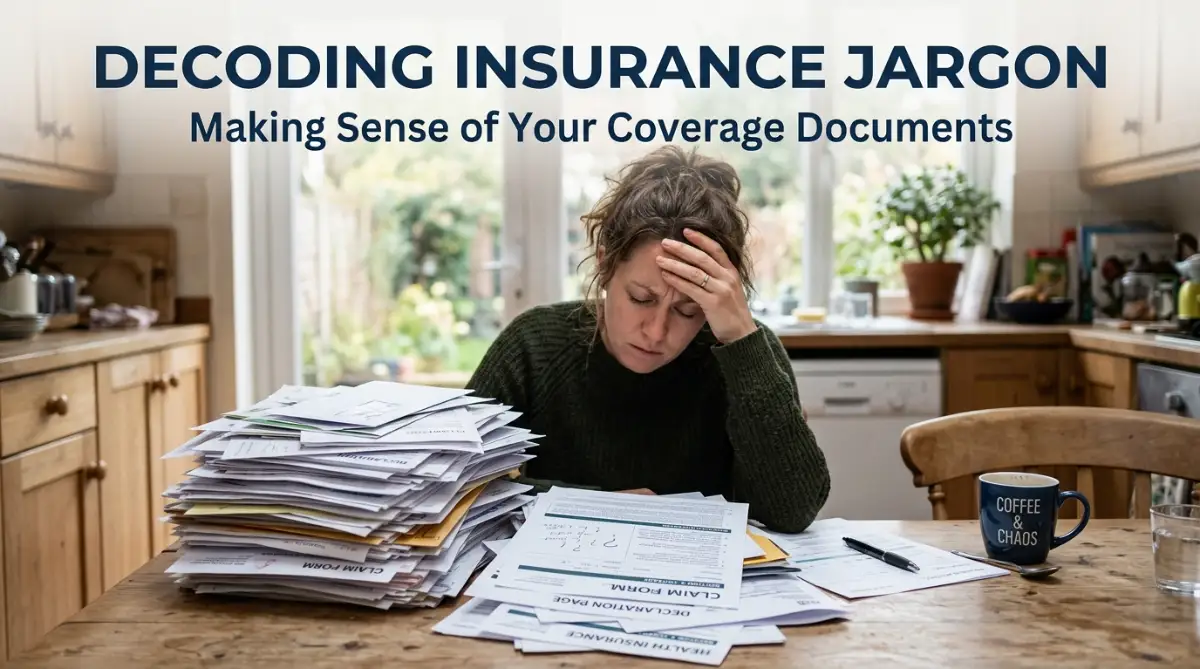
I remember the exact moment my heart dropped into my stomach. I was sitting at my kitchen table, sipping a cold cup of coffee, casually checking my bank statements on my phone.
Suddenly, I noticed something missing. The automatic deduction for my term life insurance premium, which usually goes out on the 5th of every month, was completely absent.
A cold sweat broke out on my forehead as I realized I had recently changed my bank debit card and completely forgot to update my payment details with the insurance company. It had been over three weeks since the due date. My mind instantly raced to the worst possible thoughts.
What if something happened to me tomorrow? Would my family be left with absolutely nothing because of a simple banking error?
I felt incredibly irresponsible and terrified. I immediately called the customer service line, my hands literally shaking as I waited on hold.
That was the exact moment I learned about a hidden safety feature built into my policy. It is a feature that actually saved my family’s financial future without me even knowing it was there.
Missing a payment is a very common human mistake. We all lead busy lives, juggling work, family responsibilities, and endless bills. Sometimes, a physical mail notice gets lost, or an email goes straight to the spam folder.
For ordinary people, this honest mistake can cause severe emotional distress and sleepless nights. The sheer panic of thinking your loved ones might lose their financial protection is deeply overwhelming.
It feels like you have failed at your main job of protecting your family. But the reality of how insurance companies handle this situation is quite different from what we imagine in our panicked state.
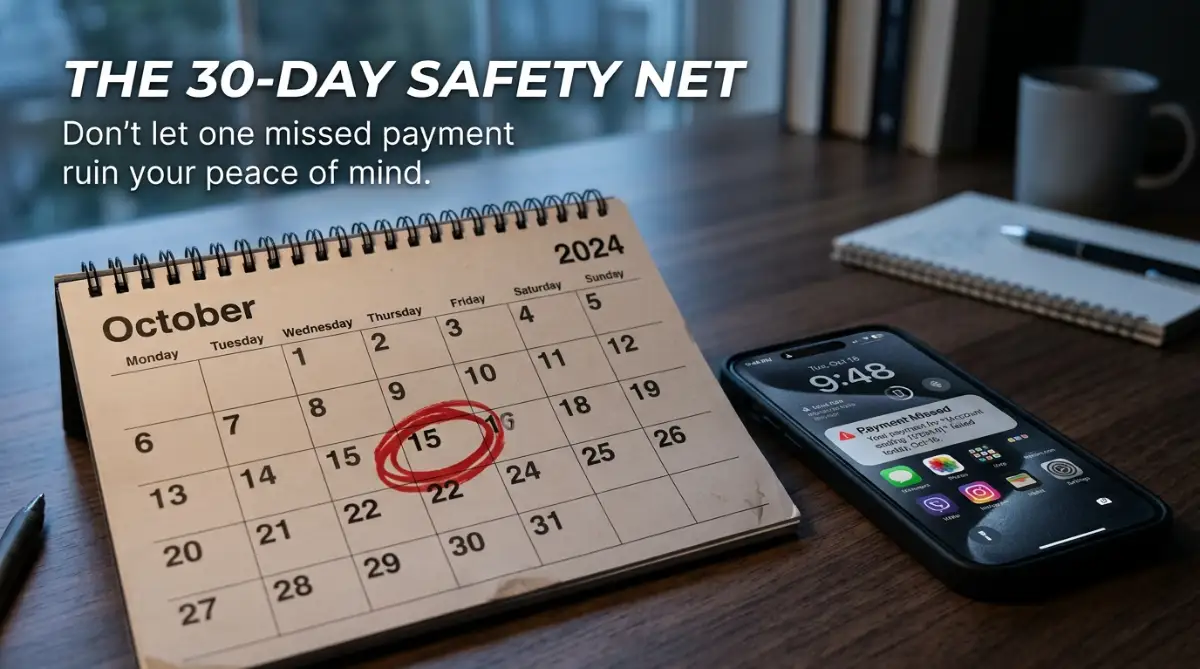
Decoding the Hidden 30-Day Safety Net in Your Policy
When I finally spoke to the representative on the phone that day, she calmly explained that my coverage was still completely active. I had not lost my policy.
She introduced me to a specific term written deep inside my contract documents. It is a built-in safety net designed specifically for situations just like mine.
This specific rule prevents your insurance company from canceling your coverage the second you miss a due date. They legally have to give you a specific window of time to fix the mistake.
Think of it like a buffer zone between making an honest mistake and facing a catastrophic financial loss. It is a mandatory waiting period that protects the consumer from sudden policy cancellation.
Most standard policies offer a thirty-day or thirty-one-day window to catch up on a missed payment. During this exact time frame, your family remains fully protected, just as if you had paid on time.
If the unthinkable were to happen during this specific window, the insurance company is still legally obligated to pay the death benefit to your beneficiaries. They will not simply deny the claim because you were two weeks late on a premium.
This is a massive relief for anyone who has ever panicked over a declined credit card or a bounced check. The system is actually designed to give you a fair chance to make things right.
Watch This Quick Explanation Before We Move Forward:
If you are feeling confused about how this timeline actually works, this short video breaks down the exact mechanics of late payments in a way anyone can understand.
I used to think that missing a single day would instantly ruin my policy. I have since learned that insurance companies actually want to keep you as a paying customer.
Canceling your policy immediately over a small billing error does not make good business sense for them. They would rather give you a little time to update your billing information and keep the contract alive.
My own mistake taught me a very valuable lesson about managing my auto-pay systems. I realized I was depending too heavily on one single checking account for all my major bills.
I actually changed my entire system after that scary phone call. Now, I keep a small, separate emergency fund in a different account specifically meant to cover at least two months of premiums. I highly recommend setting up calendar reminders on your phone a few days before your premium is due, even if you use auto-pay. It takes two seconds to check, and it completely removes the stress of wondering if the payment went through successfully.
Exactly How Claims Are Handled During the Waiting Period
You might be wondering what exactly happens to the money if a claim is filed while the payment is technically late. This is where things get highly specific, and you need to understand the math behind it.
Let us look at a very realistic scenario to make this easy to understand. Imagine a man named David who has a term policy with a half-million-dollar death benefit.
His monthly payment is fifty dollars, due on the first of the month. David accidentally misses his payment on the first of the month because he was traveling and forgot to check his mail.
Tragically, David passes away on the fifteenth of the month. This is right in the middle of his allowed waiting period.
Because he was still inside that protective window, his coverage was one hundred percent active on the day he passed away. His family will absolutely receive the payout they were promised.
However, the insurance company is not going to ignore the fact that he owed them fifty dollars for that month. They will simply subtract the unpaid premium amount directly from the final payout.
Instead of receiving exactly five hundred thousand dollars, David's family will receive four hundred and ninety-nine thousand, nine hundred and fifty dollars. The insurance company recoups their missing fifty dollars, and the family still gets the massive financial protection they need.
This logical approach ensures that the insurance company gets paid for the risk they took. At the same time, it ensures the family does not suffer completely because of a simple fifty-dollar oversight.
It is a very fair compromise that most people are completely unaware of until they actually read the fine print of their contract. Understanding this math takes away a lot of the fear surrounding late payments.
Dispelling Common Myths About Late Payments
There is a lot of bad information floating around the internet about what happens when you pay your life insurance late. Let us clear up some of the biggest misunderstandings right now.
Many people falsely believe that missing a payment will immediately destroy their credit score. This is a very common fear that stops people from thinking clearly.
The truth is, life insurance companies do not report missed premium payments to credit bureaus. Your life insurance is not a line of credit or a loan.
If you stop paying, they eventually just cancel your coverage. They do not send debt collectors after you, and your credit score remains completely unaffected.
Another huge myth is that your monthly rate will automatically increase if you use this built-in late payment window. People worry they will be penalized with higher premiums going forward.
This is simply not true for term life contracts. As long as you pay the owed amount before the window closes, your locked-in rate stays exactly the same.
Your premium is determined by your age and health at the time you bought the policy, not by whether you paid a few days late one month. The company cannot legally change your fixed rate just because you used the buffer zone.
Some folks also believe that the insurance company will aggressively call them every single day if a payment is missed. While they will definitely send you a formal written notice, they usually do not resort to aggressive collection tactics.
They are legally required to notify you that your policy is in danger of lapsing. This notification is usually sent by physical mail to the address they have on file for you.
This is exactly why keeping your mailing address updated with your insurance provider is so incredibly important. If you move and forget to tell them, you might never receive that warning letter.
You could easily run out of time and lose your coverage simply because the warning letter went to your old apartment. Always update your address with your insurance agent the moment you move.
The Harsh Reality of Missing the Deadline
We have talked a lot about the safety net, but we must also talk about what happens when you fall completely through it. The rules change dramatically once that exact thirty-day or thirty-one-day window closes.
If the deadline passes and the company has still not received your money, your policy officially enters a state called a "lapse." This is the exact situation you want to avoid at all costs.
A lapsed policy means your contract is completely dead. If you pass away the day after the policy lapses, the insurance company will pay absolutely nothing to your family.
All the money you paid into the term policy over the previous months or years is simply gone. You do not get a refund for past payments on a standard term contract.
This is a devastating outcome for many families who thought they were protected. The financial consequences of a lapsed policy can easily ruin a family's future plans.
Once your policy lapses, getting your coverage back is not as simple as just paying the late fee. The insurance company now views you as a brand new risk.
To get your coverage turned back on, you will usually have to go through a process called "reinstatement." This process is often a massive headache and can be very expensive.
First, you will have to pay back all the missed premiums, sometimes with added interest fees. But paying the money is usually the easiest part of the process.
The hardest part is that the insurance company will often require you to prove that you are still in good health. You might have to answer a new set of medical questions or even take a brand new medical exam.
If your health has declined since you originally bought the policy, this is a major problem. You might have developed high blood pressure, gained weight, or been diagnosed with a new medical condition.
If your health is worse, the insurance company has the legal right to deny your reinstatement request completely. They can refuse to take you back as a customer.
Even if they do approve the reinstatement, they might significantly increase your monthly premium based on your new health status. You could end up paying double or triple what you were paying before, all because you missed that one specific deadline.
This is why you must never, ever treat this safety buffer as a casual extension of your due date. It is an emergency backup system, not a flexible payment plan.
If you are struggling financially and know you cannot make your upcoming payment, ignoring the problem is the worst thing you can do. You should contact your agent or the company directly before the deadline approaches.
Sometimes, they can offer solutions or explain other options you might have. Being proactive is always better than letting the contract die in silence.
The peace of mind that comes from knowing your family is secure is worth far more than the temporary relief of avoiding a difficult phone call. Always protect your coverage fiercely, because it is the ultimate promise you make to the people you love the most.
Expert Strategies to Never Miss a Premium Payment Again
We have already established that the safety buffer in your contract is for emergencies only. Now, we need to talk about how you can build a bulletproof system to ensure you never actually have to use it.
Most people simply set up automatic payments and completely forget about them. While automation is great, it is also exactly how honest mistakes slip through the cracks.
To truly master managing your insurance premium payments, you need a layered approach to your personal finances. Relying on just one single checking account for everything is a very risky game to play.
I always suggest the "Dedicated Account Method" for bills that protect your family's future. This means opening a completely separate, fee-free checking account strictly for your non-negotiable expenses.
You simply deposit enough money into this specific account to cover your insurance, mortgage, and essential utilities. Because you do not carry a debit card for this account in your wallet, you completely remove the risk of accidentally spending that money.
This one simple change is a game-changer for securing your family's financial future. It keeps your protective bills isolated from your everyday spending habits.
Another highly effective strategy is to change your billing cycle from monthly to annually. Paying once a year might feel like a big chunk of money leaving your bank all at once.
However, paying annually completely eliminates twelve different chances to make a billing mistake every single year. You only have to worry about the transaction going through successfully one single time.
Many providers actually give you a pretty decent discount if you choose to pay your entire premium upfront for the year. This means you are essentially getting paid to reduce your own risk of missing a deadline.
If paying annually is simply not possible for your budget, you should strongly consider shifting your monthly due date. Most people do not realize that you can actually call your provider and request a different day of the month for your bill to be due.
If you get paid on the fifteenth of the month, do not leave your insurance due date on the first. You are forcing yourself to hold onto that money for two weeks, which increases the chance it gets spent on something else.
Call your agent and ask them to align your premium due date closely with your actual payday. This small adjustment in organizing your personal finances effectively makes the payment feel effortless.
Finally, we need to discuss the "Spouse Notification Rule." This is something almost nobody does, but it is an absolute lifesaver.
You should never be the only person in your household who knows the login details or the payment schedule for your policy. If you handle all the bills and you suddenly fall ill, your spouse needs to know exactly how to keep the policy active.
Sit down with your partner and physically show them where the contract is located and how the payment is processed. You can learn more about the legal importance of communicating with your policy beneficiaries from recognized estate planning associations.
I personally keep a simple, shared digital document with my wife that lists our provider, our policy number, and the exact date the money leaves our account. This completely removes the burden of guesswork if an unexpected emergency ever happens to me.

The Most Dangerous Traps Policyholders Fall Into
Even with the best intentions, highly responsible people still make terrible mistakes when dealing with their coverage. Understanding these traps is the only way to make sure you do not fall into them yourself.
The most common trap is what I call the "Silent Debit Card Expiration." We all have debit and credit cards with expiration dates printed right on the front.
When your bank issues you a new card in the mail, you probably update your favorite online shopping sites immediately. But almost everyone forgets to update their life insurance billing profile.
Because life insurance is an invisible product that you do not interact with every day, it completely slips your mind. Your insurance provider will try to run the expired card, and the payment will simply fail in the background.
You might not even notice the money is still sitting in your checking account. This is how perfectly healthy, financially stable people accidentally lose their coverage.
Always treat a new debit card as a mandatory trigger to audit your keeping your important documents updated systems. Set a reminder on your phone right now for the month and year your current card expires.
Another massive trap is ignoring physical mail because it looks like junk or marketing material. Insurance companies still rely heavily on the United States Postal Service to send official legal notices.
If your payment fails, they are going to send a physical warning letter to your mailbox. If you are in the habit of throwing away mail without opening it, you might be throwing away the only warning you will ever get.
This issue becomes even more dangerous if you have recently moved to a new home. People always remember to forward their mail or update their address for their internet and electricity bills.
But they rarely think to call their life insurance agent to report a change of address. If they send your warning letter to your old apartment, the post office will eventually stop forwarding it.
You could easily find yourself in a situation where your policy is canceled, and you had absolutely no idea it was happening. To fully comprehend how dangerous this is, you should read up on understanding life insurance policy lapses through official consumer protection resources.
Perhaps the most heartbreaking mistake I see is when someone intentionally skips a payment due to temporary financial stress. When money gets tight, people look for things they can temporarily cut out of their budget.
They incorrectly assume that life insurance is a flexible expense, like a gym membership or a streaming service. They tell themselves they will just catch up on the payments next month when they have more cash.
They falsely believe the late payment window is just a casual, friendly extension of their due date. As we discussed earlier, this is a legally binding emergency feature, not a budgeting tool.
If you deliberately delay paying, you are playing Russian roulette with your family's safety net. If a tragedy strikes while you are intentionally delaying the bill and you slip past the allowed window, the financial devastation is permanent.
It is always better to evaluate managing household budgeting strategies and cut out dining out or entertainment expenses before you ever touch your insurance premiums. Your family's future should never be treated as an optional monthly expense.
Your Action Plan for Complete Peace of Mind
We have covered a massive amount of detailed information today, but the core message is incredibly simple. Your term contract has a built-in safety buffer designed to protect you from honest human errors.
This specific thirty-day or thirty-one-day window ensures your loved ones do not suffer because of a banking glitch or a lost piece of mail. It is a powerful consumer protection feature that offers immense peace of mind.
However, you must respect the absolute finality of the deadline once that window begins to close. The consequences of letting your policy fully lapse are simply too severe to ignore.
You have the power to take completely control of this situation right now, today. You do not need to wait for a warning letter to start managing your account like a true professional.
Make it a habit to log into your online portal at least twice a year to verify your billing information and check your personal details. Taking a proactive approach is the absolute best way to handle protecting your long-term assets.
Do not let fear or confusion stop you from asking your agent direct questions about how your specific contract handles late payments. They are paid to explain these exact details to you, so make sure you use their expertise.
In my own life, I realized that taking just ten minutes to audit my billing details gave me a sense of security money simply cannot buy. I strongly encourage you to log into your account tonight and double-check your payment settings. Your future self, and your family, will thank you.
Common Questions About Term Life Payment Rules
Does missing my premium payment negatively affect my credit score?
No, it absolutely does not impact your credit score at all. Life insurance is not a loan or a line of credit, so the companies do not report missed payments to the major credit bureaus. If you stop paying entirely, they will simply cancel your coverage rather than send your account to a debt collector.
Will my insurance provider notify my spouse if I miss a payment?
Generally, the provider will only communicate directly with the official policy owner. Unless your spouse is listed as a co-owner of the policy, they will not receive a warning letter in the mail. You can find detailed information about life insurance beneficiary rights through state financial service departments.
Can I just pay a late fee if the official waiting period has completely passed?
Unfortunately, you cannot just pay a small fee to fix it once the deadline expires. Once the window closes, your policy enters a lapse state and is legally considered dead. You will have to apply for formal reinstatement, which often requires proving you are still in excellent health.
Do all insurance contracts use the exact same waiting period rules?
While most standard term contracts use a thirty-day or thirty-one-day rule, the exact timeline is heavily regulated by your specific state laws. Some states might mandate slightly different rules, and certain unique policies might have varied terms. This is why understanding complex policy terms by reading your specific declaration page is so incredibly important.
What happens if I pass away on the very last day of my allowed waiting period?
If the unthinkable happens while you are still inside the legal buffer zone, your coverage remains fully active. The insurance provider will pay out the full death benefit to your family as promised. However, they will legally subtract the exact amount of the unpaid premium from that final payout check.
Disclaimer: The information provided in this article is for general educational and informational purposes only and does not constitute financial, legal, or professional insurance advice. Insurance regulations and specific policy clauses vary significantly by state and by individual insurance providers. Always consult directly with a licensed insurance agent or financial advisor to understand the exact terms, conditions, and grace period rules of your specific term life insurance contract before making any financial decisions.