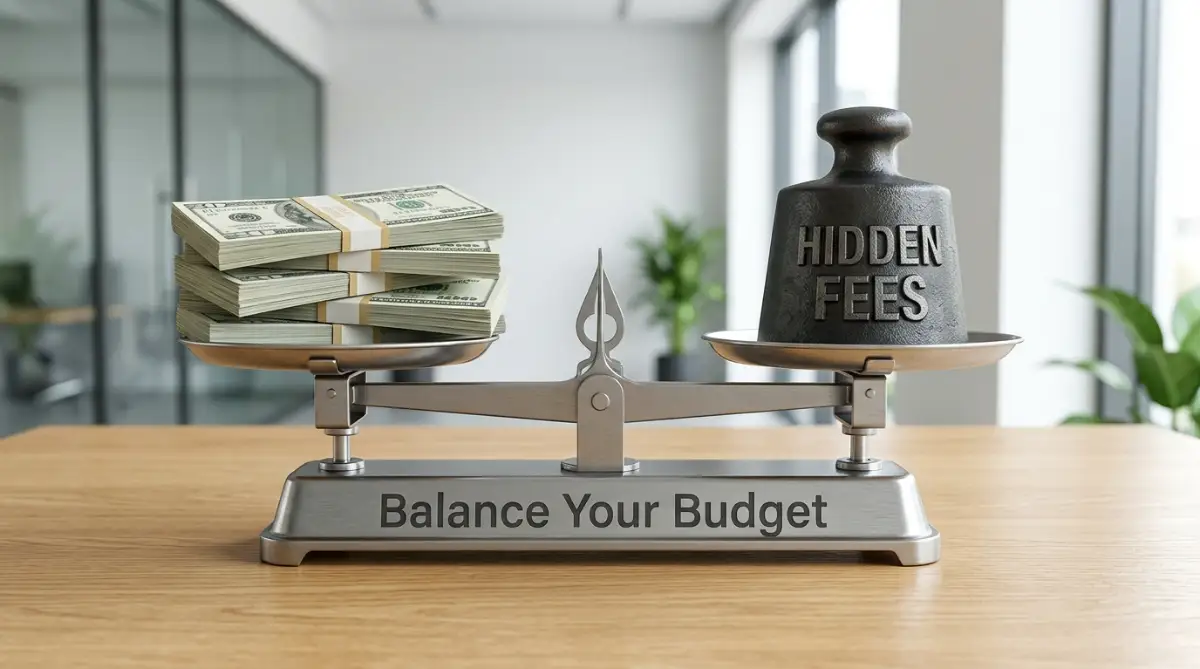
The Silent Trap of "Low" Monthly Payments
Most people look at a low monthly payment and think they’ve won. But if you’ve noticed your loan balance barely moves even though you pay on time every month, you’re likely caught in a hidden fee trap. I want to show you exactly how lenders hide the real cost of your debt in the fine print. Forget the fancy bank ads; we are going to look at the raw numbers so you can stop leaking money and start paying off your debt for real.
I signed on the dotted line, feeling incredibly relieved and thinking I had made a smart financial move. My relief quickly turned into a complete nightmare just a few months down the line. When I tried to pay off a large chunk of my balance early, a massive penalty charge hit my account completely out of nowhere.
That was the painful day I realized my "cheap" loan was actually packed with invisible charges. I felt betrayed, angry, and honestly, a little embarrassed that I fell for it.
This situation happens to millions of hardworking people every single day. You walk into a bank or apply online, hoping to get a little financial breathing room. Lenders flash a giant sign promising super low interest rates to grab your attention.
They make everything look so affordable on the surface. But underneath that shiny offer lies a maze of processing charges, administrative costs, and unexpected penalties.
These sneaky additions completely ruin your budget and steal your peace of mind. Instead of focusing on your family or your career, you lie awake at night wondering why your balance barely goes down.
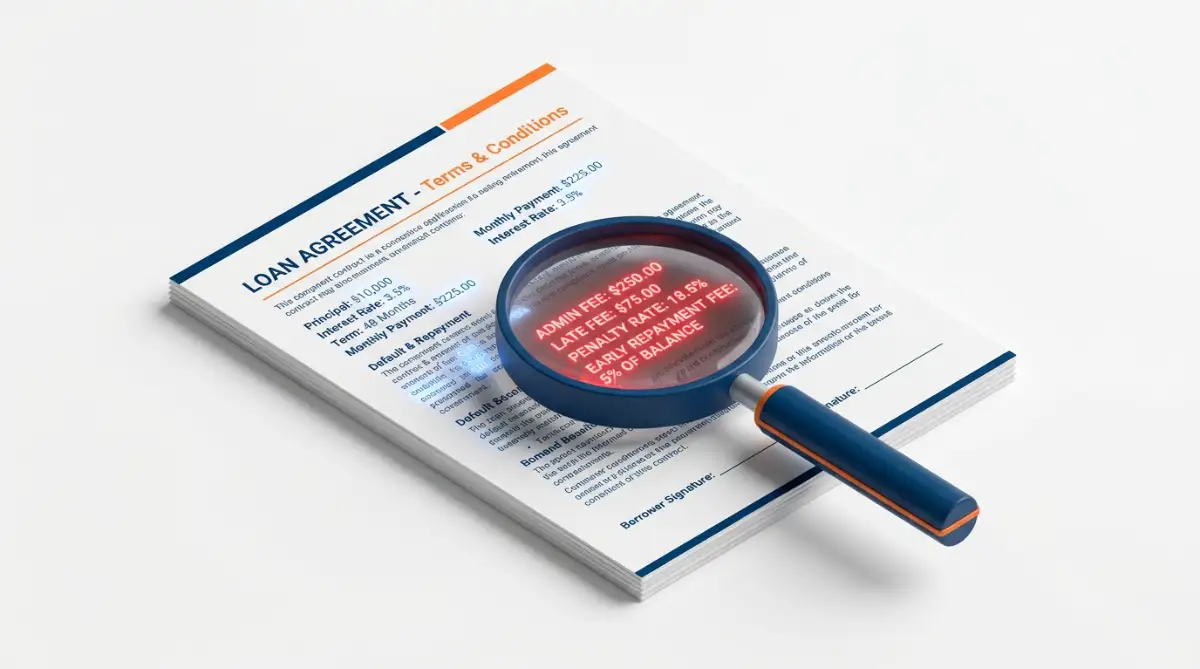
- APR is King: Always compare the Annual Percentage Rate (APR), not just the interest rate. It's the only honest way to see total costs.
- Watch the 'Deductions': Some lenders take fees out of your loan before you even get the cash, meaning you pay interest on money you never received.
- Say No to Insurance: Credit insurance is often a high-commission product you don't actually need if you already have life insurance.
- Negotiate Hard: Most application and processing fees can be waived if you just ask the loan officer directly."
How to Save Money on Your Next Loan
They use clever marketing tactics to highlight the best numbers while hiding the expensive details. But once you understand their playbook, you can easily outsmart them.
Let's break down the actual mechanics of figuring out what you will truly pay over the life of your agreement. We will look at exactly where these traps are hidden and how you can spot them instantly.
The Big Illusion: Interest Rate vs. APR
Most people look at the interest rate and think that is the whole story. If a lender offers you a 5% interest rate, you probably assume you are only paying 5% extra on the money you borrowed.
This is the biggest mistake borrowers make. The standard interest rate only represents the basic cost of borrowing the principal amount. It completely ignores all the extra administrative charges the lender plans to add to your bill.
This is why you always need to ask for the Annual Percentage Rate (APR). The APR is a much more honest number.
Think of the interest rate as the sticker price of a car on the dealer's lot. The APR is the final price you pay after adding the delivery fees, taxes, and dealer preparation charges.
By comparing the APR instead of just the basic rate, you get a realistic view of your financial commitment. If a lender boasts a 5% interest rate but has an APR of 9%, you immediately know they are hiding a mountain of
To help you see the difference clearly, look at this simple breakdown. It shows how much an extra 2% in fees actually costs you on a $10,000 loan over 3 years:
You basically throw away $460 just by ignoring the fine print. That is money that could have stayed in your savings account.
Whenever a lender tries to pressure me into signing quickly by repeating how low the monthly payment is, I immediately stop the conversation. I always ask them to write down the exact APR on a piece of paper and sign their name next to it. This simple trick forces them to be completely transparent, and it saved me from a terrible deal just last month.
Uncovering the Sneaky Origination Charge
One of the most common ways lenders trick you is through something called an origination fee. This sounds like an official, unavoidable government tax, but it is really just a processing charge.
Lenders charge you this money simply for the effort of reviewing your application and handing you the cash. The tricky part is how they collect this money from you.
Sometimes, they ask for this payment upfront before you even get your funds. Other times, they do something much worse and secretly deduct it from your total loan amount.
Imagine you ask to borrow $10,000 to fix your leaking roof. The lender approves you, but they charge a 5% origination fee.
Instead of getting the full ten thousand dollars, they hand you $9,500. However, you are still legally required to pay back the full $10,000 plus the interest on top of it.
You end up paying interest on money that never even reached your bank account. Always ask your lender exactly how they handle origination costs before you agree to anything.
Must-Watch: How Lenders Trick You With Numbers
If you really want to protect your wallet, you absolutely need to see how banks manipulate standard math to make a bad deal look amazing. Check out this eye-opening breakdown of lender math before you sign your next contract!
The Punishment for Being Responsible
It sounds completely backward, but many lenders will actually punish you for managing your money well. If you get a bonus at work and decide to pay off your balance early, you might get hit with a prepayment penalty.
Lenders plan their budgets around the interest they expect to collect from you over several years. When you pay them back early, they lose out on all that future profit.
To protect their bottom line, they hide a clause in your contract that fines you for early repayment. This completely defeats the purpose of trying to get out of debt faster.
You work hard, save extra cash, and try to do the right thing, only to receive a massive bill for your good behavior. Before taking any funds, you must explicitly ask if there are penalties for closing the account ahead of schedule.
Decoding the Application and Appraisal Traps
Getting approved for funding often requires several background checks and property valuations. Lenders love to pass these operational expenses directly onto you.
When you apply, they might charge an application fee just to look at your file. The worst part is that application fees are usually non-refundable.
If they deny your request, they still keep your money. If you are using your home as collateral, they will also force you to pay for an appraisal.
They choose the appraiser, but you have to pay the invoice. These small charges might seem insignificant individually, but they snowball into hundreds or even thousands of dollars.
Always negotiate these upfront expenses. Many hungry lenders will gladly waive the application fee if you simply ask them to do it.
Myth vs. Reality in Everyday Borrowing
There is a lot of bad advice floating around on social media regarding personal finance. Let's clear up some dangerous misunderstandings right now.
- The Myth: A longer repayment term is always better because the monthly bill is lower.
- The Reality: Stretching out your payments means the lender has more time to charge you interest. You might enjoy a lower bill today, but you will pay significantly more over the lifetime of the agreement.
- The Myth: Fixed rates mean you will never face unexpected charges.
- The Reality: A fixed rate only locks in your basic interest percentage. It does absolutely nothing to protect you from late payment fines, annual account maintenance fees, or early payoff penalties.
The Hidden Danger of Credit Insurance
When you sit down to finalize the paperwork, the lender might slide a document across the desk offering credit insurance. They will pitch this as a safety net for your family.
They tell you that if you lose your job or pass away, this insurance will cover your remaining balance. It sounds like a caring, responsible option to choose.
However, this product is usually horribly overpriced and completely unnecessary. The premiums are rolled directly into your principal balance.
This means you are paying interest on your insurance premiums every single month. If you already have a standard life insurance policy or an emergency savings fund, you likely do not need this extra coverage.
Lenders push this product aggressively because they receive massive commissions for selling it to you. Do not let fear tactics push you into buying expensive add-ons you do not need.
Visualizing the Trap: Rate vs. Reality
Sometimes the easiest way to understand this trap is to look at a side-by-side comparison. Let's pretend you are borrowing a standard amount over a three-year period.
Notice how quickly the extra charges change the entire landscape of your financial commitment.
This table clearly shows why you can never trust the large, bold numbers on a bank's promotional flyer. You have to dig into the rows of the table to find the actual price.
Calculating the Damage Without a Math Degree
You do not need to be an accountant to figure out your true financial commitment. You just need to follow a very simple, logical process.
First, write down the exact amount of money you want to end up with in your bank account. Next, ask the lender to list every single upfront deduction they plan to take.
Add those deductions to your original number. That combined total is the actual principal you will be paying interest on.
Then, ask for the total dollar amount you will pay over the entire life of the agreement. Do not ask for percentages; ask for the exact dollar figure.
Subtract the money you actually received from the total money you will hand back to them over the years. That resulting number is your true cost.
If you borrow $10,000 but end up paying back $14,500 over five years, your true cost is $4,500. Looking at raw dollars instead of confusing percentages removes all the illusion.
How Late Fees Destroy Your Progress
We all make mistakes, and sometimes a bill slips our mind. Lenders know this, and they design their late fee structures to maximize their profits from your simple human errors.
A single late payment does not just trigger a flat fee. It can completely reset your financial standing.
Many contracts contain a hidden clause that automatically skyrockets your interest rate if you are more than thirty days late. This is called a penalty APR.
You could go from a comfortable 7% rate to a suffocating 25% rate overnight. Once that penalty rate kicks in, nearly all of your monthly payment goes directly toward interest.
Your principal balance stops shrinking. Always read the section on late payments carefully and set up automatic transfers to protect yourself from this devastating trap.
The Power of Asking the Right Questions
Most people are too intimidated by bank officials to ask tough questions. You sit in their nice office, they wear a fancy suit, and you feel pressure to just agree and sign.
You need to flip the script and remember that you are the customer. They need your business to make money.
Take control of the conversation by asking highly specific questions. Ask them, "If I pay this off entirely in six months, what exact fees will I face?"
Ask them, "Is this APR fixed for the entire duration, or can it change if I miss a payment?" Do not accept vague answers like, "It usually stays the same."
Demand to see where their answers are written in the official contract. If a lender becomes annoyed or tries to rush you, that is a massive red flag. Walk out the door immediately and The 60-Second Loan Safety Checklist
Before you grab the pen to sign, ask yourself these three things:
- Is the APR more than 1% higher than the interest rate? (If yes, there are heavy fees).
- Did the lender subtract the origination fee from the cash I’m getting?
- Is there a specific dollar amount listed for the 'Total Cost of Credit'?
Mastering the Art of Borrowing Like a Financial Insider
Now that you know how lenders hide their numbers, it is time to flip the script and take total control of your money. You do not have to accept the first offer a bank hands you.
Everything in the financial world is highly negotiable if you know the right things to say. Most borrowers walk into a bank feeling like they are asking for a favor.
You must remember that lenders need your business to survive and make a profit. Once you shift your mindset, you instantly gain the upper hand in the negotiation room.
To really protect your wallet, you need to understand exactly how your daily payments are structured behind the scenes. This involves looking closely at the amortization schedule of your agreement.
In the early months of your payment plan, a massive portion of your money goes straight toward the interest charges. The bank makes sure they collect their profit first, leaving only a tiny amount to reduce your actual principal balance.
By familiarizing yourself with understanding how loan amortization works, you can plan exactly when to make extra payments to lower your overall burden. If you simply pay a little extra toward the principal every month, you can easily save thousands of dollars over the long run.
One of my favorite expert secrets is creating a customized comparison sheet before I even speak to a loan officer. Do not rely on the confusing paperwork the bank prints out for you.
Create your own simple chart on a piece of paper. List the initial amount, the exact upfront deductions, the true APR, and the final total payback amount.
Taking the time for creating a solid financial plan gives you complete clarity. When you force the loan officer to fill in your personal chart, they quickly realize they cannot trick you with fancy industry jargon.
Another powerful strategy is timing your application perfectly. Banks have monthly and quarterly lending quotas they desperately need to meet.
If you apply near the very end of the month, loan officers are often much more willing to waive annoying application and processing fees just to close the deal. You simply have to ask them directly.
Look them in the eye and say, "I am ready to sign this today, but only if you completely remove the origination charge." You will be shocked at how often they instantly agree just to get the paperwork finished.
Always insist on taking the physical contract home for a full twenty-four hours before signing anything. Loan officers will use high-pressure tactics to make you sign on the spot.
They might claim the special promotional rate expires today. This is almost always a completely fabricated sales tactic designed to make you rush.
Take the documents home, sit at your kitchen table, and read every single page with a fresh cup of coffee. This calm environment is essential for managing your monthly finances better without any outside stress or pressure.
Finally, you should always shop around with local credit unions instead of just massive national banks. Credit unions are non-profit organizations that exist to serve their members, not Wall Street shareholders.
Because they do not have to generate massive corporate profits, they usually offer significantly lower fees and much better true interest rates. Walking into a community credit union is often the smartest financial move you can possibly make.

The Most Expensive Borrowing Traps You Must Dodge
When you need money quickly, your brain goes into full survival mode. This sudden panic is exactly what greedy lenders rely on to trap you in horrible financial agreements.
The biggest mistake I see people make is borrowing money out of pure desperation without reading the terms. If your car engine suddenly breaks down and you need it for work, you might blindly accept the first cash advance offer you see on the internet.
These rapid-approval websites often hide completely unreasonable administrative charges deep inside their digital terms and conditions. Before you know it, that quick fix turns into a massive financial anchor weighing you down for years.
You must learn the warning signs and start recognizing predatory lending practices before you hand over your personal banking details. Never let a temporary emergency push you into a permanent financial disaster.
Another incredibly dangerous trap is focusing entirely on the monthly payment amount while ignoring the total timeline. Lenders love to stretch your payments out over five, six, or even seven years to make the monthly bill look tiny.
It feels like a great deal today because you have extra cash in your pocket at the end of the month. However, this extended timeline means you are paying monthly interest for thousands of extra days.
That small monthly payment is actually an illusion designed to drain your bank account very slowly. If you want to get serious about improving your financial literacy, you must always choose the shortest repayment timeline you can safely afford.
Many hardworking people also fall victim to the "balloon payment" disaster. Some shady lenders will offer you incredibly low monthly payments for the first few years to get you hooked.
What they fail to clearly explain is that at the very end of the agreement, you suddenly owe one massive, lump-sum payment. I have seen close friends cry out of sheer frustration when a surprise five-thousand-dollar bill arrived just as they thought they were finally debt-free.
Always scan your documents specifically for the words "balloon payment" or "variable final installment." If you see those terms, you need to walk away immediately.
We also have to talk about the habit of blindly trusting digital loan applications. Today, you can apply for funding directly from your smartphone while lying in bed.
The screens are small, and the terms of service are usually hidden behind a tiny link you have to click to expand. Most people simply scroll to the bottom and hit the bright green "Accept" button.
This digital convenience makes calculating true borrowing costs effectively almost impossible unless you slow down. Never accept a financial agreement on a mobile phone screen where you cannot clearly see the full math.
Lastly, do not assume that a good credit score automatically protects you from hidden fees. Many borrowers think that because they have an excellent payment history, the bank will automatically give them a fair and honest deal.
The truth is, banks will gladly overcharge anyone who does not speak up and defend themselves. Even if your credit score is absolutely perfect, you still have to verify every single number on that page.
You are the only person who truly cares about protecting yourself from unfair financial contracts; the bank only cares about their quarterly revenue targets.
Your Simple Action Plan for Debt-Free Confidence
We have covered a lot of deep financial ground today, but you do not need to memorize every single detail perfectly. You just need to change the way you approach your next conversation with a lender.
Start looking at borrowing money as a business transaction where you are the boss. Demand complete transparency, ask the hard questions, and absolutely refuse to pay for ridiculous administrative charges.
Whenever you feel confused by the math, simply ask the loan officer to show you the exact dollar amount you will pay over the entire timeline. This single question instantly destroys the confusing illusions created by tricky percentages and hidden clauses.
Make a habit of comparing at least three different offers before making a final decision. Take your time, read the physical paperwork in a quiet room, and trust your gut feelings.
If a deal feels too complicated or a lender becomes highly aggressive, that is your signal to pack up your things and leave. There is always another bank willing to give you a fair deal if you are patient.
By applying these simple strategies, you are already lightyears ahead of the average consumer. You are actively building better saving habits just by protecting the money you already have.
I know staring at these complicated loan documents can feel completely overwhelming and highly stressful. My biggest hope is that you use this knowledge to protect your hard-earned money and walk into your next bank appointment with total confidence. You work way too hard for your paycheck to let a sneaky bank fee steal it away from you.
Common Questions About Hidden Borrowing Costs
Can I ask the lender to remove the origination fee entirely?
Yes, you absolutely can and always should negotiate this point. Many loan officers have the authority to waive origination and application charges, especially if you have good credit and threaten to take your business to a competitor.
Does asking for the true APR hurt my credit score?
Simply asking a lender to calculate the true APR for you does not hurt your credit at all. Your score is only impacted when the lender performs a formal "hard inquiry" background check, so always ask for the math before giving them permission to pull your credit report.
What exactly is a prepayment penalty in simple terms?
A prepayment penalty is a highly frustrating fee the bank charges you for being responsible and paying off your debt early. They charge this fine to recover the future interest profits they lose when you close the account ahead of schedule.
How do I know for sure if a lender is hiding secret fees?
The fastest way to catch a deceptive lender is to compare their advertised interest rate against their official APR. If the APR is significantly higher than the standard rate they are promoting, you instantly know they have buried heavy fees in the contract.
Are digital loan apps safer than traditional physical banks?
Digital lenders offer amazing convenience, but they often hide their expensive fees deep inside their mobile terms of service. You must still read every digital document carefully and check understanding debt consolidation terms before clicking the final accept button on your phone.
Disclaimer: This article is for educational and informational purposes only and does not constitute professional financial, legal, or tax advice. Borrowing money involves significant personal risk. Always consult with a certified financial planner or a professional advisor before signing any legally binding loan agreements or making major financial decisions.