The Weight of a Zero Balance: My Personal Journey Back
Quick Guide: My Rebuilding Roadmap
- Audit First: Pull your credit report and dispute any "active" debts that were already discharged.
- The 10% Rule: Keep your credit utilization below 10% to show lenders you aren't desperate.
- Automate Everything: Use technology to pay bills automatically so you never miss a due date.
- Mindset Shift: Stop comparing your life to people who are spending money they don't have.
Maybe you’re staring at a stack of bankruptcy papers, feeling like you’ve hit a dead end. I’ve been there—I know the sinking feeling of checking your bank balance and seeing nothing but zeros. But here’s the truth: your credit score doesn't define your worth, and this isn't a permanent label. Let’s talk about how to stop the panic and start rebuilding your life, one realistic step at a time.. I had just finished my bankruptcy filing, and I felt like a total failure. My bank account was empty, my credit cards were gone, and my phone wouldn't stop ringing with hidden numbers.
It felt like I was wearing a giant sign that said "Broken" on my forehead. I couldn't even get a basic apartment lease because my credit score was in the basement. I felt like the world had closed its doors on me forever.
Maybe you feel that same heavy weight in your chest right now. You might think that your financial life is over because of the bankruptcy papers in your hand. I want to tell you right now that you are wrong.
Bankruptcy is not the end of your story; it is just the end of a very bad chapter. It is a tool designed to give you a clean slate, not a life sentence of poverty. I had to learn how to walk again, financially speaking, one tiny step at a time.
I spent months crying and hiding from the world before I realized something. Nobody was going to come and fix my life for me. I had to take charge and learn the rules of this new game.
The stress of not being able to buy a car or even get a "real" bank account is soul-crushing. It affects your sleep, your health, and your relationships with the people you love. You start to doubt every choice you make.
I wrote this guide because I don't want you to wander in the dark like I did. I want to show you the exact path I used to go from "zero" to "financial hero" without falling into more debt traps.
The Very First Step: Checking the Damage Without Fear
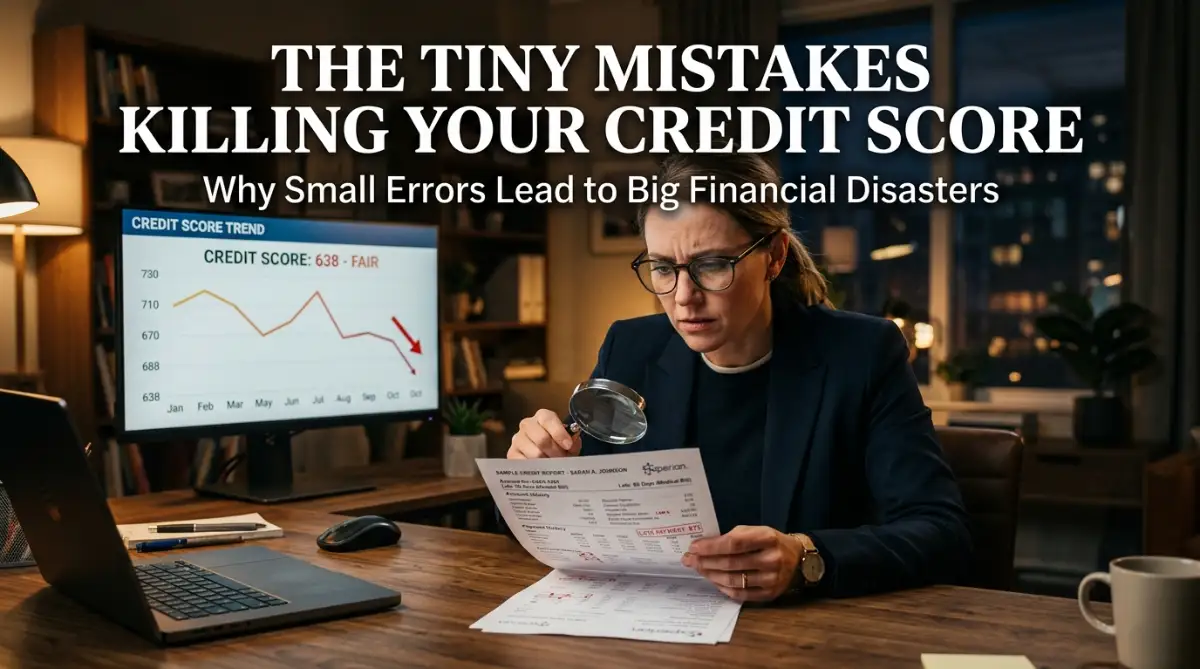
The first thing you must do is look at your credit report, even if it scares you. Many people ignore their mail after bankruptcy because they are tired of seeing bad news. But you cannot fix what you do not measure.
You need to make sure that all the debts you "wiped out" in court are actually showing as "discharged." Sometimes banks make mistakes and keep reporting that you owe them money. This is a huge roadblock for your recovery.
If you see an old debt still listed as "active," you need to tell the credit bureau immediately. It sounds like a lot of work, but it is a major part of cleaning your record. I found three mistakes on my own report that were dragging my score down for no reason.
Pro Tip: I used to think checking my credit score would make it drop lower. That is a myth! Checking your own report is a "soft pull" and does not hurt your score at all. In fact, checking it once a month helped me stay motivated as I saw the numbers slowly climb.
Starting Small with a Secured Credit Card
Once your bankruptcy is fully closed, you might think you should never touch a credit card again. I felt that way too because I was afraid of repeating my old mistakes. But to build a credit score, you need to show that you can handle credit.
The safest way to do this is with a Secured Credit Card. This is not like a normal credit card where the bank trusts you with their money. Instead, you give the bank a deposit, say $200, and they give you a card with a $200 limit.
This is basically a training wheel for your financial life. You are using your own money to prove you are responsible. I started with a very small deposit and only used it to buy one tank of gas each month.
The secret is to pay it off in full every single month before the due date. Never carry a balance and never pay a cent in interest. You are just using the card as a tool to send "good signals" to the credit bureaus.
Building a Foundation with a Credit Builder Loan
If you don't like the idea of a credit card yet, there is another great tool. It is called a Credit Builder Loan. Many small credit unions and online banks offer these to people who are starting over.
Here is how it works: The bank puts a small amount of money into a locked savings account. You make monthly payments toward that amount. Once you finish paying, the bank gives you the money back (minus a small fee).
The best part is that they report every single payment to the credit bureaus. This shows that you are someone who can follow a schedule and pay on time. It feels like a forced savings plan that also heals your credit score.
I used one of these for twelve months, and it was a game-changer for me. It gave me a sense of pride to see my savings grow while my credit score started to rise. It was the first time I felt like I was winning.
Watch this helpful video to see how credit builder tools actually work in real time:
Managing Your Cash Flow Like a Scientist
When you are rebuilding, every dollar has a job to do. You cannot afford to "guess" where your money is going anymore. I started using a simple paper notebook to track every single penny I spent for thirty days.
I was shocked to see how much I was spending on small things that didn't matter. Those $5 coffees and "sale" items at the store were eating my future. I had to become very strict with myself for a while.
I suggest using the 50/30/20 rule because it is simple and it works. 50% of your money goes to needs (rent, food, lights), 30% to things you want, and 20% to savings or debt. Since you just finished bankruptcy, you should try to put even more into savings.
Having an Emergency Fund is your best defense against going bankrupt again. Even if it is just $500, having that cash in a separate account keeps you away from high-interest loans when things go wrong. Life will happen, and your car will break down—be ready for it.
Why Patience is Your New Best Friend
You might want your credit score to jump 100 points overnight. I know I did. I was checking my phone every day hoping for a miracle. But the truth is, rebuilding is a slow walk, not a fast run.
Think of your credit score like a garden. You can't plant a seed and expect a tree the next morning. You have to water it, pull the weeds, and wait for the sun to do its work.
Every month that you pay your bills on time is another "brick" in your new financial house. Over time, those bricks become a solid wall that protects you. You will start to get better offers and lower interest rates as you prove your worth.
I remember the day I finally got approved for a normal, unsecured credit card.
Dealing with the Emotional Side of Money
Rebuilding your profile is 20% math and 80% mindset. If you still feel like a "bankrupt person," you will make choices like one. You have to forgive yourself for the past so you can own your future.
I had to stop hanging out with people who spent money they didn't have. I had to find new ways to have fun that didn't involve a credit card. It was a lonely time, but it was the most important time for my growth.
When you feel the urge to spend money you don't have, take a deep breath. Remind yourself how it felt to be on that kitchen floor. That memory is a powerful tool to keep you on the right path.
We often buy things to impress people who don't even care about us. After bankruptcy, you realize that true security is worth more than any fancy gadget or new pair of shoes. Peace of mind is the ultimate luxury.
The Power of Automatic Payments
One of the biggest mistakes I made before my bankruptcy was simply forgetting due dates. Life got busy, and I would miss a payment by two days. Those late fees and "dings" on my report added up fast.
Now, I automate everything. I set up my bank account to pay my phone bill, my rent, and my secured card automatically. I don't even have to think about it anymore.
This removes the "human error" part of the equation. If you have the money in your account, let the computer do the work for you. This ensures that your payment history stays 100% perfect.
A perfect payment history is the single most important factor in your credit score. Even one late payment during your recovery can set you back months. Don't take that risk—use technology to stay safe.
Finding the Right Bank for a Fresh Start
Not all banks are friendly to people who have a bankruptcy on their record. Some big banks might reject you for a simple checking account for years. This can be very frustrating when you are trying to be responsible.
I found that local Credit Unions are often much more helpful. They are owned by the members, not by greedy shareholders. When I walked into my local credit union, I sat down with a real person and told them my story.
They looked at me as a human being, not just a number. They helped me open a "second chance" checking account. This gave me the tools I needed to manage my money without the high fees of "check cashing" stores.
Avoid those "predatory" lenders who promise quick fixes. If a company asks you for money upfront to "fix your credit," run away. There are no shortcuts—only honest, steady work.
Understanding Credit Utilization
This is a fancy term for a very simple concept. It means how much of your available credit you are actually using. If your secured card has a $200 limit and you spend $190, your utilization is 95%.
The credit bureaus hate this. It makes you look desperate for money. To get the best score, you should keep your utilization below 10%. On a $200 card, that means never having a balance higher than $20 when the statement closes.
I used to think that as long as I paid it off, it didn't matter how much I spent. I was wrong. The "snapshot" the bank takes usually happens once a month. You want that snapshot to show a very low balance.
By keeping my usage low, I saw my score jump much faster than my friends who were maxing out their cards every month. It’s a small trick that makes a massive difference in how the algorithms see you.
Keep Your Oldest Accounts Open
Even if you have an old account that you don't use much, don't close it yet. The "age" of your credit history matters. The longer you have a relationship with the credit system, the better you look.
When you close an account, you shorten your average credit age. This can actually cause your score to drop. After bankruptcy, you don't have many old accounts left, so protect the ones you do have.
I kept my first secured card open for years, even after I got better cards. It was my "anchor" that kept my credit age growing. It cost me nothing to keep it in a drawer, but it helped my score stay strong.
Think of it like a long-term friendship. The longer it lasts, the more trust is built. You want the credit bureaus to see that you can maintain a relationship for a long time.
Final Thoughts on This Phase of Recovery
You have already done the hardest part—you survived the bankruptcy. Now, you are in the rebuilding phase, which is much more hopeful. You are learning the skills that will keep you wealthy for the rest of your life.
Every time you choose to save instead of spend, you are winning. Every time you check your credit report, you are taking control. You are no longer a victim of your circumstances; you are the architect of your future.
I know it feels slow right now, but stay the course. In a few years, you will look back at this time as the moment everything changed for the better. You are building a life of freedom, one safe step at a time.
Keep your head up, stay disciplined, and remember that you deserve a second chance. Your financial profile will recover, and you will be stronger because of what you went through.
Mastering the Art of Credit Growth: Expert Secrets for the Bold
Moving past the basics of secured cards and simple budgets feels like stepping into a larger world. Now that you have the foundation, it is time to use some expert-level strategies to speed up your recovery. These are the things the big banks don't usually talk about with beginners.
One of the fastest ways to boost your score is through a method called "Credit Piggybacking." This means asking a family member or a very close friend to add you as an Authorized User on one of their old, high-limit credit cards. You don't even need to have the physical card or spend a single dollar.
When they add you, their long history of on-time payments and their high credit limit suddenly show up on your report. It is like getting a "grade boost" because your friend is a straight-A student. Just make sure the person you ask has a perfect payment record, or it could hurt you instead.
Another secret is to keep a close eye on your credit mix. Lenders like to see that you can handle different types of money, not just credit cards. Having a small personal loan alongside a credit card shows you are a well-rounded borrower. You can learn more about these choices in this guide to navigating unsecured personal financing options.
I used to think that paying off a collection account would make my score jump instantly. Sadly, the old models don't always work that way. Sometimes, an old "paid" collection stays on your report and continues to weigh you down.
Instead of just paying, you can try a "Pay for Delete" strategy. This is where you negotiate with the debt collector to remove the negative mark entirely in exchange for payment. Always get this agreement in writing before you send a penny. Dealing with these errors is a big deal, and one wrong digit on your credit report can really hold you back.
You also need to become a master of your own data. Don't wait for a bank to tell you how you are doing. Use official resources like AnnualCreditReport.com to get your full history for free. This helps you spot mistakes before they turn into disasters.
To stay safe in the long run, you must build a "wall" around your new life. This wall is made of knowledge. I spent hours reading about how interest is calculated and how banks make their money. Understanding the fine print is your best defense.
I suggest you learn how to read financial statements so you can see your progress clearly.
Always remember that your credit score is just a shadow of your financial habits. If your habits are healthy, the shadow will eventually look good too. Focus on the habits, and the numbers will follow on their own.
Hidden Traps that Could Reset Your Progress
When you start seeing your score rise, you will feel a sense of excitement. This is the most dangerous time for many people. You might start getting "pre-approved" offers in the mail for cards that look shiny but are actually traps.
The biggest mistake is falling for "Subprime" Credit Cards. These cards target people with recent bankruptcies. They often have huge "account opening fees" and "monthly maintenance fees" that eat your money before you even buy anything.
I once got an offer for a card with a $300 limit, but they charged $150 just to open it! That is a terrible deal. If a card asks for a fee before you use it, put it in the trash. Stick to cards from reputable banks or credit unions.
Another pitfall is the "Emergency Loan" Trap. When something goes wrong, you might be tempted to take a high-interest loan just to get by. But these loans often have hidden pitfalls that can keep you in debt for years.
I have seen people lose all their progress because they took a "quick cash" advance. These companies charge interest rates that are almost criminal. It is much better to use your emergency fund or talk to your local credit union for a small, low-interest loan. You can read more about the dangers of cash advances to stay safe.
Don't forget about Hidden Fees. Lenders are very good at hiding the true cost of borrowing money. They might talk about a low monthly payment but hide the fact that you will pay triple the original price in the end.
I always tell my friends to look at the Total Cost of Credit. You need to calculate your real costs before signing any paper. If the math doesn't make sense, walk away. There is always another option if you are patient.
Another big mistake is Applying for Too Much Credit at Once. Each time you apply, a "hard inquiry" hits your report. If you have five inquiries in one month, it looks like you are having a financial crisis.
Space your applications out by at least six months. This shows that you are calm and in control. Patience is your greatest power during this journey. If you rush, the system will mark you as a high-risk borrower.
Lastly, never ignore your mail. Sometimes a small bill you forgot about goes to collections. If that happens after your bankruptcy, it will hurt your score even more. Be proactive and check your mailbox every single day.
A Roadmap for Your New Financial Future
Think of your recovery as a long hike up a mountain. You might get tired, and you might slip a few times, but the view from the top is worth it. Your goal is to reach a place where you never have to worry about a "declined" card again.
The first part of your plan is to Automate Your Success. Set up a system where a portion of your paycheck goes directly into a savings account you don't touch. This is your "freedom fund."
The second part is to Keep Learning. Read books about money management and listen to podcasts from experts. The more you know, the less likely you are to be fooled by clever marketing. You can find official guidance on debt management at the National Foundation for Credit Counseling.
The third part is to Stay Humble. Even when you have a high score and a big bank account, live like you are still rebuilding. This "frugal" mindset is what keeps the wealthy people wealthy. It prevents "lifestyle creep" from stealing your future.
I used to think that having a lot of stuff meant I was successful. Now I know that success is having no debt and plenty of choices. Freedom is the ability to say "no" to things that don't serve your goals.
Your action plan for tomorrow is simple. Check your credit report for errors. If you find one, use the tools at the Consumer Financial Protection Bureau to file a dispute. Then, make sure your emergency fund has at least a small amount of cash in it.
This journey is not just about numbers on a screen. It is about changing who you are as a person. You are becoming someone who is disciplined, wise, and resilient. Those traits are more valuable than any credit score.
Common Questions About Your Post-Bankruptcy Path
How long will the bankruptcy stay on my credit report?
Depending on the type of filing, it can stay for seven to ten years. However, its negative impact fades over time. If you follow the steps we discussed, you can often get a good score and even a mortgage long before the bankruptcy is removed.
Can I buy a house after filing for bankruptcy?
Yes, you certainly can. Most government-backed loans have a waiting period of two to three years after your discharge. During this time, you must show a perfect history of on-time payments and steady income to qualify.
Will my bankruptcy affect my current job or future hiring?
In most cases, current employers cannot fire you just for filing. For future jobs, some employers in the finance or government sectors might check your credit. However, many look for honesty and how you have recovered since the filing rather than just the filing itself.
Is it better to hire a credit repair company?
Most credit repair companies charge you for things you can easily do yourself for free. They cannot legally remove accurate information from your report. It is usually better to save that money and use it to pay down your bills or build your emergency fund.
Should I close all my old accounts?
No, you should keep your remaining accounts open if they don't have high annual fees. The length of your credit history is a major part of your score. Closing accounts can actually make your score drop by shortening your history.
Your Personal Action Plan for Today
You have everything you need to start your new life right now. The pain you felt at the beginning of this process is now your greatest strength. It will remind you why you never want to go back to that dark place again.
I know it feels like a mountain, but remember that mountains are climbed one small step at a time. I truly believe that you can build a financial life that is better than the one you had before. Don't wait for the "perfect time" to start—the perfect time is right this second.
I have been where you are, and I can tell you that the peace of mind waiting for you is incredible. Take that first small step today, and I promise you will look back on this day with a smile. Your future self is already cheering for you!
Disclaimer: The information provided in this blog post is for educational and informational purposes only. I am not a financial advisor, lawyer, or certified credit counselor. Bankruptcy laws vary by location and individual circumstances. Always consult with a qualified professional before making major financial decisions or legal filings. The author is not responsible for any financial losses or legal issues arising from the use of this information.