
The Silent Heavy Weight of a Discharged Bankruptcy
I still vividly remember staring at my phone screen in absolute disbelief when my card got declined at the grocery store checkout, long after my discharge papers were signed. It felt like my past financial mistakes were following me like a dark shadow, making every basic adult task feel like an uphill battle. I was so exhausted from feeling invisible to the banking world that I finally decided to stop hiding and learn the hard truths about how credit actually works.
I remember holding my official bankruptcy discharge papers in my hands with shaking fingers. The aggressive phone calls from collection agencies had finally stopped, but a deep feeling of panic settled in my chest when I checked my bank account. My credit score was sitting in the low four hundreds, and traditional lenders treated my name like toxic waste. I felt completely invisible in the financial world, wondering how I was ever going to rent an apartment, buy a family car, or get approved for a basic credit card again. That painful afternoon became the moment I stopped mourning my past mistakes and started studying how the lending system actually works.
Filing for bankruptcy carries an invisible emotional cost that nobody talks about in legal offices. You walk into everyday situations feeling like you have a giant red warning label stamped directly across your forehead. Simple daily tasks quickly turn into humiliating hurdles. Utility companies demand massive cash deposits just to turn on the electricity in your home, and rental agents reject your applications without a second glance.
That persistent stress eats away at your mental clarity from the moment you wake up. You second-guess every single penny you spend at the grocery store because you live in constant fear of running out of money again. Many people fall into the trap of believing their financial life is permanently over after court proceedings end. The legal system gives you a clean slate, but it never provides an instruction manual for what to do the morning after.
Rebuilding your life is not about sitting around and waiting ten years for public records to drop off your file. It is about taking calm, methodical steps right now to prove that you are a dependable and low-risk borrower.
Auditing Your Credit Reports for Lingering Paperwork Errors
Your journey to a healthy credit score starts by inspecting the exact data credit reporting agencies have on file. Banks and collection companies make frequent clerical errors when updating accounts after a bankruptcy discharge. You are legally entitled to review your complete credit files from all three major bureaus at no cost. Pull your reports and comb through every line item with a bright highlighter.
Every single debt that was included in your bankruptcy filing must show a zero balance. If a past lender still lists an active past-due balance or a late payment status after the discharge date, your score will remain artificially suppressed.
When you spot an inaccurate balance, send a formal written dispute letter along with a copy of your court discharge schedule. Do not rely on quick online dispute buttons because they often limit the amount of supporting proof you can upload.
Certified mail provides a physical paper trail that requires reporting agencies to respond within thirty days. Cleaning up these clerical mistakes alone can give your score an immediate and well-deserved boost.
Establishing New Credit Lines Without Falling for Scams
I learned this lesson the hard way when I foolishly rushed out and wasted my scarce post-bankruptcy cash on predatory card offers that promised instant approvals. My true turning point only happened when I canceled those junk accounts, swallowed my pride, and quietly opened a single, low-fee secured card with my local credit union instead.
Once your credit report shows an accurate clean slate, you must begin building fresh positive payment data. A blank report with no recent activity does not prove creditworthiness to modern underwriting algorithms.
Traditional unsecured credit cards will reject your application immediately at this stage, and applying blindly will only damage your score with unnecessary hard inquiries. You need dedicated rebuilding tools designed specifically for fresh starts.
The Strategic Power of a True Secured Credit Card
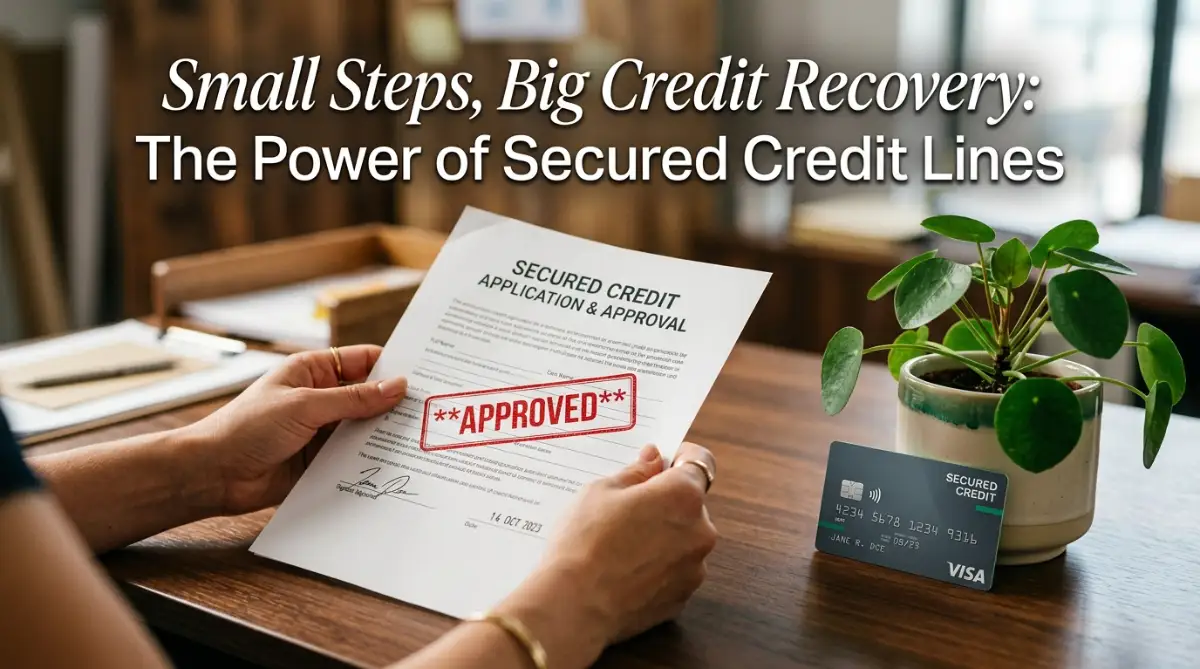
A secured credit card is the safest and most effective tool for establishing a fresh payment history. You provide a refundable cash deposit to the bank, which then becomes your total credit limit.
Look specifically for a secured card that reports to all three major reporting bureaus every month. Avoid cards that charge hidden monthly maintenance fees, setup costs, or high annual charges.
Use this card only for one small, recurring monthly bill, such as a basic streaming subscription. Set up an automatic payment from your checking account to pay off the entire balance several days before the statement closing date.
Building Trust with Credit-Builder Installment Loans
Credit scoring models reward borrowers who demonstrate the ability to manage different types of accounts responsibly. Adding a small installment loan alongside your secured card creates a balanced credit profile.
Many local credit unions and online community banks offer credit-builder loans. The lender places your borrowed amount into a locked savings account while you make small, fixed monthly payments over twelve to twenty-four months.
Once you make the final payment, the bank unlocks the savings account and hands you the total cash amount plus any accrued interest. You walk away with an improved credit profile and a brand-new emergency savings cushion.
My Personal Realization: When I first tried to fix my credit, I rushed out and signed up for three different high-fee cards that promised guaranteed approval. Those shady companies hit me with massive setup fees before I even opened the envelope, which drained my cash and added unnecessary stress. My true turning point came when I canceled those predatory accounts and opened a single, low-fee secured card with a trusted local credit union.
The Exact Mathematical Rules for Fast Score Recovery
Improving your credit score after a major setback is not based on luck or guesswork; it is governed by predictable math. Understanding how scoring models calculate your risk level allows you to optimize your actions for maximum points.
Two primary categories make up the bulk of your credit score: your payment record and your credit utilization ratio. Mastering these two elements will produce rapid and steady improvements over time.
The Single-Digit Credit Utilization Rule
Credit utilization measures how much of your available revolving credit limit you use in any given billing cycle. If your secured card has a three-hundred-dollar limit and your statement balance is one hundred and fifty dollars, your utilization is fifty percent.
High utilization signals financial distress to credit scoring software, even if you pay the balance in full every single month. To earn the highest possible score, you must keep your reported balance under ten percent of your total limit.
On a three-hundred-dollar limit, your balance should never exceed thirty dollars on the statement closing date. If you need to make a larger purchase, pay it off immediately before the statement generates so the bank reports a tiny balance.
Creating an Unbreakable On-Time Payment Record
Your payment history accounts for over a third of your total score. A single payment that is thirty days late will instantly destroy months of steady rebuilding progress.
Set up automatic payments through your bank for every single active account you own. Even if you only set the automation to cover the minimum amount due, it acts as a permanent safety net against human forgetfulness.
Treat your monthly payment date like an absolute legal commitment. Keeping an unbroken streak of on-time payments for twelve consecutive months proves to future lenders that your past troubles are behind you.
Creating a Cash Flow Buffer to Protect Your New Credit
The biggest reason people struggle after bankruptcy is not a lack of willpower; it is the sudden arrival of unexpected life expenses. A blown car tire or a minor medical issue can easily force you right back into bad debt habits.
You must build a small cash cushion before you focus on aggressive investing or long-term goals. Having immediate access to liquid cash prevents you from relying on emergency borrowing options when things go wrong.
Watch this clear visual walkthrough to see how building a basic cash cushion keeps your newly rebuilt credit safe from unexpected setbacks. Seeing these practical steps in action will give you the exact structure you need to protect your budget before moving forward!
The 500-Dollar Starter Emergency Fund
Start by setting a realistic goal of saving five hundred dollars in a completely separate savings account. Keep this money at a different financial institution than your daily checking account so you are not tempted to spend it on casual purchases.
Fund this account by selling unused household items, picking up a temporary weekend side task, or trimming unused digital subscriptions. Having this modest cash cushion removes daily panic and gives you immediate breathing room.
Whenever an unexpected expense occurs, pay for it using this emergency cash rather than running up balances on your new credit accounts. Replenish the fund immediately with your next paycheck to keep your safety net intact.
Structuring a Clean Cash Flow Tracking Habit
Rebuilding your financial standing requires complete honesty about where every single dollar goes. You do not need complicated software to manage your monthly cash flow successfully.
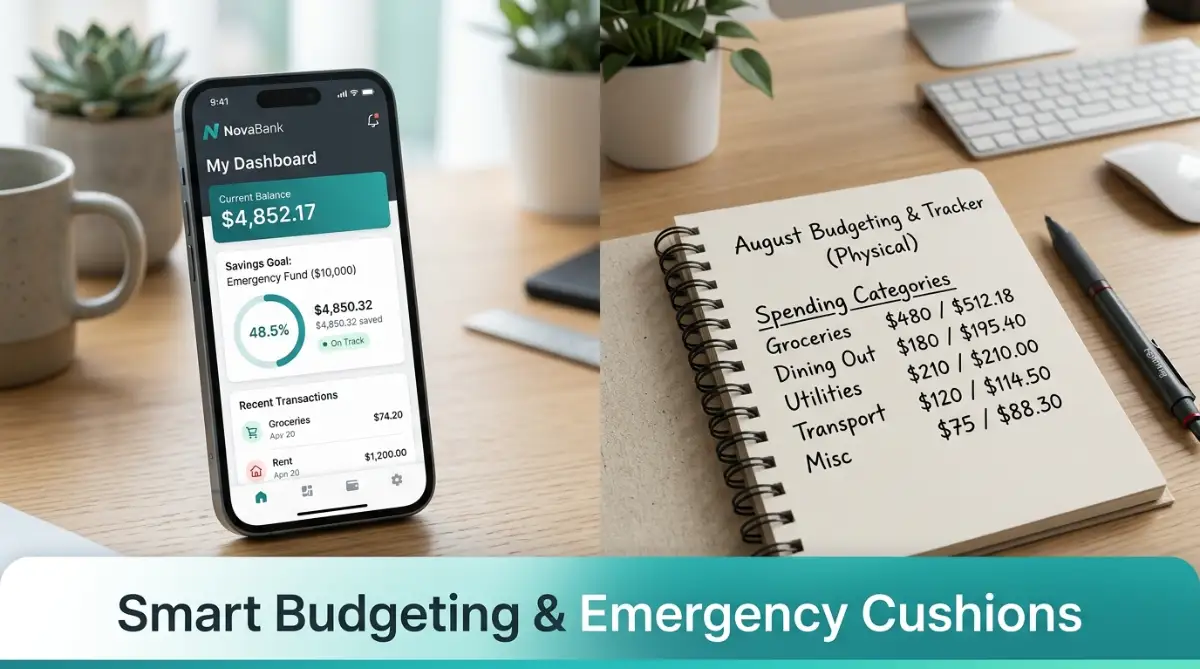
A basic spreadsheet or a simple pen-and-paper notebook is more than enough to track your fixed expenses, variable needs, and savings goals. Write down your expected income at the start of every month and assign every dollar a specific job.
Review your numbers every Sunday afternoon for ten minutes to catch minor spending leaks before they turn into major cash shortages. This weekly check-in keeps your mind focused and eliminates nasty financial surprises.
Myth vs. Reality in Post-Bankruptcy Recovery
Misinformation regarding bankruptcy recovery causes many well-meaning people to make costly mistakes. Let us clear up the most common misconceptions so you can make informed decisions based on facts.
The Truth About Waiting Periods for Mortgages
Many people falsely believe that buying a home is completely impossible after filing for bankruptcy. Traditional government-backed mortgage programs actually offer clear pathways to homeownership much sooner than most expect.
With consistent on-time payments, a stable job history, and clean post-discharge records, you can become eligible for standard mortgage consideration in as little as two to four years.
Underwriters care deeply about how you handled your obligations after the legal filing. Demonstrating stability, reliable income, and low debt-to-income ratios will always open doors to respectable financing terms.
Expanding Your Credit Depth Safely
After you have managed a secured card and a credit-builder loan flawlessly for six to twelve months, you can begin expanding your profile. Adding new positive lines increases your overall available credit, which naturally keeps your utilization low.
Contact your secured card issuer and ask if your account qualifies for an automatic upgrade to an unsecured card. Many reputable institutions will review your good habits, refund your initial security deposit, and increase your credit line.
Becoming an Authorized User on a Trusted Account
Another powerful way to accelerate your progress is by becoming an authorized user on a family member's seasoned credit card. The primary cardholder must have an exceptional credit history with zero late payments and very low utilization.
When they add your name to the account, the entire positive history of that specific card is added to your credit file. This instantly improves the average age of your credit accounts and increases your available borrowing limit. Make sure the primary cardholder does not give you the physical card if you are worried about overspending. You do not need to use the card or make purchases to receive the positive scoring benefits on your credit report.
Spacing Out New Applications Intelligently
Every time you submit a formal application for new credit, the lender performs a hard inquiry on your report. Each hard inquiry temporarily removes a few points from your score and remains visible for twenty-four months.
Space out all new credit applications by at least six months to keep your file looking clean and stable. Submitting multiple applications in a short window makes you look desperate for cash, which scares away top-tier lenders. Focus your energy on managing two or three quality accounts with absolute perfection rather than collecting a dozen mediocre store cards. Consistency, low balances, and steady habits will always outperform aggressive shortcut attempts.
The Hidden Trap of Cross-Collateralization Clauses
Many people who file for bankruptcy return to their favorite local credit union to open a new checking account or an auto loan. While credit unions offer wonderful community benefits, you must be extremely cautious about cross-collateralization terms.
Cross-collateralization means that property securing one loan, like your vehicle, can be held as collateral for other debts you owe to the same institution. Read why your credit union might own your car even after you pay it off to understand how these complex agreements function behind the scenes. Always review loan paperwork thoroughly before signing so you know whether your daily deposit accounts are legally tied to any past or present obligations.
Opening Too Many Subprime "Fee Harvester" Cards
When your mailbox begins filling up with pre-approved credit card offers after your discharge, proceed with extreme caution. Most of these offers come from subprime lenders offering fee-harvester cards designed to drain your bank account.
These cards frequently charge monthly maintenance fees, account opening charges, and program fees that eat up half of your available credit line before you even receive the card. Always follow the ultimate checklist what to look for before signing any binding financial contract to spot predatory terms hiding in the disclosures. Stick exclusively to standard secured credit cards from reputable national banks or established credit unions that charge zero annual fees.
The Dangerous Return of Emotional Retail Therapy
Bankruptcy often happens because of unexpected medical emergencies, job losses, or severe life disruptions. However, daily spending habits also play a massive role in long-term financial stability.
Once your credit limits begin to climb, the temptation to make impulse purchases can return quietly. Remember why borrowing money feels expensive the hidden truth about time value whenever you feel the urge to finance non-essential lifestyle items. Treat your credit card strictly as a payment tool rather than an extension of your paycheck. If you do not have the physical cash in your checking account to pay for an item today, do not buy it.
Co-Signing or Borrowing for Friends Out of Guilt
When your financial profile begins to recover, friends or relatives might ask you to co-sign for an apartment, a car loan, or a personal line of credit. Agreeing to co-sign is one of the fastest ways to destroy your newly restored credit standing.
When you co-sign a loan, you become one hundred percent legally responsible for the entire balance if the primary borrower defaults. A single missed payment by someone else will immediately appear on your credit report and undo years of careful rebuilding. Protect your fresh financial start by setting strict boundaries with your loved ones. Politely decline any requests to co-sign, and keep your credit profile entirely dedicated to your own household security.
Your Action Blueprint for Lasting Financial Peace
Rebuilding your life after a bankruptcy discharge is not about achieving perfection overnight; it is about committing to quiet, repeatable habits. Every on-time payment you make and every dollar you save in your emergency cushion acts as a brick in your new financial foundation. You do not need complicated financial formulas to build genuine, lasting wealth. By staying informed, reviewing your accounts regularly, and avoiding high-interest traps, you take complete control of your future. If you ever plan to consolidate remaining debts or student loans during your journey, check a step-by-step process for consolidating multiple educational advances into one finance loan guide to make sure you protect your rights.
If you ever decide to work with an advisor for wealth building, make sure you understand is your financial advisor working for you or their commission so your money is always working for your benefit. When I was sitting on my living room floor looking at my own discharge papers, I thought my life was permanently ruined. Taking that first small step to open a secured card and tracking my spending gave me my confidence and peace of mind back. You have all the tools and knowledge you need right in front of you, so take a deep breath and start building your fresh financial story today.
Looking back at those heavy days when I sat on my living room floor clutching my discharge papers, I never imagined I could regain financial peace of mind. If my broken story taught me anything, it is that your financial worth is never defined by a court document, so take a deep breath and start building your fresh story today.
Frequently Asked Questions About Rebuilding Credit After Bankruptcy
Can I buy a car immediately after a bankruptcy discharge?
Yes, you can buy a car after your discharge, but doing so right away will likely mean dealing with predatory interest rates from subprime lenders. If possible, save a modest cash down payment and wait six to twelve months while rebuilding your score with a secured card to qualify for much better loan terms.
How long does a bankruptcy remain on my credit reports?
A Chapter 7 bankruptcy remains on your credit file for ten years from the initial filing date, while a Chapter 13 bankruptcy drops off after seven years. However, your credit score can begin improving significantly within the first twelve to twenty-four months if you maintain positive payment habits.
Will adding utility bills to my credit report help my score?
Using free third-party reporting tools to add your on-time utility and phone payments can give your score a modest boost during the early rebuilding stages. Just keep in mind that some mortgage underwriting models ignore these alternative data points in favor of standard trade lines.
What should I do if a discharged creditor tries to collect money?
If a creditor contacts you attempting to collect a debt that was legally wiped out in court, send them a formal written notice along with a copy of your discharge order. Attempting to collect discharged debt is a serious legal violation under federal bankruptcy regulations.
Should I close my secured card once I get approved for an unsecured card?
If your secured card does not charge an annual fee, it is usually best to keep it open to preserve your average length of credit history. If the bank allows you to graduate the card to an unsecured account, they will simply refund your security deposit while keeping your original account history intact.
Disclaimer: The information provided in this guide is strictly for educational and informational purposes and does not constitute formal legal, tax, or financial advice. Bankruptcy laws and credit scoring calculations vary based on individual circumstances and state regulations. Always consult with a qualified bankruptcy attorney or a licensed financial counselor accredited by the National Foundation for Credit Counseling before making major financial decisions or signing credit contracts.