The Cold Reality of the Post-Bankruptcy Journey
I still remember the cold, heavy silence of the federal courtroom when my bankruptcy was finalized. The judge signed the discharge papers, and a sudden wave of relief washed over me, followed quickly by a deep, hollow panic. I walked out into the chilly afternoon air realizing that my financial life was completely blank, yet deeply scarred.
My credit score was in the gutter, and the fear of being rejected for everything from a simple credit card to an apartment lease felt overwhelming. It felt like carrying a giant red stamp on my forehead that read "untrustworthy" to every lender in America. This was the brutal day-one reality of my journey to rebuild my life.
The system makes you feel isolated, but millions of honest Americans go through this exact struggle every day. Trying to rent a decent home becomes a humiliating process of explaining your past to skeptical landlords. Even getting a basic utility account setup can require massive cash deposits that you simply do not have.
To make things worse, the debts that survived the bankruptcy process—like my federal student loans—kept silently growing. I watched in horror as the interest accrued daily, making my monthly payments feel like pouring water into a bucket with a massive hole in the bottom. It felt like taking one step forward only to be dragged three steps back by an invisible financial monster.
You sit at your kitchen table at night looking at bills, wondering if you will ever break free from this cycle. The constant anxiety of a low FICO score affects your sleep, your relationships, and your self-worth. It is a quiet, exhausting struggle that standard financial advice often ignores.
But I want you to know that this is not the end of your financial story. You can take back control, rewrite your credit history, and manage those growing student loan balances effectively. Let's walk through the exact steps to clean up your reports and rebuild your financial profile from the ground up.

Why Your Student Loan Interest Keeps Accruing After Bankruptcy
When you file for bankruptcy, most of your unsecured debts are legally wiped away. However, federal and private student loans are treated differently under the United States bankruptcy code. Unless you can prove undue hardship in a separate court action, these loans remain your responsibility.
While your other debts are gone, your student loan servicer will continue to calculate interest on your principal balance. This interest compiles daily, meaning the outstanding balance grows even if you are making minimum payments. Understanding this mechanic is the first step to regaining control of your financial profile.
The Impact of Payment Allocation on Your Balance
When you make a payment on a student loan, the money is not applied directly to your principal balance. Instead, the payment goes first to any late fees, then to the accrued interest, and finally to the principal. If your monthly payment is lower than the monthly interest generated, your principal balance will continue to rise.
This phenomenon is known as negative amortization, and it catches many post-bankruptcy borrowers off guard. You might feel like you are doing the right thing by making payments, but the total number on your statement keeps climbing. This makes it difficult to improve your overall debt-to-income ratio, which affects your credit rebuilding process.
How to Rebuild Financial Profile After Bankruptcy Step-by-Step
Quick Action Checklist to Rebuild Your Credit:
- Obtain free credit reports from AnnualCreditReport.com to inspect Experian, Equifax, and TransUnion files.
- Cross-reference every single line item with your official court bankruptcy discharge paperwork.
- File formal disputes under the FCRA for any account showing an active balance that should be zero.
- Apply for one secured credit card from a lender that reports to all three major credit bureaus.
To start rebuilding your credit after bankruptcy, you must know exactly what is on your credit files. You need to obtain official copies of your reports from Experian, Equifax, and TransUnion. These three credit bureaus hold the keys to your financial reputation, and they often contain errors after a bankruptcy discharge.
Look closely at every account that was supposed to be discharged under Chapter 7 or Chapter 13. Each of those accounts must be reported with a balance of zero and marked as "Discharged in Bankruptcy." If a creditor is still reporting a past-due balance or active late payments, they are damaging your FICO score illegally.
Leveraging the Fair Credit Reporting Act (FCRA) for Corrections
The Fair Credit Reporting Act gives you the legal right to dispute any inaccurate information on your credit reports. If you find a creditor reporting incorrect post-bankruptcy data, you can send a formal dispute letter to the credit bureaus. They are required by law to investigate and correct or delete the inaccurate information within thirty days.
Cleaning up these reporting errors provides an immediate boost to your credit rebuilding efforts. It removes the active negative reporting that drags down your credit score every month. A clean, accurate report is the foundation upon which your new financial profile will stand.
Discharging vs. Managing Surviving Debts
While you dispute errors on your old accounts, you must actively manage the debts that survived your bankruptcy. Your student loans will still show up as active obligations on your credit report. Making on-time payments on these loans is a powerful way to start rebuilding your positive payment history.
Even if the interest is growing, keeping the account status as "current" prevents further damage to your payment history. Payment history makes up thirty-five percent of your total FICO score, making it the most influential factor in your recovery. Consistently paying on time shows future lenders that you are managing your remaining responsibilities.
Rebuilding Credit After Chapter 7 with Secured Accounts
Many people believe they cannot get credit after bankruptcy, but this is a common myth. Secured credit cards are designed specifically for individuals looking to rebuild their credit profiles. These cards require a cash deposit, which serves as your credit limit and protects the lender from risk.
When choosing a secured card, ensure the issuer reports your payment activity to all three major credit bureaus. Use the card only for small, regular purchases like groceries or gas, and pay the balance in full every month. This practice establishes a pattern of responsible credit usage without putting you back into debt.
The Role of Credit Builder Loans in FICO Score Recovery
Another excellent tool for credit reconstruction is a credit builder loan, often offered by local credit unions or online financial institutions. With these loans, the money you borrow is held in a secured savings account while you make monthly payments. Once the loan is paid off, the money is released to you, and your on-time payments are reported to the bureaus.
This process helps you build a savings cushion while simultaneously improving your payment history and credit mix. A diverse credit mix accounts for ten percent of your FICO score, which helps maximize your recovery. It shows lenders you can handle both revolving credit and installment loans responsibly.
How to Tame the Student Loan Interest Monster
To stop your student loan interest from outgrowing your payments, you need to explore alternative repayment options. For federal student loans, Income-Driven Repayment plans can adjust your monthly payment based on your income and family size. In some cases, your required monthly payment could be calculated as zero dollars.
The great benefit of certain IDR plans is that the government may subsidize your unpaid interest. Under these specific plans, if your monthly payment does not cover the accruing interest, the government waives the remaining interest for a period of time. This prevents your balance from growing out of control while you focus on rebuilding your credit.
Negotiating Private Student Loan Terms
If your student loans are private, you will not have access to federal income-driven plans. However, you can contact your private lender directly to discuss hardship programs or interest rate reductions. Many private lenders are willing to modify your terms temporarily rather than risk you defaulting on the debt.
Be honest about your bankruptcy and your current financial limitations when speaking with private lenders. Explain that you want to make consistent payments but need a manageable interest rate to do so. Getting a temporary rate reduction can help keep your interest from compounding faster than you can pay it.
Long-Term Financial Habits for Post-Bankruptcy Success
Rebuilding your financial profile requires a complete shift in how you manage your money daily. Creating a realistic budget that prioritizes saving and debt management is absolutely necessary. You must track every dollar that comes in and goes out of your household.
Building an emergency fund should be your next major priority after establishing basic credit accounts. Having a cash cushion prevents you from relying on high-interest credit cards when unexpected expenses arise. Even a small emergency fund of one thousand dollars can keep your financial recovery on track.
Monitoring Your FICO Score Progress
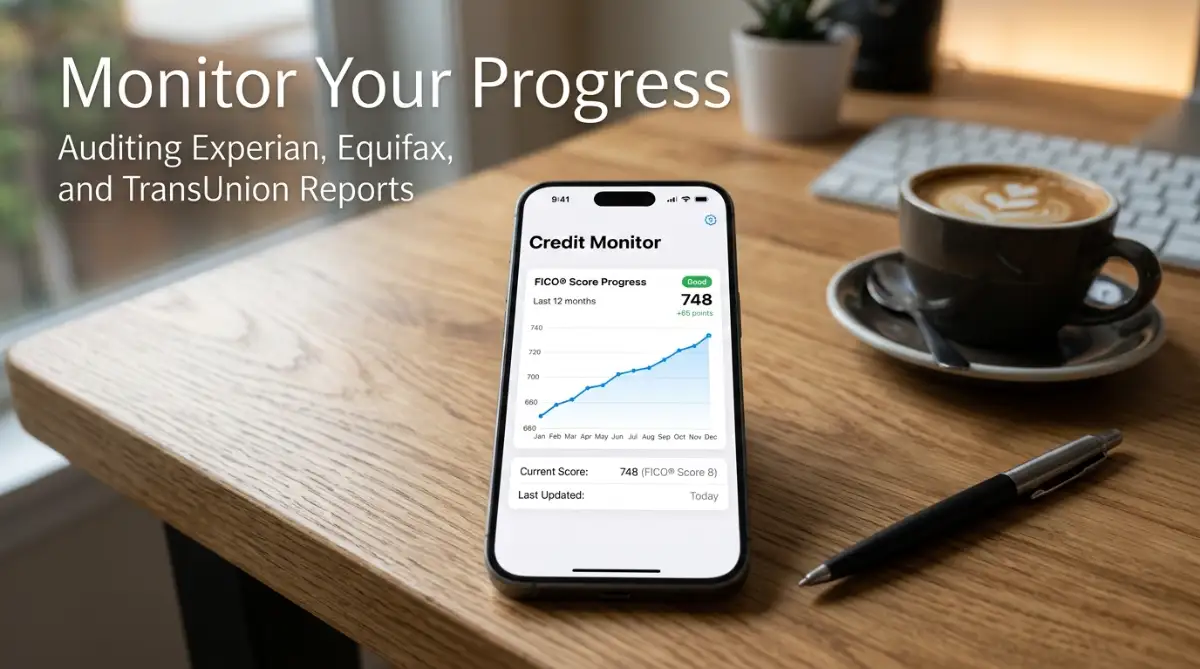
You should monitor your credit scores regularly using free credit tracking tools or services provided by your credit card companies. Watch how your score responds to your on-time payments and declining account balances. Celebrate the small milestones, such as crossing the six-hundred score threshold.
Be patient with the process, as rebuilding credit takes time and consistent effort. The bankruptcy mark will remain on your credit report for seven to ten years, but its negative impact fades over time. Your recent positive financial behavior will carry far more weight with lenders than past mistakes.
My personal realization during my recovery was that waiting for the bankruptcy to fall off my report before taking action was a massive mistake. I learned that actively building new, positive credit lines immediately after discharge is what actually dilutes the negative impact of the bankruptcy.
To help you understand the visual step-by-step process of cleaning up your credit report and disputing errors, watch this detailed guide.
Chapter 7 vs Chapter 13 Bankruptcy Credit Impact
The path to a full recovery looks slightly different depending on whether you filed under Chapter 7 or Chapter 13. A Chapter 7 bankruptcy completely liquidates qualifying debts and is removed from your credit reports ten years from the filing date. A Chapter 13 bankruptcy involves a court-approved repayment plan and is removed from your credit reports seven years from filing.
Because Chapter 13 involves repaying a portion of your debts over three to five years, lenders may view you slightly differently. However, both options give you the opportunity to start fresh and rebuild your FICO score immediately after discharge. The key is to remain consistent in your positive financial habits regardless of the chapter you filed.
The Importance of Credit Utilization Ratio
Once you obtain a secured credit card, your credit utilization ratio becomes a critical factor in your score recovery. This ratio represents the percentage of your total available credit that you are currently using. Keeping this ratio below ten percent is highly recommended for those looking to maximize your credit score gains.
For example, if your secured credit card has a limit of three hundred dollars, never let your outstanding balance exceed thirty dollars. Paying your bill before the statement closing date is a great way to ensure a low utilization ratio is reported to the bureaus. This simple habit shows lenders that you are not desperate for credit and can manage your limits wisely.
Deep-Dive: Disputing Errors Under FCRA Section 611
If you discover inaccurate information on your Equifax, Experian, or TransUnion reports, you must initiate a formal dispute. Under Section 611 of the Fair Credit Reporting Act, credit bureaus must conduct a reasonable investigation into your dispute. You should submit your dispute in writing and include copies of your official bankruptcy discharge paperwork.
Send your dispute letters via certified mail with a return receipt requested to establish a clear paper trail. Keep copies of everything you send, as well as any correspondence you receive back from the bureaus. If a bureau fails to correct or delete inaccurate information within thirty days, they may be in violation of federal law.
Direct Disputes with Creditors Under FCRA Section 623
In addition to disputing errors with the credit bureaus, you can also dispute inaccurate information directly with the creditor. Under Section 623 of the FCRA, data furnishers have an obligation to provide accurate information to the credit bureaus. Writing to the creditor's dispute department can often resolve reporting errors much faster than dealing with the bureaus alone.
Provide the creditor with the same evidence you sent to the credit bureaus, including your court discharge order. If the creditor agrees that the reporting is inaccurate, they must immediately instruct the bureaus to update your file. This double-pronged dispute strategy ensures that errors are corrected as quickly as possible.
Re-establishing Your Relationship with Traditional Banks
After bankruptcy, many major national banks may view you as a high-risk customer and reject your account applications. It is often beneficial to move your banking relationships to local credit unions or community banks instead. These smaller institutions tend to have more flexible lending criteria and a more personalized approach to customer service.
Opening a checking and savings account with a local credit union helps you build a new relationship history. Keep these accounts in good standing by avoiding overdrafts and maintaining a steady balance. Over time, the credit union may offer you credit cards or personal loans that larger banks would deny.
Navigating Housing and Rental Applications
Securing housing after bankruptcy is one of the most stressful challenges you will face. Many corporate apartment complexes use automated screening systems that automatically reject applicants with a bankruptcy history. To increase your chances, focus your search on private landlords who are willing to listen to your story.
Be prepared to show proof of stable income, a letter explaining your bankruptcy, and references from past landlords. Offering a larger security deposit or having a co-signer can also help ease a landlord's concerns. Demonstrating that your current financial habits are stable can overcome the negative mark on your credit report.
Avoiding Post-Bankruptcy Financial Pitfalls
As your credit score begins to rise, you will start receiving credit offers in the mail. Many of these offers will come from subprime lenders charging astronomical fees and high interest rates. It is important to avoid these predatory offers, as they can quickly drag you back into a debt trap.
Stick to your plan of using only secured cards and credit builder loans until your score is strong enough for prime cards. Read the fine print of every agreement carefully before signing or applying. Maintaining a disciplined approach to new credit is the key to protecting your hard-earned progress.
The Danger of Credit Repair Scams
You will also encounter numerous companies promising to erase your bankruptcy from your credit report overnight for a fee. These claims are entirely false, and these companies often use illegal methods that can get you into legal trouble. Nobody can legally remove accurate information from your credit report, so do not waste your money on these schemes.
You have the legal power to do everything a credit repair company does for free. By writing your own dispute letters and managing your accounts, you maintain full control over your recovery process. Taking charge of your own financial rehabilitation builds the confidence and knowledge you need for long-term success.
Preparing for Future Financial Milestones
Rebuilding your credit profile is not just about getting a credit card; it is about preparing for future milestones like buying a home. You can qualify for an FHA home loan as soon as two years after a Chapter 7 discharge, provided you have rebuilt your credit. This makes your daily credit rebuilding efforts highly valuable for your long-term family goals.
Keep your debt-to-income ratio as low as possible by keeping your student loan balances managed and avoiding new debt. Save diligently for a down payment, even if it is a small amount each month. Your consistent financial habits today are paving the way for homeownership tomorrow.
Final Thoughts on the Post-Bankruptcy Journey
Filing for bankruptcy is a difficult decision, but it is also a powerful tool for a fresh financial start. It allows you to wipe the slate clean and build a solid foundation for your financial future. By managing your remaining student loans and actively rebuilding your credit, you are taking charge of your life.
The journey requires patience, discipline, and daily commitment to your financial goals. Every on-time payment and corrected credit report error brings you closer to a strong FICO score. Your financial recovery is fully within your reach, and you have the tools to make it happen.
Accelerating Your Recovery Through Strategic Debt Restructuring
Once you have cleared the initial hurdle of cleaning up your credit report, you must tackle your remaining debt. If you are struggling with multiple loans, you might want to look into consolidating multiple educational advances to simplify your repayment strategy. This approach combines your outstanding loans into a single monthly payment, making your budget far more manageable.
It also gives you a chance to secure a fixed interest rate, which protects you from rising costs. When you consolidate, you can lock in a predictable schedule that prevents sudden payment spikes. This stability is incredibly valuable when you are working hard to build a steady financial foundation.
Utilizing Government Assistance and Forgiveness Options
If your remaining debt consists of federal student loans, you should check your eligibility for specialized relief programs. Working in public service, such as for a government agency or a non-profit organization, can open doors to significant financial relief. You can look into public service loan forgiveness qualification requirements to see if you can have your remaining balance wiped clean.
These programs are designed to reward community service by eliminating your debt after a set number of on-time payments. Even if your interest is growing right now, qualifying for forgiveness means that the growing balance will eventually be cleared. It provides a light at the end of the tunnel for borrowers who feel overwhelmed by compounding interest.
Additionally, you should explore how income-driven repayment plans can lower your monthly liability based on what you actually earn. These plans adjust your payments to a small percentage of your discretionary income, sometimes reducing them to zero. This keeps your accounts in good standing while you focus on raising your credit score.
Navigating the Mechanics of Compounding Interest
To master your post-bankruptcy recovery, you must understand exactly how your loan interest behaves. You might often wonder why borrowing money feels expensive even when you are actively trying to make regular payments. The secret lies in the way interest compounds and eats away at your hard-earned money before it ever touches your principal balance.
Many borrowers do not realize the difference between simple vs pre-computed interest models used by various lending institutions. Simple interest calculations work in your favor if you pay early, whereas pre-computed models lock in your total interest cost from day one. Knowing which model applies to your loans helps you plan extra payments more strategically to maximize their impact.
If your student loans use a daily simple interest model, making bi-weekly payments instead of monthly payments can save you thousands of dollars. By paying half of your monthly bill every two weeks, you make twenty-six half-payments, which equals thirteen full monthly payments a year. This small adjustment reduces the average daily balance of your loan, slowing down the speed at which interest accumulates.
Maintaining Long-Term Financial Strength and Health
Building a healthy credit score is not a one-time project; it is a permanent lifestyle change. You must commit to auditing your credit reports at least once every three months to catch any new errors early. Think of this process as a regular health checkup for your financial life.
As you build your savings, aim to transition from secured credit accounts to traditional, unsecured credit lines. Always call your secured card issuers after twelve months of on-time payments to ask if they can graduate your card and return your deposit. This progression shows that major financial institutions now trust you with traditional revolving credit.
Finally, treat credit cards as transactional tools rather than actual sources of extra money. Never charge an item to your card unless you already have the physical cash in your bank account to pay for it. This simple, strict rule guarantees that you will never fall back into the dangerous cycle of high-interest debt.
Dangerous Credit Traps to Avoid After Filing Bankruptcy
Rebuilding your credit profile requires careful navigation, as a single misstep can easily reset your progress back to zero. Many people fall into common traps out of desperation to raise their credit scores quickly. Understanding these pitfalls allows you to protect your hard-earned progress and avoid repeating past financial mistakes.
The first major mistake is rushing into predatory loans without reviewing the terms thoroughly. Subprime lenders often target post-bankruptcy individuals with offers that feature hidden fees and astronomical interest rates. You must utilize a strict guide before signing any binding financial contract to ensure you are not walking into a trap.
Signing a high-interest auto loan or an expensive personal loan can quickly overwhelm your monthly budget. If you cannot keep up with the payments, you risk defaulting again and severely damaging your newly rebuilt score. Always read the fine print and avoid any financial commitment that charges unreasonable setup fees or annual interest.
Carrying a Balance on Secured Cards
Another common error is believing that carrying a balance on your secured credit card helps build your score faster. This is a persistent myth that actually costs you money and hurts your credit score. Carrying a balance causes you to pay unnecessary interest, and it raises your overall credit utilization ratio.
Your FICO score benefits from showing active usage followed immediately by full payment before the statement due date. Paying your balance to zero every month proves to lenders that you can manage credit responsibly without carrying debt. It keeps your credit utilization low, which is one of the fastest ways to raise your score.
Applying for Too Much Credit at Once
Desperation often leads people to apply for multiple credit cards and loans in a short period. Each application triggers a hard inquiry on your credit report, which temporarily lowers your FICO score. Applying for too many accounts makes you look like a high-risk borrower who is desperate for cash.
Space out your credit applications by at least six months to keep your report clean and stable. This deliberate approach shows lenders that you are building your credit profile in a steady, planned manner. A patient strategy protects your credit score from unnecessary inquiry penalties.
Missing Payments on Active Accounts
Even a single missed payment on a new secured card or a surviving student loan can devastate your recovery efforts. A thirty-day late payment reported to the major bureaus can drop your credit score by dozens of points instantly. It tells future lenders that your post-bankruptcy financial habits have not truly changed.
Set up automatic payments for at least the minimum amount due on every single active account you own. This safeguard guarantees that you will never miss a due date because of a busy schedule or simple forgetfulness. Protecting your payment history is your absolute highest priority during credit rehabilitation.
Failing to Monitor Your Credit Reports Regularly
Many individuals make the mistake of assuming their credit reports will automatically update correctly after bankruptcy. In reality, credit bureaus and creditors make mistakes constantly, leaving old debts incorrectly marked as active. Failing to check your credit reports regularly means these errors will continue to quietly drag down your score.
Set a reminder on your calendar to check your credit files at least once every three months. Catching errors early allows you to dispute them quickly and keep your score on an upward trend. Consistently monitoring your files is the only way to ensure your report accurately reflects your hard work.
Your Blueprint for Lasting Financial Freedom
Rebuilding your financial profile after a bankruptcy is a journey that requires patience, consistency, and clear strategies. While the growing interest on your surviving student loans can feel discouraging, you now have the tools to manage it. Remember that bankruptcy is not a permanent failure; it is simply a tool to help you start over.
Every small action you take today—whether it is disputing a reporting error, keeping your utilization low, or negotiating terms—adds up over time. You are building a stronger, wiser financial version of yourself with every wise choice you make. The struggles of your past do not define where your financial future is headed.
Do not wait for your bankruptcy to fall off your record before you begin taking control of your financial destiny. Open your credit reports today, inspect every single detail, and start taking these practical steps to secure your life. You have the knowledge and the legal rights to make a full, successful financial recovery.