Verify your state’s DMV portal to see if your name is the only one listed as the owner
You finally made that last payment on your car loan, and you’re ready to celebrate. But what if I told you that your local credit union might still legally own a piece of your vehicle? It sounds wild, but it happens more often than you think due to simple paperwork slips. Let’s walk through why this happens and how you can get that clean title in your hands today. Imagine the feeling of pure joy when you make the final payment on your car loan. You have worked hard for years to own this vehicle outright. You wait by the mailbox for your car title to arrive, but weeks pass and nothing happens. When you finally call your credit union, they give you news that feels like a punch to the gut. Important They tell you they are keeping your car title.
Even though the car is paid off, they claim you still owe them money for an old credit card or a personal loan. This is the reality of a "dragnet clause" or cross-collateralization. It is a common practice that catches thousands of honest people off guard every single month. It turns your dream of ownership into a confusing legal nightmare that feels impossible to escape.
Why Finding a Clear Solution Feels So Impossible Today
Many people struggle to deal with this because the information available is often incomplete or too hard to understand. Here is why the search for answers is so hard:
- Hidden Language: These clauses are often buried on page 20 of a 40-page document that you signed years ago.
- Misleading Advice: Many "finance gurus" online only talk about banks, but credit unions operate under very different rules.
- Complex Legal Talk: Most websites use words that only lawyers understand, leaving regular people more confused than before.
- The "All or Nothing" Trap: Borrowers often think if they pay one loan, that specific asset is safe, which is sadly not always true.
- Lack of Transparency: Loan officers rarely explain these risks during the exciting moment when you are buying a new car.
The Emotional Weight of Being Trapped by Your Own Bank
This problem does more than just hurt your wallet; it attacks your mental peace. When you realize you don't actually own what you paid for, it can lead to a deep sense of betrayal.
- Loss of Control: You feel like you no longer have a say in your own financial future or your personal property.
- Constant Anxiety: Every time you use your credit card, you worry if it will somehow put your car or home at risk.
- Broken Trust: You trusted your local credit union to help you grow, but now they feel like an enemy holding your assets hostage.
- Fear of the Future: This uncertainty makes it hard to plan for big life events, like moving or starting a small business.
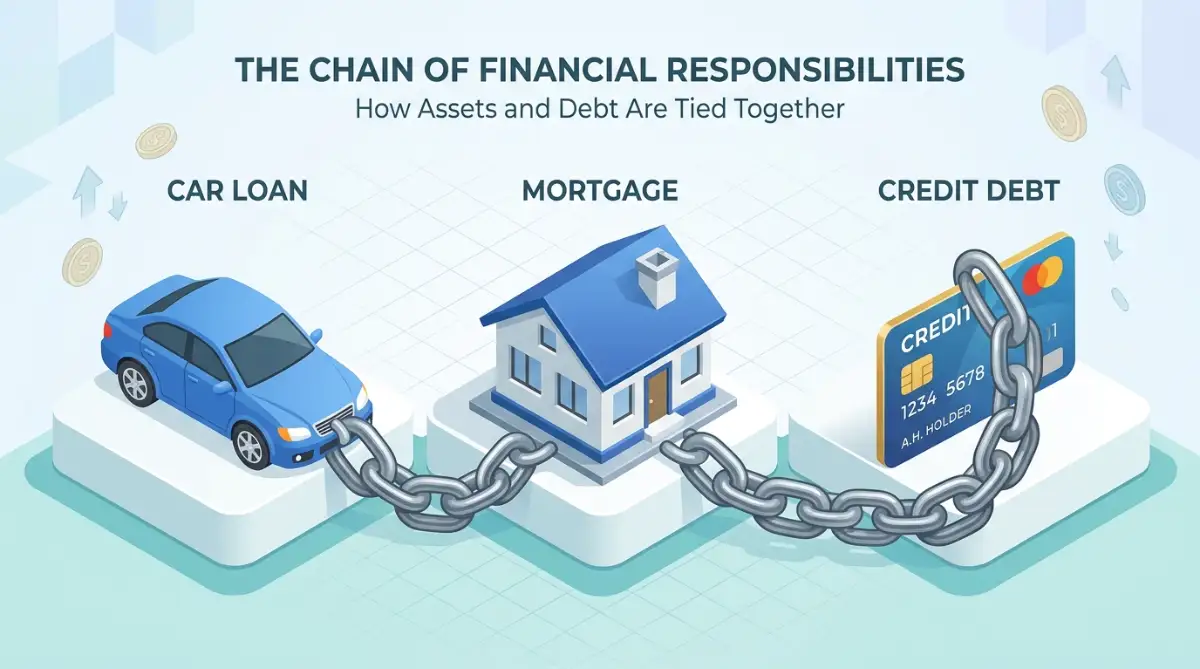
The truth is, credit unions use these clauses as a safety net for themselves, but it often becomes a trap for you. They link all your debts together into one giant ball of risk. If you fall behind on a small credit card payment, they can legally take your car, even if the car payments are perfect. This system is designed to protect the institution, not the member. Understanding how to fight back starts with knowing exactly what you signed and how the law views these "linked" loans.

Understanding the Mechanism: How Cross-Collateralization Actually Works
To beat the system, you must first understand the "how" and "why" behind it. Most credit unions include a small paragraph in their membership agreement or loan documents. This paragraph basically says that any property you use to secure one loan will also secure every other debt you have with them. This includes credit cards, personal lines of credit, and even overdrawn checking accounts.
For example, if you have a $20,000 car loan and a $5,000 credit card with the same credit union, the car is the "collateral" for both. In their eyes, you don't just owe money for the car. You owe $25,000 against that car. If you pay the car loan down to zero but still owe $5,000 on the card, they can refuse to release the lien on your car title. This keeps you from selling the car or trading it in until the credit card is paid off too.
Step 1: Conduct a Full Audit of Your Loan Paperwork
The first step to regaining your freedom is to find out exactly where you stand. You cannot fix a problem if you do not know the rules of the game you are playing. Go through your files and find your original "Security Agreement" and "Membership Agreement." You are looking for phrases like "cross-collateralization," "dragnet clause," or "all indebtedness." These words mean that the asset is tied to other debts. If you cannot find your paperwork, you have the right to ask the credit union for a copy of your signed loan docs.
Do not just look at the car loan papers. Often, the language that traps you is actually inside the credit card agreement or the general membership terms you signed when you first joined. Check every single document for "security interest" language. If you find these terms, do not panic. Simply knowing they exist is the biggest step toward making a plan to separate your debts.
Step 2: Isolate Your Secured Assets from Unsecured Debt
Once you know which assets are at risk, you need to think about how to separate them. The goal is to make sure your car or home is not "protecting" a credit card. Credit cards are usually "unsecured" debt at regular banks, but at credit unions, they often become "secured" through these clauses. One way to handle this is to avoid having all your financial eggs in one basket. If you have a car loan at Credit Union A, consider moving your credit card or personal loan to Bank B. Large national banks rarely use cross-collateralization for consumer credit cards. By moving the "unsecured" debt to a different place, you break the link between your car and your credit card balance.
If you are currently looking for a new loan, ask the loan officer point-blank: "Is this loan cross-collateralized with my other accounts?" If they say yes, ask if you can sign a "waiver of cross-collateralization." Some institutions will allow this if you have a high credit score or if you insist on it before signing. Always remember that you have the power to walk away before you put your pen to the paper.
Step 3: Strategically Direct Your Monthly Payments
If you are already in a situation where your debts are linked, you must be very smart about how you pay them. Not all debt is created equal when a dragnet clause is involved. Usually, people try to pay off the debt with the highest interest rate first. While this is normally good advice, it might be dangerous here. If your car is tied to a low-interest credit card, you might want to prioritize paying off that credit card faster. Why? Because as long as that card has a balance, your car is not truly yours.
Think of it as "buying back" your car title. Every dollar you put toward the linked credit card or personal loan brings you one step closer to actually owning your vehicle. If you run into financial trouble, always try to keep the "linked" accounts current first. If you default on a credit card that is cross-collateralized, the credit union can legally repossess your car, even if you never missed a car payment. This is a scary thought, but being aware of it helps you stay safe.
The Logic of the Credit Union System
You might wonder why credit unions do this if they are supposed to be "member-owned." The reason is simple: risk management. Credit unions are smaller than big banks. They need extra protection to make sure they don't lose money when a member cannot pay. By linking a car (which has value) to a credit card (which is just a promise to pay), they make sure they have something to sell if things go wrong.
However, just because it is legal does not mean it is fair for your specific situation. You have to be your own advocate. Understanding this logic helps you negotiate. If you want to sell your car but still owe money on a linked credit card, talk to them. Sometimes, if you have a good history, they might agree to a "partial release" of the lien if you pay a certain amount toward the other debt.
Protecting Your Peace of Mind for the Long Term
Living with the fear of asset seizure is not healthy. It creates a "financial fog" that makes it hard to see the road ahead. By following these steps, you are clearing that fog. You are moving from a place of "I hope they don't take my car" to a place of "I know exactly how my loans work."
This knowledge gives you back your power. You can sleep better knowing that you have a plan to untangle these complex agreements. In the next parts of this guide, we will look at how to handle these clauses during a bankruptcy or a total loss insurance claim. For today, focus on auditing your papers and understanding the links between your accounts. Your path to true ownership starts with the fine print you read today.
Stay focused on the goal. True financial health is not just about having money; it is about having security and knowing that what you have worked for is safe. Keep your records organized, ask hard questions at the branch, and never sign a document you don't fully understand. You are now on your way to navigating these complexities like a pro.
Common Traps That Can Ruin Your Financial Plans
Many people make the mistake of trusting the word "unsecured" when they apply for a credit card. At a normal bank, a credit card is usually a promise to pay with no assets tied to it. But at a credit union, the rules are different because of the membership agreement. You might think your card is safe, but the fine print says otherwise.
Ignoring the right of offset laws is another major error that can leave you broke. Credit unions have a legal right to take money from your savings or checking account if you miss a loan payment. They do not need a court order to do this because you gave them permission when you joined. If you keep your emergency savings in the same place you have your debt, you are at risk.
Imagine waking up on a Monday morning to find your checking account balance is zero. The credit union took your rent money to cover a past-due credit card payment. To avoid this, always keep your primary spending money at a different bank than where you have your loans. This "firewall" ensures that you can still pay for food and housing even if you have a dispute with your lender. A fourth mistake is relying on verbal promises from branch employees. A teller might tell you that your car will be paid off and the title will be sent in ten days. However, the computer system at the main office might flag your other debts and block the title release. Tellers often do not have the authority to override a cross-collateral clause, no matter how nice they are.
If an employee makes a promise, ask them to put it in an email or a printed letter. This gives you proof of the agreement if things go wrong later. Without a written document, it is your word against theirs, and the signed contract will always win in court. Being professional and asking for documentation is the best way to protect your interests. Trading in a car without checking your total payoff balance is also a recipe for disaster. Many people go to a dealership thinking they only owe five thousand dollars on their car. They pick out a new vehicle and start the paperwork. Then, the dealer calls the credit union and finds out the real payoff is ten thousand because of a linked credit card.
This surprise can kill the deal and leave you feeling embarrassed and frustrated. It might even lead to a drop in your credit score if the dealer has already run several credit checks. Before you go to a car lot, call your credit union and ask for a "Total Cross-Collateralized Payoff Statement." This number tells you exactly what it will cost to walk away with your title. Finally, never assume that loyalty or long-term membership will save you from these rules. You might have been a member for twenty years and known the staff by their first names. But the legal department and the automated systems do not care about your history. They only care about the contracts you signed, so treat every loan like a business deal, not a friendship.
Moving Toward Total Ownership and Freedom
The journey to owning your car and protecting your savings starts with a single step. You have already taken that step by learning how these complex agreements work. Most people never take the time to read the fine print, which puts them at a disadvantage. By staying informed, you are putting yourself in a position of strength. Start by looking at your current balances and identifying which ones are linked. If you find a connection, do not panic; instead, start planning your exit strategy. Whether it is refinancing your loan or paying down a specific credit card, every small action counts. You are building a wall around your assets that no bank can climb over.
We want you to feel a sense of pride and confidence in your financial choices. When you understand the "why" behind the bank’s rules, you can play the game better than they do. You deserve to have your car title in your hand without worrying about other debts holding it back. This is what real financial health looks like in the real world. Practice smart debt management strategies by keeping your accounts separated and your records organized. If you are looking for a new loan today, use your knowledge to negotiate better terms. Ask the loan officer to strike out any cross-collateral language before you sign the document. If they say no, you have the freedom to take your business elsewhere.
There is a great sense of peace that comes from knowing exactly where you stand. You no longer have to fear a surprise from your credit union or a blocked car title. You have the tools, the plan, and the mindset to be a successful owner. Your financial future is now in your own hands, and that is the best place for it to be. Take a few minutes this week to review your bank statements and loan docs. Use a highlighter to mark any terms that seem confusing and ask questions until you are satisfied. Your car and your money are too important to leave to chance. By being proactive today, you are ensuring a much smoother and happier tomorrow for yourself and your family.