

The Pain, Struggle & Reality
Let's be honest: looking at your student loan balance usually feels like staring into an abyss. You’re working hard, but that interest rate keeps climbing. Here’s the good news—you don’t need to be a financial genius or hire an expensive lawyer to navigate debt forgiveness. I’m going to show you exactly how to bypass the confusion and take control of your balance today.
You went to college to build a better life, but now it feels like you are being punished for getting an education. Every month, a huge chunk of your paycheck vanishes.
You cannot save for a house. You delay getting married or having kids. Even taking a simple weekend vacation feels like a financial crime.
What You Will Learn Today (At a Glance)
- How to check if your loans are federal or private in under 5 minutes.
- Why paying $0 a month can still count toward total debt cancellation.
- The exact forms you need to fill out to protect yourself from servicer mistakes.
- How to legally avoid the surprise "Tax Bomb" when your debt is finally wiped out.
Why Finding the Right Solution Feels Impossible
The "Fast-Track" Forgiveness Checklist
-
Verify Your Type: Only federal "Direct" loans qualify for most relief programs.
-
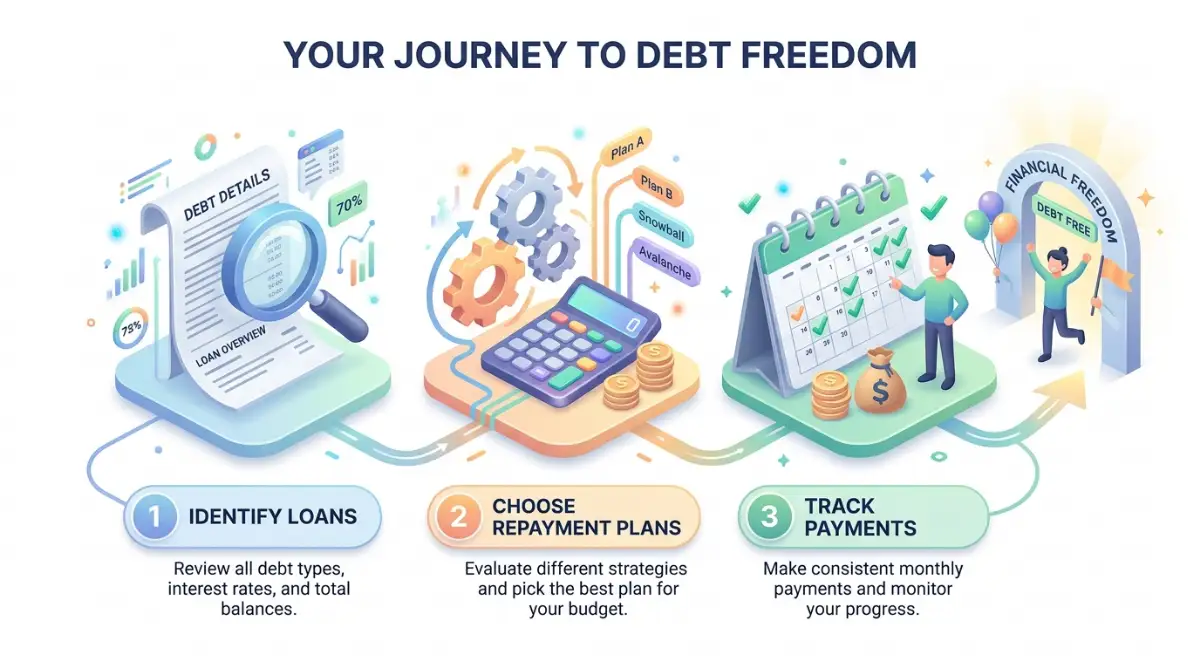
Switch to IDR: Move away from "Standard Repayment" to an Income-Driven plan to make your payments affordable.
-
Audit Annually: Don't trust the bank. Keep a physical folder of every payment and certification form.
-
Avoid the "Extra Pay" Trap: If you're on a forgiveness track, paying more than the minimum is usually a waste of your money.
Many people try to find a way out, but they end up hitting a brick wall. The internet is filled with broken promises and confusing legal jargon. Here is why so many hard-working people become victims of bad information:
- Confusing Government Websites: The official portals are incredibly hard to navigate. They use complex words that make you feel like you need a law degree just to understand your own debt.

- Constantly Changing Rules: The rules for debt relief change all the time. What worked yesterday might not work today, leaving you completely lost.
- Predatory Scams: Desperate people are easy targets. You might get robocalls promising "instant cancellation" for an upfront fee, which only steals your money and time.
- Incompetent Customer Service: You call your loan servicer for help, and you get three different answers from three different representatives. Nobody seems to know the actual truth.
- Hidden Deadlines: Missing a single, poorly advertised deadline can reset your progress by years. This forces you to start the whole painful process all over again.
The Hidden Mental Toll of Debt
- Severe Debt Fatigue: You feel like you are running on a treadmill that never stops. No matter how much you pay, the interest makes the balance grow higher.
- Imposter Syndrome: You have a great degree and a professional job, but you feel like a failure because you live paycheck to paycheck.
- Strained Relationships: Money is the number one cause of arguments. The constant stress about loan payments easily spills over into your family life.
- The "What If" Anxiety: You constantly worry about losing your job. If you miss just one paycheck, your entire financial foundation could collapse.
- Loss of Hope: After years of trying and failing to get clear answers, you start to believe that you will die with this debt. You stop planning for the future.

Section 2: Step-by-Step Educational Guide (Part 1)
I understand exactly how frustrating this feels. But I want you to take a deep breath.
There is a way out. Debt cancellation is real, and thousands of people achieve it by following a clear, logical path.
Step 1:
| Loan Feature | Federal Loan | Private Loan |
| Forgiveness Eligible | Yes | No |
| IDR Plans | Available | None |
| Interest Rates | Fixed/Government-backed | Market-based/Variable |
Bottom line: If your lender is a bank (e.g., Chase, Sallie Mae), you are likely paying out-of-pocket without hope for government forgiveness
You cannot fix a car if you do not know the exact make and model. The same rule applies to your student debt.
Most people fail to get relief simply because they have the wrong type of loan. There are many different types, and they do not all play by the same rules.
Federal vs. Private Loans
First, you must understand the difference between federal and private loans. The government provides federal loans, and they come with special protections. Private loans come from banks and usually do not qualify for government cancellation programs.
Myth vs. Fact: Know What You Owe
- The Myth: If a bank services my loan, it must be private.
- The Fact: Not true! Many federal loans are handled by private companies (like Mohela or Nelnet).
- Quick Test: If your loan name includes words like "Direct" or "Stafford," you have federal debt. If it says "Discover," "Sallie Mae," or "SoFi," it is a private loan.
How to Find Your Loan Details Today
Do not rely on your memory. You need cold, hard facts. Go directly to the official government student aid website. Log in using your credentials.
Once you are inside, download your student aid data file. You are looking for one specific word: "Direct".
If your loans say "Direct Subsidized" or "Direct Unsubsidized," you are in a great position. These are the golden tickets for most government cancellation programs.
What If You Have the Wrong Type?
If you see older loans like FFEL (Federal Family Education Loan) or Perkins loans, do not panic. You are not out of luck.
You can use a completely free process called Loan Consolidation. This basically groups your old, outdated loans into a brand new Direct Consolidation Loan.
Real-Life Scenario:
Imagine a teacher named David. He paid his loans for five years but realized they were older FFEL loans. None of those payments counted toward his public service cancellation.
Once David consolidated his loans into a Direct Loan, he was finally on the right track. Do not make David's mistake. Check your loan type tonight before you make another payment.
Step 2: Choose the Right Repayment Plan (The Strategy)
Quick Myth-Buster: Many borrowers think, "If I pay more, I get out faster." True, but if you're aiming for forgiveness, paying extra is a trap. It just means you’re funding a balance that the government is eventually going to cancel anyway. Focus on the minimum payment to keep your cash flow healthy.
Once you know you have the right loans, you need the right strategy. Paying the standard monthly bill is actually the worst thing you can do if you want cancellation.
Think of repayment plans like picking the right shoes for a marathon. If you wear heavy boots, you will never finish the race.
The Magic of Income-Driven Repayment (IDR)
To qualify for most cancellation programs, you must be enrolled in an Income-Driven Repayment (IDR) plan.
What does this mean? It means your monthly bill is based on your current salary and family size, not on how much money you owe.
How the Math Actually Works
Let us use a simple example. If you owe $100,000, a standard 10-year plan might demand $1,100 every month. That is impossible for most normal people.
But under an IDR plan, the government looks at your income. If you earn a modest salary, your new payment could drop to $150 or even $0 a month.
Yes, a $0 payment can legally count as a qualifying payment toward your cancellation! This is a massive secret that loan servicers rarely explain clearly.
Selecting the Best IDR Option
There are several different IDR plans available. The names might sound like a weird alphabet soup: PAYE, IBR, and SAVE.
Real-World Update: Right now, the new SAVE plan is facing legal battles in court, which means the rules might shift again. If you feel stuck, your best bet is to call your loan servicer directly and ask, "Which IDR plan is currently accepting applications and offers me the lowest monthly payment based on my tax return?"
You do not need to guess which one is best. The government website has a free Loan Simulator tool.
You simply type in your salary, your tax filing status, and your family size. The tool does the math for you instantly. It will show you exactly which plan gives you the lowest possible monthly payment.
Actionable Advice for Today:
Log into your servicer's website. Look at your current plan. If it says "Standard Repayment," you need to switch immediately. Apply for an IDR plan right now to ensure every future payment moves you closer to freedom.
Step 3: Track Your Eligible Payments Relentlessly (The Execution)
Now you have the right loan and the right payment plan. The next step is execution. You must track your progress like an auditor looking for missing money.
Many cancellation programs require a specific number of payments. For example, some public service programs require exactly 120 payments.
The Danger of Blind Trust
The biggest mistake you can make is trusting your loan servicer to keep accurate records. They make mistakes all the time.
If you blindly trust their computer systems, you might find out years later that half of your payments were not counted.
What Counts as a Qualifying Payment?
A payment only counts if it meets three strict conditions.
First, it must be made under a qualifying IDR plan. Second, it must be the exact full amount shown on your bill. Third, it must be paid on time, usually within 15 days of the due date.
If your bill is $50, and you pay $49.99, the computer will reject it. That entire month will be wasted.
The Annual Certification Habit
If your cancellation program is tied to your job, you must prove your employment. This is done through an Employment Certification Form.
Do not wait until you have made 10 years of payments to submit this form. That is incredibly dangerous. What if your old boss retires or the company goes bankrupt? You will never get those signatures.
Instead, you need to submit this form every single year.
Create a Personal Audit Folder
Set a reminder on your phone for the same day every year. Print the form, get your HR manager to sign it, and upload it immediately.
Furthermore, you should keep your own paper trail. Create a physical folder in your house.
Every time you make a payment, print the confirmation screen. Every time you submit a form, save a copy.
If the loan company ever tries to say you missed a payment, you can open your folder and prove them wrong instantly. You must become your own best advocate.
Real-Life Analogy:
Think of this like keeping receipts for a massive tax refund. You would never throw away a receipt that is worth thousands of dollars. Treat your loan payment confirmations with the exact same level of respect and care.
(This marks the end of Part 1. You are now equipped with the first three foundational steps to reclaim your financial future. In the next part, we will cover the advanced steps to secure your final approval.)
ection 3: Advanced Practical Tips & Pro-level Secrets (Part 2)
Step 4: Master the Art of Income Recertification
Most people think they just sign up for an Income-Driven Repayment (IDR) plan once and forget it entirely. That is a massive trap. You are legally required to recertify your income and family size every single year.
If you miss this specific deadline, your payment amount will automatically jump back up to the standard 10-year plan. Imagine getting a bill for $1,200 when you were only paying $50. That sudden shock can completely ruin your monthly budget and put you behind on rent or groceries.
To prevent this disaster, you need a bulletproof personal system. Treat your recertification date like a major holiday. Set three different alarms on your phone calendar a full month before the actual due date.
Real-Life Scenario: The Hidden Marriage Penalty
Let us talk about a real-life situation that catches many young professionals off guard. Sarah and John got married. Sarah had a mountain of student debt, while John had none.
When they filed their taxes jointly as a married couple, the government combined their incomes. Sarah’s monthly loan payment suddenly tripled because her total household income looked much higher on paper.
Here is the pro-level secret to avoid this painful mistake. If you are married and on an income-driven plan, you might want to file your taxes separately. Yes, you might miss out on a few traditional tax breaks.
However, keeping your loan payment extremely low usually saves you much more money in the long run. Always sit down with a certified tax professional to run the exact math for both scenarios before you file.
Step 5: Prepare for the "Tax Bomb" Trap Early
Here is a dark secret that many loan servicers hide deep in the fine print. When your debt is finally forgiven, the IRS might treat that canceled amount as taxable income.
Imagine having $50,000 forgiven after twenty years of hard work. You feel completely free, right? But then, tax season arrives. The government might say you suddenly owe taxes on that "free" $50,000, leaving you with a surprise bill for thousands of dollars.
Some specific programs, especially those tied to public service jobs, are completely tax-free. But standard income-driven cancellation often comes with this heavy, unexpected tax burden.
How to Protect Your Future Financial Health
You must plan for this potential tax bomb today. Do not wait until your balance hits zero to start panicking.
Start a simple, high-yield savings account right now. Name it your "Tax Bomb Fund." Even if you only put $20 or $30 in there every month, it will grow steadily over the years. By the time your debt is canceled, you will have enough cash to hand the IRS without breaking a sweat.
The Professional Guide to Long-Term Maintenance
Achieving a zero balance is a marathon, not a quick sprint. To maintain your good standing, you need absolute consistency and organization.
First, make your payments using an auto-pay system so you never miss a deadline by accident. This simple habit also usually gives you a small discount on your interest rate.
Second, check your official loan portal at least once every three months. You want to verify that every single payment is logging correctly on their end.
Finally, take screenshots of your qualifying payment count every quarter. Back these images up to a secure cloud drive. If their computer system ever crashes, your personal records will save your progress.
Section 4: Common Mistakes to Avoid (The Pitfalls)
Now that you know the advanced strategies, we need to talk about the danger zones. The road to zero debt is filled with hidden traps. Falling into these traps can add thousands of dollars to your balance and delay your ultimate freedom.
Here are the five biggest mistakes people make and how you can dodge them easily.
Mistake 1: Paying Extra to "Get Ahead"
This sounds completely backwards, but paying more than your required monthly bill is a terrible idea if you want cancellation.
Let us say your required IDR payment is $100, but you decide to pay $150 to act responsibly. The computer system gets highly confused. It might push your next due date back, putting your account into a strict "paid ahead" status.
When you are in a paid ahead status, your future monthly payments might not count toward your forgiveness total. You basically throw your money away and freeze your progress completely. Always pay the exact penny of the amount due on your statement.
Mistake 2: Ignoring Messages From Your Servicer
We all hate getting emails from debt companies. Your first instinct is to delete them or throw physical letters directly in the trash. This is a massive error that costs people dearly.
Loan servicers change constantly. The government might transfer your entire account from one company to another completely randomly. When this happens, your auto-pay might get canceled without you even realizing it.
If you ignore their letters, you will eventually miss a payment. Missing a payment breaks your perfect streak and puts your account in default. Open every single piece of mail. Treat their letters like urgent notices from your boss.
Mistake 3: Putting Loans in Forbearance When Broke
Life happens to everyone. Maybe you lose your job, or your car needs a massive repair. You call your loan company in a panic, and they quickly offer to put your loans in "forbearance."
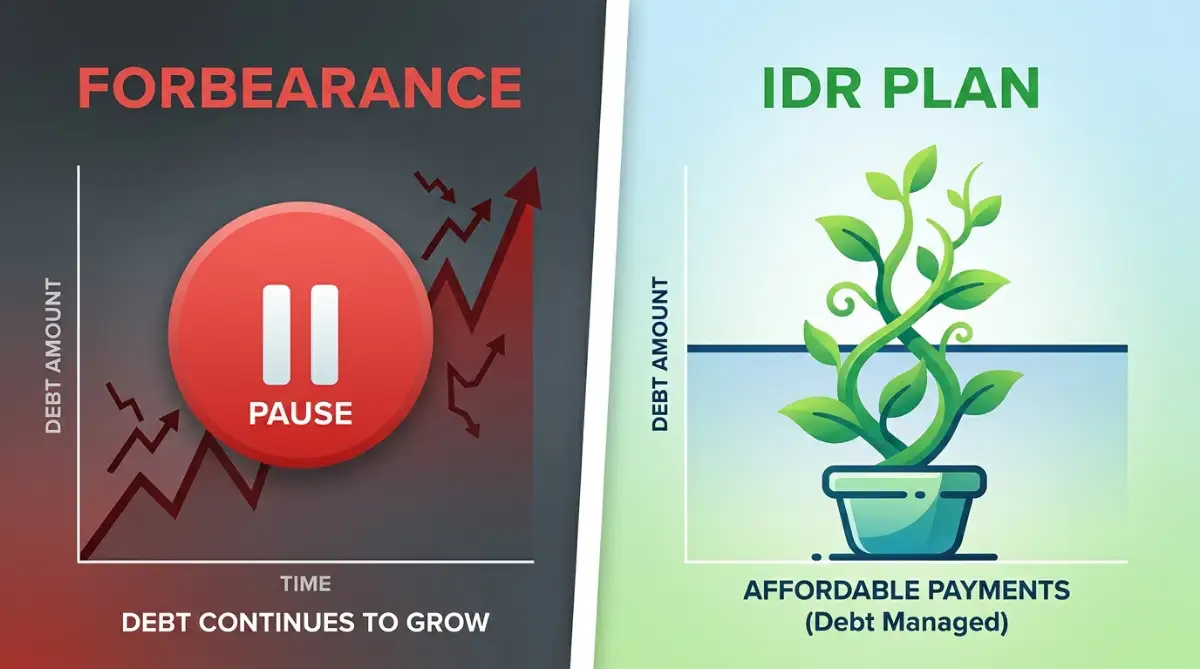
Forbearance pauses your payments, which sounds like a huge relief at first. But it is actually a dangerous financial trap. During forbearance, your interest continues to grow wildly in the background.
Worse, none of the months you spend in forbearance will count toward your cancellation timeline. You are just wasting precious time.
Instead of taking a forbearance, instantly apply to recalculate your IDR payment. If you lost your job, your new income is zero. That means your legally required payment will drop to exactly $0. A $0 payment keeps you in good standing and still counts toward your final goal!
Mistake 4: Believing Private Loans Qualify for Federal Relief
I see this heartbreaking mistake all the time. Hard-working people spend years hoping the government will wipe out their private loans.
Let me be completely clear on this point. Federal cancellation programs do not apply to loans from private banks or credit unions. If you refinanced your federal loans with a private company to get a lower interest rate, you permanently lost your right to federal forgiveness.
If you have private loans, your best strategy is aggressive repayment. Do not waste time waiting for a magical government bailout that legally cannot happen for private debt. Focus on increasing your income and paying those private balances off yourself.
Mistake 5: Forgetting to Update Your Family Size
Your family size directly impacts how much you are forced to pay every single month. The more dependents you have, the lower your monthly bill will naturally be.
However, the loan company does not automatically know when you have a baby. They do not know when you take in an elderly parent who depends on you financially. If you do not actively update this vital information, you will overpay every single month.
Any time your household grows, log into the official student aid website. Update your personal details immediately. This simple five-minute task can drop your monthly payment by hundreds of dollars.
Section 5: Final Conclusion & Actionable Takeaways
You are now heavily armed with the exact knowledge you need to beat the system. Student debt does not have to be a lifelong curse that ruins your happiness. It is simply a math problem, and you now hold the exact formula to solve it.
Let us quickly review your ultimate action plan to ensure your success:
- Find out exactly what type of loan you hold right now by checking the official government portal.
- Consolidate older loans immediately if you need to access the most modern cancellation programs.
- Get on an Income-Driven Repayment plan today to drop your payment to an affordable level.
- Never pay a single penny more than your exact monthly bill requires.
- Recertify your income and household size every single year like clockwork.
- Keep a physical and digital paper trail of every form you submit and every payment you make.
Your Next Steps to Freedom
Take a deep breath and let go of the heavy shame or stress you feel about your debt. Millions of wonderful, hard-working people are in the exact same boat as you. But unlike most people, you are now taking active control of your financial destiny.
Open up your laptop today. Log into your account and check your true loan status. Make the necessary changes to your repayment plan.
Every small action you take today brings you one step closer to that beautiful moment when your balance finally hits zero. You absolutely have the power to reclaim your life, your paycheck, and your total peace of mind. Let today be the day you start fighting back!