
The Heavy Burden of an Upside-Down Auto Loan
How to Escape the Debt Trap
-
Know Your Number: Get a 10-day payoff quote and compare it to the real market value (Kelley Blue Book).
-
Target the Principal: Any extra cash must be labeled as a "principal-only" payment to stop interest growth.
-
Avoid the Rollover: Never let a dealer roll your old debt into a new car loan—it’s the fastest way to stay broke.
-
Get Protected: Use GAP insurance (bought through your own insurance, not the dealer) to cover you while you pay down the balance.
I know that gut-wrenching feeling when you check your loan balance and realize you owe thousands more than your car is worth. It feels like you're paying for a ghost—a vehicle that’s losing value while your debt stays stubbornly high. The good news? You aren't permanently trapped. Let’s walk through a simple, no-nonsense plan to flip that negative equity and finally own your ride, not just the debt.
You are certainly not alone in this difficult fight. Millions of hardworking people face this exact same challenge every single day.
Why do so many drivers fail to find a clear way out? The internet is full of terrible financial advice. Misinformation keeps you stuck in a painful cycle of debt. Here is exactly why most people struggle to find real solutions:
- Dealership Rollover Tricks: Salespeople often suggest rolling your old debt into a brand-new car loan. This just creates a much larger debt mountain that you have to climb later.
- Quick-Fix Scams: Sketchy websites promise to magically erase your auto loan balance overnight. These are almost always dangerous scams designed to steal your hard-earned money.
- Confusing Bank Terms: Lenders use complicated words like "loan-to-value ratio" and "amortization schedules." This completely confuses everyday buyers who just want a simple, honest answer.
-
Myths vs. Reality
- Ignoring Rapid Depreciation: Many people do not realize a brand-new vehicle loses about 20% of its value the second it leaves the lot. You start the race far behind from day one.
- Trusting the Wrong Advisors: Taking advice from friends who are also drowning in debt rarely works. You need proven, logical strategies from real financial experts.
- Constant Financial Anxiety: You panic every time a minor check engine light comes on on your dashboard. You know you cannot afford expensive repairs, and you cannot afford to trade the car in either.
- Strained Family Relationships: Arguments about money become a daily routine at the dinner table. The quiet stress of hidden debt slowly ruins family harmony.
- Shattered Self-Confidence: You feel like you made a terrible financial mistake by signing that contract. This heavy guilt makes you afraid to make any future investments or purchases.
- Feeling Entirely Trapped: Knowing you cannot upgrade your family vehicle when a new baby arrives leaves you feeling completely powerless.
- Sleep Deprivation: You lie awake at night wondering what happens if the car gets totaled in an accident. The fear of getting a tiny insurance payout keeps you tossing and turning.

-
🚗 Quick Action Guide: Beating Negative Equity
-
Find the Gap: Call your lender for a 10-day payoff quote, then compare it to your car's true Kelley Blue Book value.
-
Attack the Principal: Send any extra cash directly to your loan's "principal balance" to kill the interest faster.
-
Skip the Rollover: Never trade in an underwater car just to roll the debt into a newer, more expensive loan.
-
Protect Yourself: Get GAP insurance immediately so a random car crash does not bankrupt you while you pay down the debt
-
Your Proven Blueprint to Break Free from Auto Debt
We are going to walk through a logical, step-by-step process to get you out of this mess. You do not need a degree in finance to understand this. You just need a little bit of discipline and the right action plan.
Below are the most practical, mathematically proven steps you can take starting today.
Phase 1: Uncover Your True Financial Reality
Check out this simple guide to understand exactly how to calculate your negative equity and stop the interest from eating away at your wallet.
You cannot fix a problem if you do not know exactly how big it is. Your very first step is to uncover the hard numbers behind your auto loan. Most people guess how much they owe, and they are usually wrong.
Let us look at a real-life example. Think about a guy named David. David assumed he was only $2,000 underwater on his sedan.
He avoided looking at his bank statements because of anxiety. When he finally checked his exact numbers, he realized he was actually $5,500 in the red.
While that number hurt to see, it finally gave him a clear target to aim at. You must do exactly what David did.
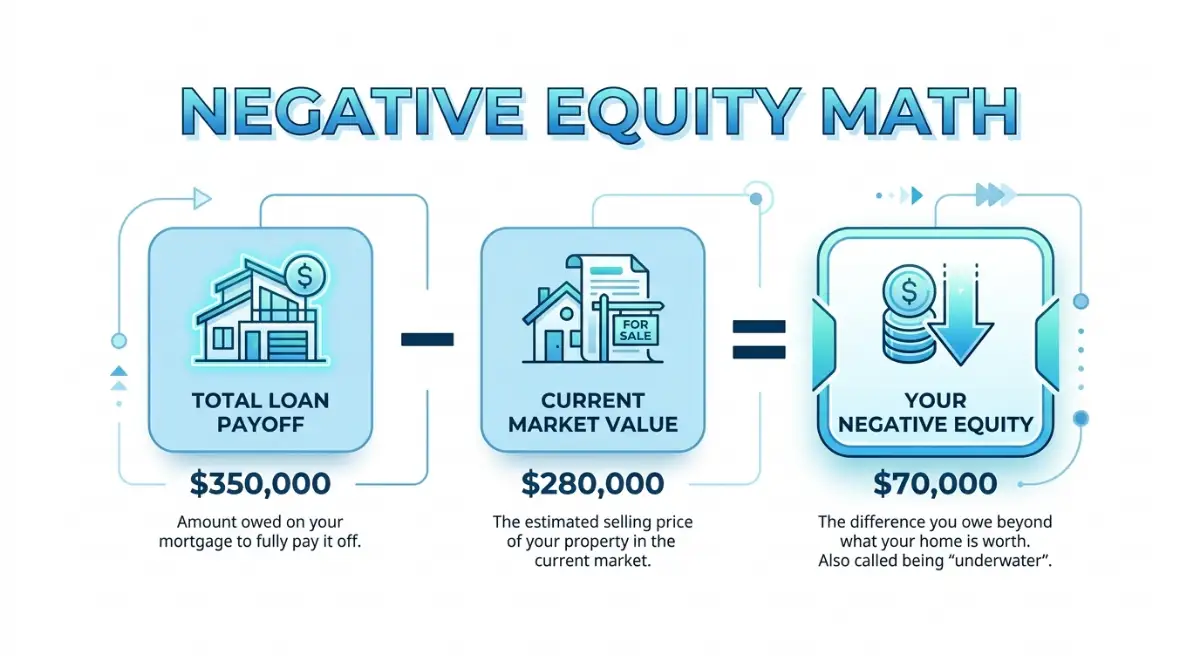
First, call your lender or log into your online banking portal. Ask for your current 10-day payoff quote. This is the exact amount of money it takes to close the account completely today.
Once you have your payoff number, you need to find out what your car is actually worth on the open market. Do not guess this number based on what you paid for it.
Go to websites like Kelley Blue Book or Edmunds. Enter your car's exact year, make, model, and mileage.
Be brutally honest about the condition of the vehicle. If it has scratches or a worn-out interior, select "fair" condition, not "excellent."
Now, subtract the value of your car from your 10-day payoff quote. The negative number you see is your exact negative equity. This is the monster we are going to defeat.
Phase 2: Attack the Principal Balance Aggressively
For a long time, I just paid my regular bill and wondered why my balance barely moved, but I realized that specifying "principal-only" payments is the real game-changer. Once I started adding just a little extra money directly to the principal every payday, the progress became addictive, and the "monster" debt finally started shrinking.
Now that you know the exact size of the problem, we need to attack it with everything we have. The science behind paying off debt relies heavily on how interest works.
Car loans are typically front-loaded with interest. This means during the first few years of your loan, most of your monthly payment goes toward bank profit, not the actual car.
Think of your auto loan like a giant tree in your backyard. The interest is just the leaves and small branches. The principal balance is the thick, heavy trunk of the tree.
If you only pay your minimum monthly payment, you are just trimming the leaves. The tree will never actually fall down. You have to take an axe directly to the trunk.
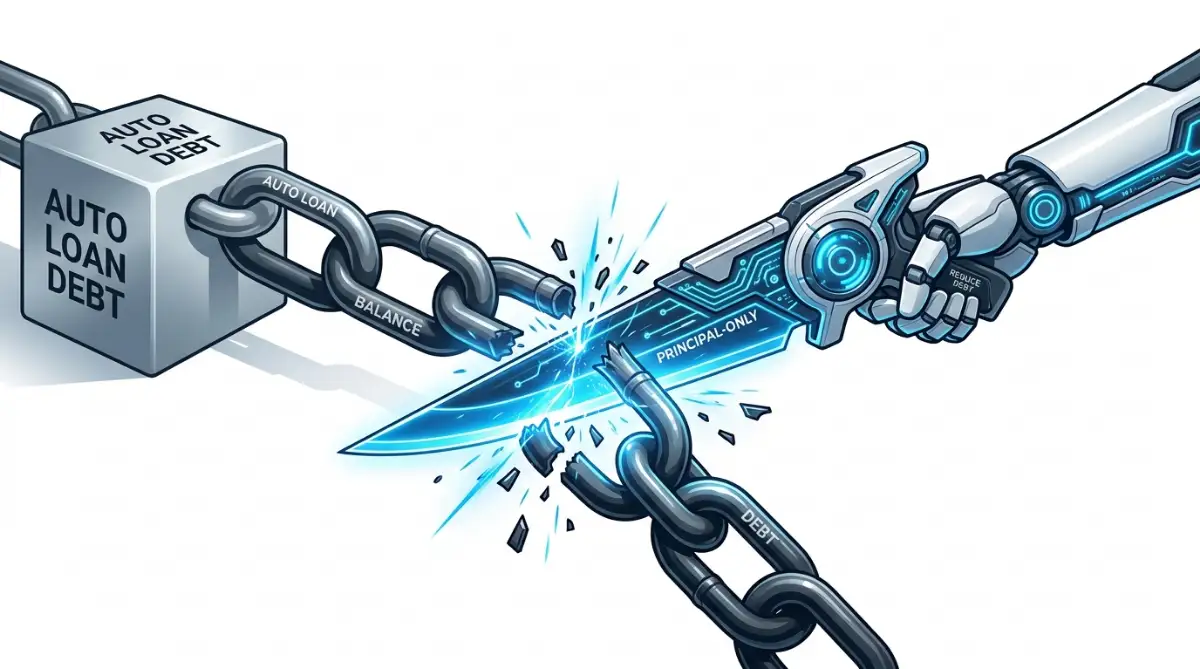
You do this by making extra principal-only payments. This is the secret weapon to beating an underwater loan.
Every time you get a bonus at work, a tax refund, or birthday cash, throw it directly at your car loan. Call your bank and clearly state that this extra money must go toward the principal balance.
If you do not specify this, the bank might just apply it to your next month's regular payment. That does not help you beat the interest game at all.
Another incredibly powerful method is the bi-weekly payment hack. Instead of paying your full car bill once a month, divide the payment in half. Pay that half-amount every two weeks.
Because there are 52 weeks in a year, you will naturally make 26 half-payments. This equals 13 full monthly payments in a year instead of 12.

You just made an entire extra payment without even feeling the squeeze in your monthly budget. This mathematical trick shaves months off your loan and builds equity much faster.
When you make that extra principal-only payment, always log into your bank’s portal or call their automated system. If you just pay extra via a standard transfer, some banks will simply apply it to "next month’s due date" rather than hitting the principal. Make sure you select "Principal Only" or speak to a rep to confirm it hits the loan balance directly.
Phase 3: Optimize Your Loan Through Strategic Refinancing
Sometimes, attacking the principal is simply not enough on its own. If you have a terrible interest rate, you are fighting a losing battle.
This is where refinancing comes into the picture. Refinancing means replacing your current bad loan with a brand-new loan that has better terms.
Let us use a practical scenario to explain this. Imagine you bought your car three years ago when your credit score was very low. The dealership hit you with an awful 12% interest rate.
Since then, you have paid all your bills on time and your credit score has gone up significantly. You are now in a great position to ask a new bank for a much lower rate.
If you can drop your interest rate from 12% down to 6%, a huge chunk of your monthly payment suddenly goes toward the principal. You stop giving away free money to the bank.
However, refinancing an underwater car can be a little bit tricky. Traditional banks hate taking on negative equity.
This is where local credit unions become your best friend. Credit unions are community-focused lenders. They are often much more willing to refinance a loan that has higher negative equity compared to a massive national bank.
If you manage to secure a refinance, you must keep your loan term as short as possible. Do not stretch the new loan out to 72 or 84 months just to get a lower monthly payment.
Stretching the loan out is exactly how you get trapped in negative equity in the first place. You want to aim for a 36-month or 48-month term at the absolute maximum.
You will also need to heavily consider Gap Insurance during this transition. Gap insurance covers the difference between what your car is worth and what you owe if you get into a major car accident.
If your car is completely totaled tomorrow, standard insurance only pays out the current market value of the car. You would personally have to pay the remaining thousands of dollars out of pocket.
Wait, what if I literally can't afford GAP Insurance right now?
I hear you—money is already tight. But here is a quick tip: do not buy GAP insurance from the dealership (they mark it up like crazy). Call your current auto insurance provider instead. Adding GAP coverage through your standard auto policy usually only costs a few extra bucks a month, and it can save you from a massive $10,000 bill if someone rear-ends you on the highway.
Gap insurance protects you from this financial disaster while you aggressively work to pay down the balance. It offers ultimate peace of mind while you execute your debt-escape plan.
Scaling Your Financial Freedom: Advanced Tactics
Now that you have mastered the basics of debt tracking and principal payments, it is time to look at advanced strategies. These methods require more discipline but provide a much faster route to zero balance.
Leveraging Private Selling for Higher Returns
Most people trade in their car at a dealership because it is convenient. You hand over the keys and sign papers in thirty minutes. However, dealerships offer the lowest possible price for your trade-in because they need to resell it for a profit.
If you sell your vehicle to a private party, you can often get 15% to 20% more cash. This extra profit can be applied directly to your loan balance.
Always check your local laws regarding private sales and lien releases. You might need to meet the buyer at your bank so the loan can be paid off on the spot. This level of transparency builds trust with the buyer and protects you from future liability.
Mastering the Art of Lifestyle Adjustments
Temporary sacrifices are the price you pay for long-term freedom. You might consider pausing high-cost subscriptions, dining out less, or carpooling to save on fuel and wear.
Track every penny for one full month. You will be shocked at how much "hidden" money disappears into small, daily habits. Redirecting that cash to your auto loan is like putting your debt on a crash diet.
Remember, this is not a permanent change to your life. You are simply tightening the belt until the negative equity is gone. Once you reach the break-even point, you can celebrate and slowly return to your normal routine.
Automating Your Debt Payoff Journey
The biggest enemy of progress is human forgetfulness. If you rely on your willpower to make extra payments, you will eventually skip a month. Set up an automatic transfer from your checking account to your loan account on payday.
Even if it is just an extra fifty dollars, the consistency wins every time. Treat this payment like a fixed bill, such as your electricity or phone service. By automating the process, you remove the choice from the equation.
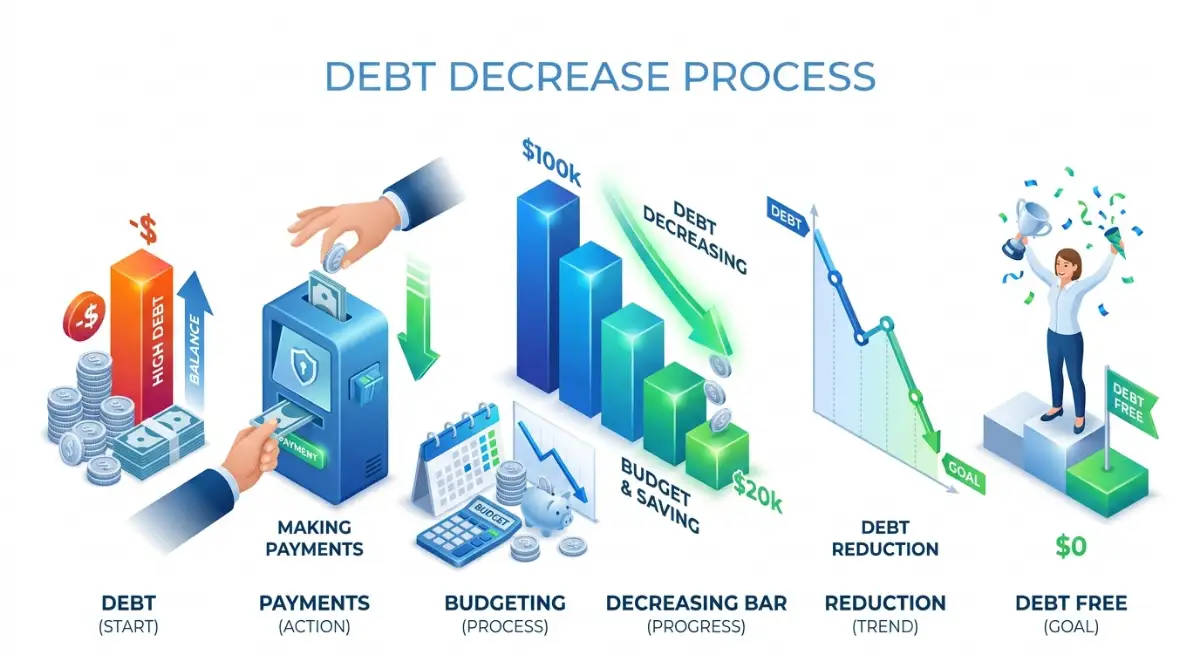
Over the course of a year, these small, automated chunks grow into a massive reduction of debt. You will see the principal balance drop faster than you ever thought possible.
Dangerous Traps That Keep You Underwater
It is easy to get impatient when you are trying to fix a bad loan. Many people make impulsive decisions that sound like solutions but are actually traps. Avoiding these five common mistakes will save you from sinking deeper.
1. Rolling Negative Equity into a New Loan
This is the most common and damaging mistake people make. The dealer tells you, "We will just add your old debt to the new car loan." You end up driving a new car, but your debt is now even larger than before.
You are now even further underwater on the new vehicle. Never hide your old mistakes inside a new, larger loan contract.
2. Choosing Longer Loan Terms
Banks love to offer 84-month or 96-month loans to lower your monthly payment. A smaller payment feels like a relief in the short term. However, you are paying interest for an extra three or four years.
Your car will lose value much faster than you can pay it off. This guarantees you will stay in negative equity for almost the entire life of the loan.
3. Skipping Routine Maintenance
You might think that saving money on oil changes helps your budget. In reality, a poorly maintained car loses market value at a staggering rate.
Keep your service records organized. When you are finally ready to sell, a well-documented car fetches a much higher price. This helps you bridge the gap between your loan balance and the car's resale value.
4. Avoiding Market Research
Many people rely on the dealer's valuation of their car. Always verify the value yourself using independent online tools. Do not let someone else define what your car is worth.
Knowledge is your strongest weapon in any negotiation. If you do not know the market price, you are essentially flying blind.
5. Ignoring Insurance Coverage Gaps
Many drivers assume their regular insurance will cover everything. If your car is stolen or totaled, your insurance pays the current market value, not your loan amount.
If you have a loan balance of $20,000 but the car is worth $15,000, you are responsible for the $5,000 difference. Never drive a high-balance loan without proper coverage.
Walking Toward a Debt-Free Future
Beating negative equity is not about luck; it is about taking control of your financial math. You have the tools and the strategy now. Start by checking your numbers, then choose your path to pay down the principal.
The path to freedom is paved with small, consistent actions. Do not get discouraged if the progress feels slow at first. Every extra dollar you pay is a victory against the interest that keeps you trapped.
Getting out of an underwater loan is one of the most rewarding financial wins you can ever achieve, and I promise it feels amazing once that final payment is made. Start taking these small, consistent steps today, and before you know it, you will finally own your vehicle completely free and clear.
You have the power to turn this situation around. Start today, stay focused, and keep moving toward that zero-balance finish line. You deserve to own your car free and clear.