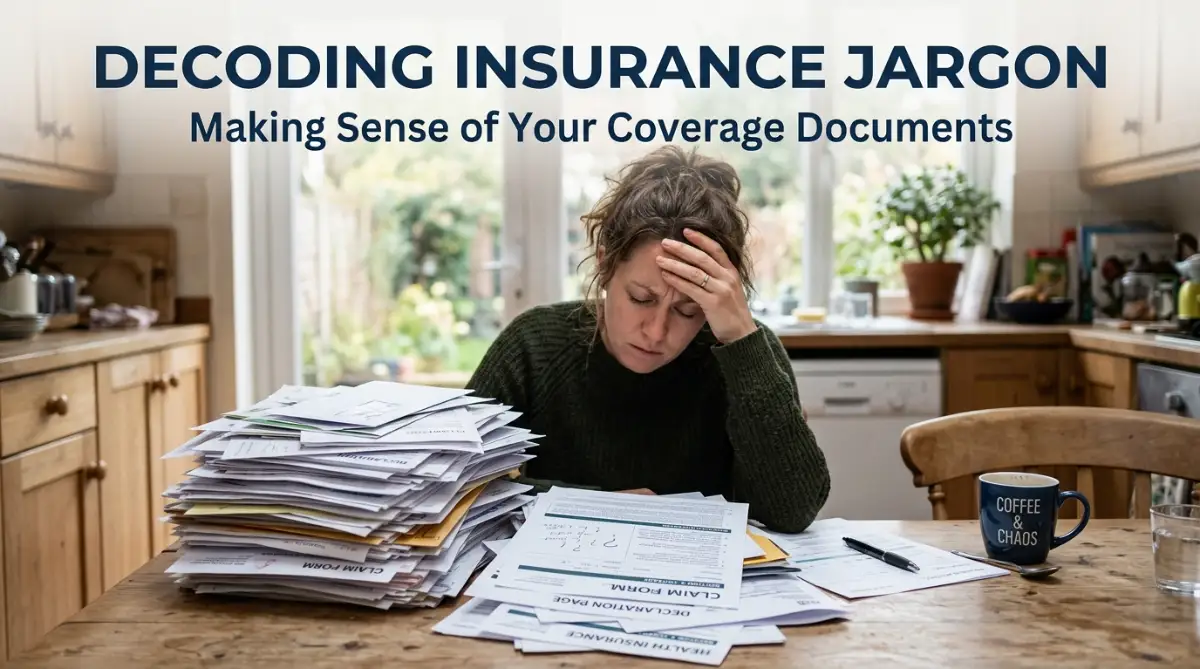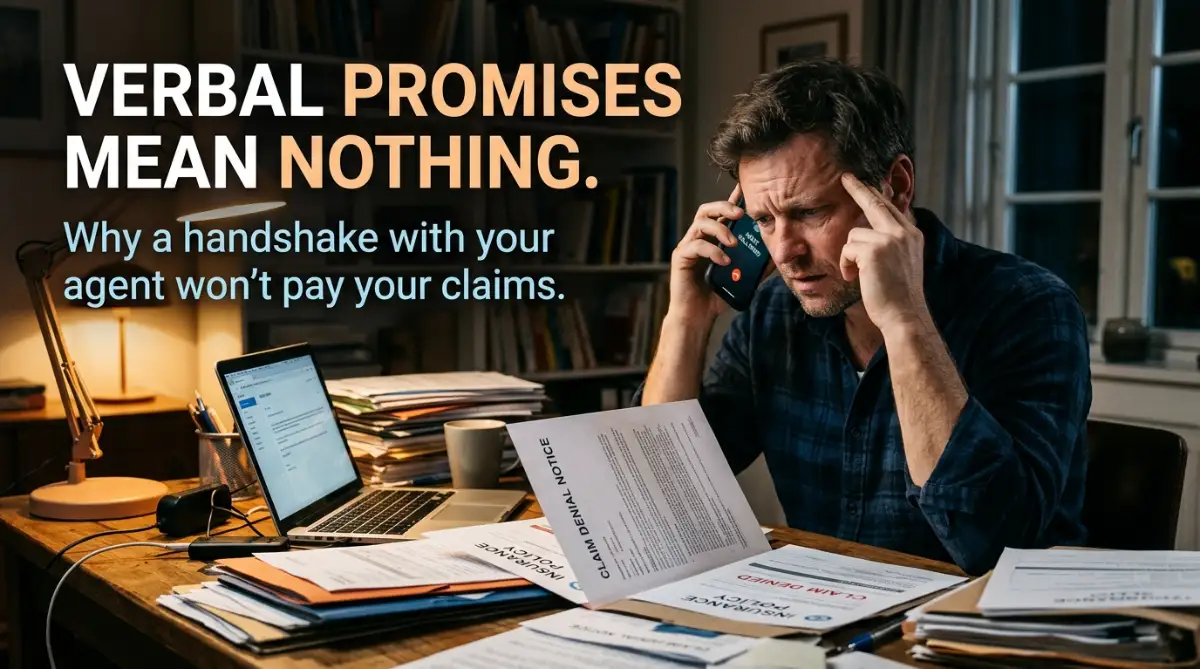
The Handshake That Nearly Destroyed My Finances
I clearly remember sitting across from a friendly agent who smiled and promised my family would be fully covered for any sudden home water damage.
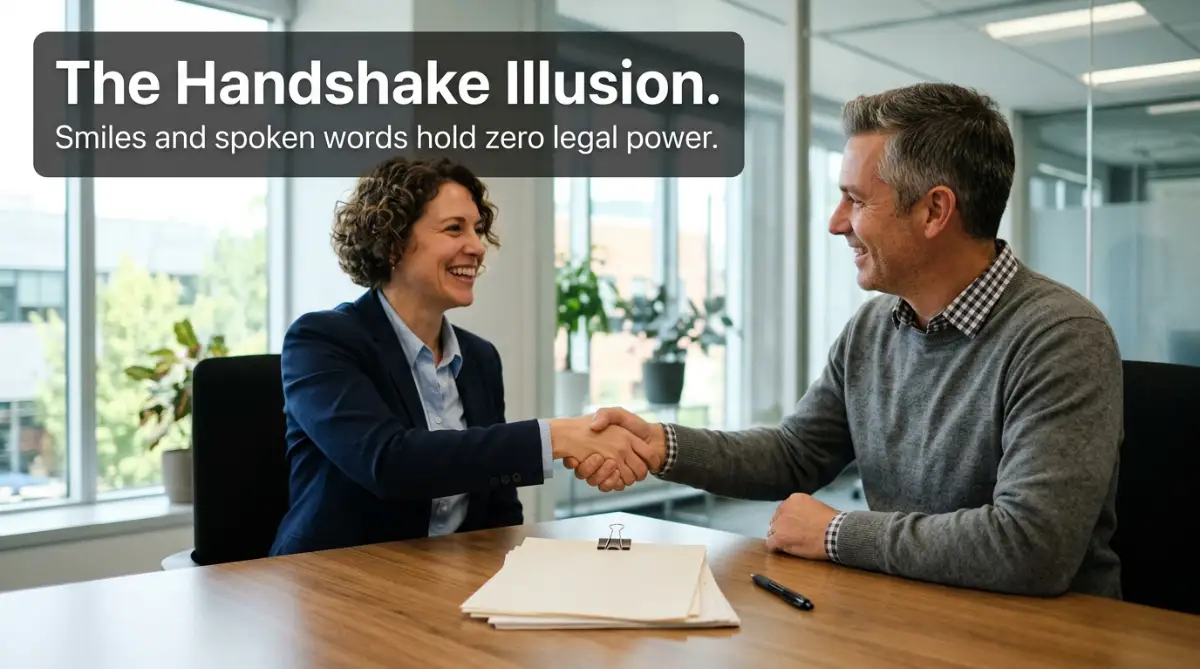
He looked me right in the eye, shook my hand warmly, and assured me that I did not need to worry about the confusing fine print.
I trusted him completely because he seemed so incredibly honest, helpful, and experienced in his field.
When a major pipe burst inside my kitchen a few months later, I confidently called the main office to file my claim.
That is exactly when my financial world came crashing down around me.
The company coldly denied my claim because that specific water damage coverage was never actually written into my official contract.
His friendly verbal promise meant absolutely nothing in the end.
I was left standing in a flooded kitchen, facing a massive repair bill with an almost empty bank account.
My heart sank as I realized the person I trusted to protect my family had left me completely exposed.
This is a quiet nightmare that thousands of innocent people wake up to every single day.
You pay your hard-earned money month after month, believing the comforting words your representative told you over the phone.
You go to sleep thinking your home, your car, or your health is wrapped in an unbreakable safety net.
But when disaster strikes, the smiling face who sold you the plan is suddenly nowhere to be found.
Instead, you are forced to deal with a cold, calculating claims department that only cares about black ink on white paper.
The mental toll this takes on a family is absolutely devastating.
Couples argue over money, savings accounts are completely drained, and the stress of unexpected debt ruins your peace of mind.
We blindly trust these professionals because we assume they hold the legal authority to bind their company to a promise.
We assume a conversation is as good as a signature.
Unfortunately, the real world of legal documents operates on a very strict, unforgiving set of rules.
If you want to protect your family from financial ruin, you have to stop listening to what people say and start reading what the paper actually says.
The Hard Truth About Spoken Words and Legal Documents
To truly fix this massive vulnerability in your financial life, we have to completely change how we view our relationship with our representatives.
A contract is not a friendly agreement between two buddies.
It is a rigid, legally binding document designed to protect the massive corporation holding the money.
Let us break down exactly why you can never safely rely on a friendly chat, and how you can take total control of your own protection.
Understanding the "Salesman vs. The Judge" Reality
The first major concept you need to grasp is the separation of roles inside a massive company.
The person sitting across from you at a local desk is primarily a salesperson.
Their main goal is to make you feel comfortable, build strong relationships, and close the deal so you sign on the dotted line.
They are heavily trained to be optimistic and encouraging.
However, the person who eventually reviews your broken window or damaged car is a claims adjuster.
The adjuster never met you, never shook your hand, and certainly never heard the conversation you had three years ago.
The adjuster only looks at the exact words printed in your legal file.
If you tell an adjuster, "But my agent said I was covered for this," they will simply point to the contract exclusions.
They do not have the legal authority to honor a spoken promise, even if they actually believe your story.
You cannot blame the adjuster for doing their job according to the rules written on the page.
The real mistake happens the moment we accept a smile instead of demanding a revised document.
The Danger of the "Entire Agreement" Clause
Every single protection plan contains a specific paragraph that completely destroys the power of spoken words.
This paragraph is usually called the "Entire Agreement" clause or the integration clause.
In simple English, this clause legally states that the paper you are holding is the complete and final deal.
It clearly says that any previous conversations, emails, or friendly phone calls do not count anymore.
If a promise is not written inside those specific pages, the law pretends that conversation never happened.
Think about it like ordering food at a busy restaurant.
You might tell the waiter that you want your steak cooked medium-rare with a side of extra fries.
The waiter smiles, nods, and promises to make it happen perfectly.
But if the waiter types "well-done steak, no fries" into the computer, the kitchen will cook exactly what the screen says.
The kitchen does not care about the friendly chat you had at the table.
Your contract is the exact same thing as that kitchen ticket.
If the promised coverage is not typed into the final system, the company will never deliver it to you.
Why the "I Will Update It Later" Excuse is a Trap
One of the most common ways people get into deep trouble is by accepting delays.
You might call your office on a Friday afternoon to add a new teenage driver or a valuable piece of jewelry to your profile.
The representative says, "I am having computer trouble right now, but do not worry, you are covered as of today. I will input the details on Monday morning."
You hang up the phone feeling relieved.
But what happens if that representative gets sick on Monday, goes on vacation, or simply forgets?
If your teenager gets into a minor fender bender on Saturday, you have absolutely zero written proof that they were protected.
The company system will show that the car was driven by an unauthorized, uninsured person.
Your claim will be denied instantly, and you will be held completely responsible for the damages.
My Personal Pro Tip: I used to accept these casual delays all the time because I hate being pushy or demanding. I finally realized that my financial safety is way more important than being overly polite. Now, if someone says they will update the system later, I immediately ask them to send me a simple, one-line email confirming the exact change and the effective date before we hang up the phone.
The Flaw of Human Memory Over Time
Let us look at this problem logically and assume your representative is one hundred percent honest.
They truly want to help you and they fully intend to honor their word.
The problem is that you might keep the same policy active for ten or fifteen years.
Do you remember what you ate for lunch on a random Tuesday three months ago?
Of course not.
So how can you expect a busy professional to remember a five-minute phone call from five years ago?
When a massive storm damages your property years later, that specific agent might be working for a completely different company.
They might have retired, moved to a different state, or passed away.
When you call the office, a brand new employee will answer the phone and open your file.
That new employee has no emotional connection to you and no memory of the promises made by the previous staff member.
Relying on human memory for long-term financial security is a recipe for absolute disaster.
You always need a permanent, unchanging record that survives staff changes and the passage of time.
Discover exactly how to safely document every conversation you have with your provider.
The Misunderstanding of "Full Coverage"
The most dangerous phrase in this entire industry is "full coverage."
When you ask an agent for full protection, you are imagining a magical shield that pays for absolutely everything that goes wrong.
But legally, the term "full coverage" does not actually exist anywhere in the dictionary of risk management.
It is just a slang term that salespeople use to describe a bundle of basic protections.
Your agent might say, "You have full coverage on this car, so you are good to go."
You drive away thinking you are safe from every possible hazard on the road.
But that bundle might exclude rental car reimbursement, roadside assistance, or custom part replacement.
If your laptop is stolen out of the backseat of your car, you will be shocked to learn that auto policies do not cover personal electronics.
Because you trusted the spoken words "full coverage," you never bothered to ask detailed questions about exclusions.
You allowed a vague, unwritten promise to replace the hard work of reading the actual rules.
How to Properly Verify a Spoken Promise
So, how do we fix this without becoming overly aggressive or rude to the people trying to help us?
The process is actually quite simple and incredibly effective once you make it a habit.
Every single time your representative makes a claim about what is included, you must ask them to point to the exact page.
You can say, "That sounds amazing and exactly what I need. Can you please show me which page in the contract specifically mentions that coverage?"
A good, honest professional will be happy to pull out a highlighter and show you the exact paragraph.
They respect clients who take their personal finances seriously.
If the person suddenly gets defensive, acts annoyed, or tells you to "just trust them," you need to walk away immediately.
A refusal to show written proof is the biggest red flag you will ever see in the financial world.
The Strategy of the Paper Trail
If you are having a conversation over the phone, you obviously cannot ask them to point to a physical page.
This is where you must build your own unbreakable paper trail.
After every single phone call where a promise or a change is made, open your email immediately.
Send a short, friendly message directly to the agent's official work address.
You simply write: "Hi, thank you for chatting with me today. I am just writing to confirm our conversation that my new roof is now fully protected against wind damage without any age-related depreciation. Please reply to confirm this is accurate."
By doing this, you are forcing them to put their spoken words into a legally traceable format.
If they reply "Yes, that is correct," you now have powerful written evidence.
If an adjuster tries to deny your claim later, you can present this email trail.
While an email is not a formal contract modification, courts and regulatory boards take written communication from an official representative very seriously.
It proves exactly what you were promised and stops the company from pretending the conversation never happened.
Taking these extra five minutes to type an email can literally save you thousands of dollars down the road.
Mastering the Art of Unbreakable Paper Trails
Now that you understand exactly why spoken agreements hold zero power, it is time to build your defense system.
You do not need a law degree to protect yourself from these hidden traps.
You simply need to change your habits and start acting like the CEO of your own financial protection.
I want to share some incredibly effective, expert-level strategies that will force any company to honor their promises.
These are the exact methods professional risk managers use to ensure their assets remain perfectly safe.
The Magic of the Formal Endorsement
When an agent promises you an extra layer of protection, they cannot just type a friendly note into the system.
They must issue a legally binding document called an "Endorsement" or a "Rider."
An endorsement is a physical amendment that permanently changes the original rules of your contract.
If you are promised coverage for your expensive camera gear, you must demand a written endorsement immediately.
Do not accept a simple "I added it to your file" over the phone.
Until that official, physically printed endorsement arrives in your mailbox, your camera gear is completely exposed.
Taking the time to review comprehensive educational guides about personal finance can train your brain to always look for these official documents.
Decoding Your Declarations Page Properly
The easiest way to verify a spoken promise is to check your Declarations Page.
This is usually the very first page of your packet, and it acts as the master summary of your account.
It lists your name, your specific limits, your deductibles, and every single active endorsement.
If a representative swears that your new teenage driver is fully protected, grab your Declarations Page immediately.
If your teenager's name is not printed clearly on that exact page, they are absolutely not protected.
According to guidelines from the National Association of Insurance Commissioners (NAIC), the Declarations Page is the ultimate legal snapshot of your actual coverage limits.
Make it a solid habit to request a freshly updated page every single time you make a change to your account.
The "Letter of Understanding" Strategy
Sometimes, dealing with complex policies gets incredibly confusing, especially for business owners or homeowners.
If you have a long, complicated phone call with a representative, you can use a legal tool called a Letter of Understanding.
After hanging up, you write a highly detailed summary of everything you both agreed upon.
You send this letter to the agent via certified mail or official business email.
You end the letter by stating, "If my understanding of this conversation is incorrect, please notify me in writing within 48 hours."
If they do not respond to correct you, this document becomes powerful evidence in your favor during a dispute.
This exact strategy works wonders when you are trying to navigate the hidden costs in your medical plans, forcing the provider to stand by their network promises.
Utilizing the Free Look Period Safely
Many people feel pressured to sign documents quickly while sitting inside a busy office.
The agent is smiling, the coffee is hot, and you just want to get back to your daily routine.
But you actually have a secret weapon called the Free Look Period.
Most states require companies to give you a window of ten to thirty days to read the massive contract at home.
During this time, you can cancel the agreement for a full refund if the written words do not match the spoken promises.
Never feel like you are trapped just because you signed a digital pad on a Tuesday afternoon.
Take the giant booklet home, sit at your kitchen table, and compare every single word to the promises your agent made.
If the contract looks drastically different from the sales pitch, you have the absolute legal right to walk away.

The Devastating Errors That Leave You Unprotected
Knowing the right steps to take is only half of the battle.
You also have to recognize the massive psychological traps that everyday people fall into.
When we trust someone, our brain naturally wants to believe their comforting words.
But this emotional comfort can lead to disastrous financial mistakes that take years to recover from.
Let us walk through the most dangerous pitfalls that destroy families financially, so you can avoid them completely.
The Digital Signature Blind Spot
Technology has made buying financial products incredibly fast and convenient, but it has also created a massive danger.
Picture this common scenario: you are sitting in a sleek office, and the agent turns an iPad toward you.
The screen just shows a small, blank white box where you are supposed to draw your signature with your finger.
The agent says, "This just confirms everything we talked about today regarding your property."
Because they are friendly and you want to be polite, you sign the blank box without hesitation.
This is a terrifying mistake.
You just attached your legal signature to a massive, fifty-page document that you have never even seen.
If the agent accidentally checked the wrong box on their computer screen, your signature completely validates their mistake.
When your house sustains massive wind damage, the company will hold up your own signature to prove you agreed to the exclusions.
Never, ever sign a digital pad unless you can clearly see the exact terms printed on the screen right above the signature line.
Ignoring the "Computer Glitch" Warning
This specific scenario breaks my heart because I see it happen to wonderful, honest people all the time.
Imagine you check your mailbox and find an aggressive, red-stamped letter warning you of an upcoming cancellation.
You immediately panic and call your trusted local representative for an explanation.
The representative laughs and says, "Oh, do not worry about that letter. It is just a computer glitch from corporate. You are completely fine."
Relieved, you throw the warning letter into the trash can and go about your day.
Two weeks later, you get into a terrible car accident, only to discover your policy was officially canceled.
The Consumer Financial Protection Bureau (CFPB) strongly warns consumers against ignoring official written notices, regardless of what a local employee says.
A friendly local agent does not have the power to stop an automated corporate cancellation process.
If you receive a written warning, you must demand a written confirmation that the issue is completely resolved.
Just like understanding the strict rules surrounding policy grace periods, you cannot rely on casual verbal extensions when deadlines approach.
Confusing Longevity with Loyalty
Many people use the exact same agent for twenty or thirty years.
You might play golf together, attend the same local events, or send each other holiday cards.
Because of this deep personal friendship, you assume they will pull special strings for you if a disaster happens.
You assume they can magically force the claims department to approve a rejected payment.
But you have to separate your personal feelings from the cold reality of corporate structure.
Your friend does not write the checks, and they do not review the damage to your property.
The claims adjuster who handles your file works in a massive office building hundreds of miles away.
That adjuster does not care that you have been a loyal customer for three decades.
They only care about what is printed in black and white on the actual agreement.
Your agent might genuinely cry with you when your home burns down, but their tears cannot rebuild your living room.
The Assumption of the "Umbrella" Safety Net
Salespeople love to use the word "umbrella" because it makes you feel safe from every possible storm.
They might casually mention that your new umbrella plan covers absolutely everything you own.
You hear those words and instantly assume your boat, your rental property, and your jewelry are all perfectly safe.
But an umbrella policy is actually a highly specific liability tool, not a magical blanket for your personal belongings.
It only covers lawsuits and extreme liability, and it requires strict underlying limits on your other accounts.
If you trust the verbal promise of "total coverage," you might accidentally drop your specific property protections.
When a massive tree crushes your expensive boat, you will learn the hard way that the umbrella does not pay for physical property damage.
Always force the representative to explain exactly how a complex product functions in real-world scenarios.
When you start taking charge of your overall financial study, you quickly learn that asking tough questions is the only way to survive.
Allowing the Agent to Fill Out the Application
This mistake is incredibly common among older adults or people who feel overwhelmed by paperwork.
To save time, the agent might offer to fill out the complex application forms for you while asking questions out loud.
You answer verbally, and they type the responses into the corporate system.
But what happens if they mishear you or decide to bend the truth slightly to get you a cheaper monthly rate?
If they write down that your roof is brand new, but it is actually fifteen years old, you now have a fraudulent application.
When a storm hits, the company will send an inspector who will instantly see the old roof.
They will immediately accuse you of lying on the application and deny your entire payout.
Even if you cry and explain that the agent filled out the form, the company will simply point to your signature at the bottom of the page.
You are legally responsible for every single detail submitted under your name.
Never let anyone rush you, and always read every single box before you finalize an application.
Taking Back Control of Your Financial Safety
Navigating the complex world of legal contracts and sales promises can feel exhausting.
But shifting your mindset from a passive buyer to an active auditor is incredibly empowering.
You no longer have to cross your fingers and hope that your family is protected.
By demanding written proof, utilizing formal endorsements, and ignoring meaningless handshakes, you build a fortress around your wealth.
The next time an agent smiles and tells you not to worry, you will know exactly how to handle the situation with total confidence.
You will politely ask them to point to the exact paragraph, or you will follow up with a firm email confirming the conversation.
You are stepping into a new era of complete financial clarity and unshakeable security.
I used to be terrified of questioning my representative, fearing I would look foolish or overly demanding. My biggest realization was that protecting my family’s future is far more important than being polite in an office. I urge you to grab your current documents tonight, read the actual words, and never accept a simple handshake as a guarantee again.
Common Questions About Unwritten Promises
Can I take legal action if my representative directly lied to me about coverage?
Yes, you can sometimes pursue an "errors and omissions" claim against the specific agency if you can absolutely prove they misled you. However, proving a verbal lie in court without any recorded evidence or email trail is incredibly difficult and highly expensive. This is exactly why creating a massive paper trail from day one is your best defense.
What should I do if the physical contract arrives and looks completely different from the sales pitch?
Do not panic, but act immediately. You are usually protected by a state-mandated "Free Look Period" that gives you time to review the paperwork. Contact the main corporate office in writing, highlight the discrepancies, and demand an immediate correction or a full cancellation of the policy without penalty.
Does a legally recorded phone call carry the same weight as a written contract?
While a recorded phone call is excellent evidence for filing a formal complaint, it does not automatically rewrite the official written contract. Corporate adjusters are still bound by the printed rules of the main agreement. However, a recording can force the company to issue a retroactive endorsement or settle a dispute rather than face regulatory fines.
Are basic emails considered valid proof if my claim gets unfairly denied?
Absolutely. Emails sent to or received from an official company address are considered legally binding business communications. If an agent explicitly confirms a specific protection via email, regulatory boards and courts will almost always hold the parent company accountable for those written words.
How do I legally force my provider to add a verbal promise into the official system?
You cannot force a company to offer coverage they do not sell, but you can force them to put their exact offer in writing. Simply request a formal "Letter of Endorsement" or an updated "Declarations Page" reflecting the specific change. If they refuse to provide physical documentation, you should immediately take your business to a more trustworthy provider.
Disclaimer: The information provided in this blog post is for general educational and informational purposes only and does not constitute professional financial, medical, or legal advice. Insurance regulations and contract laws vary heavily by state and specific providers. Always read your official policy documents carefully and consult with a licensed legal professional or independent financial advisor before making major decisions.