The Silent Struggle: Why Your Body Feels Like It Is Working Against You
Let's be totally honest for a second. If you are reading this right now, you are probably tired of doing everything "right" but still feeling completely exhausted. I get it. You cut your meal sizes, you try to walk more, and you skip the desserts, but your body just refuses to play along. Before you start blaming yourself again, I need to tell you something important: your metabolism is not broken. You have just been fed a lot of really bad advice. Today, we are going to clear up the confusion so you can finally feel like yourself again.
You look in the mirror and feel a deep sense of frustration. It feels like no matter how little you eat or how much you exercise, your body refuses to cooperate. You feel trapped inside your own skin.
Every single day feels like an uphill battle. You experience random energy crashes in the afternoon, intense sugar cravings at night, and stubborn belly fat that simply will not budge. You start to believe your metabolism is permanently broken.
What You Will Learn Today
- Why eating too little actually forces your body to store more fat.
- The truth about the "8 PM rule" and why late-night eating gets a bad reputation.
- How to keep your inner engine running hot, even as you get older.
- The 5 hidden daily mistakes that are quietly ruining your progress.
Why You Stay Stuck in the Cycle of Bad Information
When you search for answers, the internet throws a million different solutions at you. Sadly, most of these solutions are built on total lies. Here is how bad information is hurting you right now:
- You fall for extreme crash diets: Internet gurus tell you to cut out entire food groups. This leaves you starving, weak, and missing essential nutrients your body desperately needs to function.
- You waste money on magic pills: You buy expensive "fat burner" supplements that promise overnight results. In reality, they just give you the jitters and upset your stomach.
- You overwork your body: You force yourself to do hours of intense cardio, thinking you need to burn off every single calorie. This spikes your stress hormones and tells your body to store more fat.
- You ignore the root cause: Because everyone focuses only on the weighing scale, you miss the actual hidden issues like blood sugar spikes and chronic inflammation.
- You blame your own willpower: When these fake, unscientific methods fail, you think it is your fault. You believe you are just lazy or lack discipline, which is entirely false.
How This Hidden Burden Destroys Your Mental Peace
The physical symptoms are hard enough, but the mental toll is much worse. A struggling metabolism slowly chips away at your confidence.
- You avoid social gatherings: You decline dinner invitations because you are terrified of eating the "wrong" thing in front of your friends.
- You feel intense guilt: Eating a simple slice of birthday cake makes you feel like you have ruined weeks of hard work.
- Your self-esteem drops: You stop taking pictures with your family because you hate how you look and feel.
- You live in a state of anxiety: You are constantly worrying about your next meal, calculating numbers in your head instead of enjoying your life.
- You lose trust in your body: You feel like your body has betrayed you, leaving you entirely hopeless about the future.

Exposing the Truth: The First 3 Metabolic Myths Holding You Back
To heal your body, we first have to unlearn the lies. It is time to replace frustration with real, scientific education.
We are going to break down the first three massive myths about your metabolism. Once you understand how your body actually works, you can finally take back control.
What You Hear vs. What Actually Works
Myth 1: Eating Less Automatically Speeds Up Your Metabolism
This is probably the most harmful lie in the health and fitness industry. For decades, magazines and fitness coaches have told us that eating less is the ultimate secret to health. They claim that if you drastically cut your calories, your metabolism will run faster to burn off your stored fat.
This is completely against basic human biology. When you starve yourself, your body does not speed up. It actually slows down.
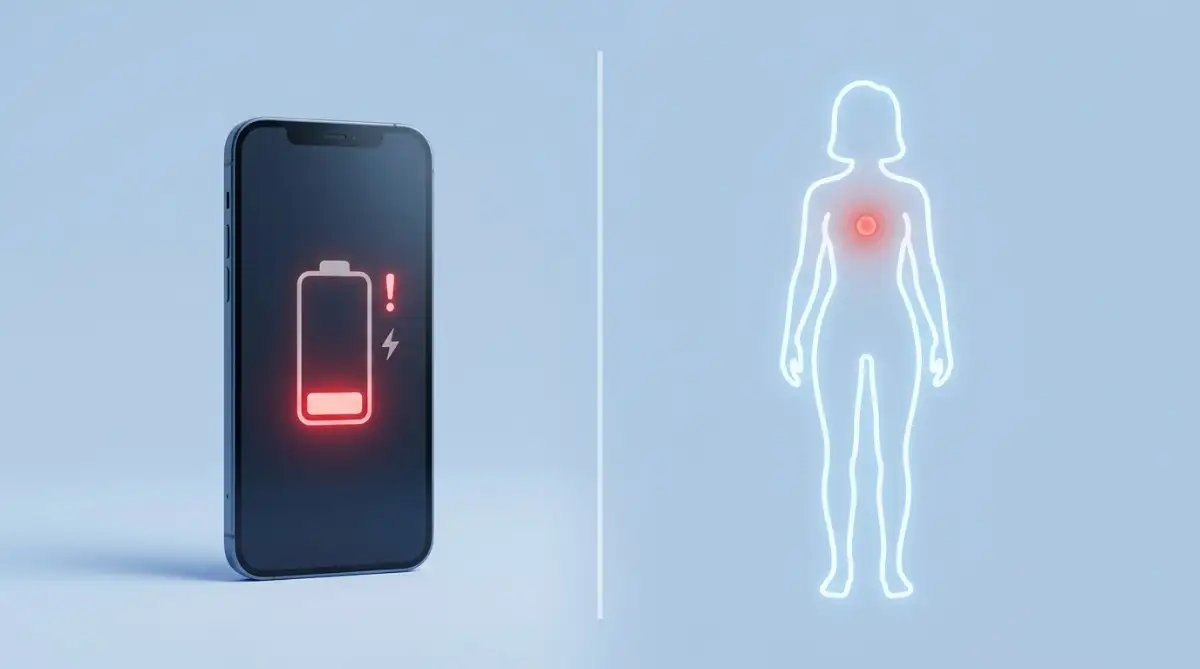
Think of your body like a modern smartphone. When your phone battery drops below 20%, what happens? It goes into "low power mode." The screen dims, apps stop refreshing in the background, and the phone tries to save every last bit of energy.
Your metabolism works the exact same way. When you suddenly drop your daily food intake to a dangerously low level, your brain panics. It thinks you are trapped in a famine with no food available.
To keep you alive, your metabolism purposely slows down. It stops spending energy on making you feel warm, growing your hair, or repairing your muscles. Instead, it holds tightly onto every ounce of fat it can find, just in case the "famine" lasts a long time.
Your Action Plan for Today:
Stop starving your body and start nourishing it. You need to eat enough nutrient-dense food to convince your brain that you are safe.
- Focus on complete meals: Make sure your plate has a good source of lean protein, complex carbohydrates, and healthy fats.
- Listen to your hunger signals: If your stomach is growling loudly, it is asking for fuel. Do not ignore it just because an app on your phone tells you to stop eating.
- Eat regular meals: Skipping meals often leads to massive sugar cravings later in the day. Keep your energy stable by eating balanced meals at regular times.
Myth 2: Thin People Naturally Have Perfect Metabolic Health
Society has taught us to connect physical size with inner health. We look at someone who is naturally skinny and instantly assume they have an amazing, healthy metabolism. We believe that if someone can eat fast food every day and stay thin, they are perfectly healthy.
Medical science tells a completely different story. Being thin on the outside does not mean you are healthy on the inside. Doctors call this dangerous condition TOFI: Thin Outside, Fat Inside.
You can easily have a normal Body Mass Index (BMI) while suffering from terrible metabolic health. A person might look slim in a mirror but carry dangerous amounts of visceral fat. Visceral fat is the hidden, toxic fat that wraps tightly around your internal organs like your liver and heart.
Imagine buying a beautiful, shiny sports car. The paint looks perfect, and the tires are brand new. However, if you open the hood, the engine is rusting, the oil is leaking, and the wires are broken. Would you call that a well-functioning car?
Of course not. Your body works the same way. A person might look thin, but they could be dealing with high blood pressure, pre-diabetes, and extreme insulin resistance. If they live on sugary drinks and processed foods, their internal engine is slowly breaking down.
Your Action Plan for Today:
Shift your focus entirely away from the weighing scale. True metabolic health happens inside your blood vessels and cells.
- Ask for regular blood tests: Next time you visit your doctor, do not just step on the scale. Ask them to check your fasting insulin, triglycerides, and HbA1c levels.
- Eat for your internal organs: Even if you do not gain weight easily, you still need vegetables and healthy proteins to keep your internal organs clean and functioning.
- Move for heart health: Exercise is not just for losing weight. A thin person still needs to walk and lift weights to keep their heart strong and their blood flowing properly.
Myth 3: As You Get Older, Your Metabolism Must Slow Down Dramatically
It is a common belief that the moment you turn 30 or 40, your metabolism simply shuts down. People tell you that middle-age weight gain is completely unavoidable. They make it sound like a ticking clock that you cannot stop.
Recent major scientific studies have proven this completely wrong. Researchers have discovered that our metabolism remains surprisingly stable from our 20s all the way through our 50s. The severe metabolic decline people experience is mostly caused by a change in lifestyle, not age.
So, why do people actually gain weight as they get older? The answer is simple: muscle loss and a lack of movement.
When we are young, we are constantly moving. We walk to school, play sports, and stay active. As we get older, we sit at office desks for eight hours a day. We drive everywhere and spend our evenings sitting on the couch.
Because we stop using our muscles, our bodies slowly lose muscle mass. Muscle is very metabolically active. It is like a hot oven that constantly burns calories, even while you are resting.
If you lose your muscle because you sit all day, your inner oven shrinks. You are not burning fewer calories because you are older; you are burning fewer calories because you have less muscle.
Your Action Plan for Today:
You have the power to stop and even reverse this muscle loss. You can build a strong, active metabolism at almost any age.
- Start resistance training: You do not need to become a professional bodybuilder. Simple bodyweight squats, push-ups, or using light dumbbells at home can wake your muscles up.
- Prioritize daily protein: Your body needs building blocks to maintain its muscle oven. Make sure you are eating enough protein like eggs, fish, lentils, or chicken at every single meal.
- Increase daily movement: Stop sitting for hours at a time. Set a gentle alarm on your phone to stand up, stretch, and walk around your house for five minutes every hour.
Breaking the Final Illusions: Deep Metabolic Secrets You Need to Know
Many of us are stuck believing outdated fitness advice from the 1990s. We follow rules that have zero scientific backing. Let us expose these remaining myths so you can finally experience real, lasting results.
Myth 4: Eating After 8 PM Instantly Stores Food as Fat
This is known as the famous "clock rule" in the fitness world. People say that eating anything after 8 PM automatically turns into stubborn belly fat. This makes absolutely zero biological sense.
Your digestive system does not wear a wristwatch. Your body does not suddenly shut down its internal processes just because the sun goes down. Your metabolism is always running, even while you are fast asleep.
Think about a night shift nurse working at a busy hospital. They eat their main meals at 2 AM because that is their lunch break. If the clock rule were true, every single night shift worker would have severe weight issues.
The truth behind late-night weight gain is much simpler. It usually happens because of the poor food choices we make when we are tired. We rarely crave a fresh salad or grilled chicken at midnight.
Instead, we grab salty chips, sugary cookies, or a large tub of ice cream while watching television. It is the high-sugar comfort food that causes problems, not the hour on the clock. You are simply consuming extra energy that your body does not need for the day.
Your Pro-Level Action Step:
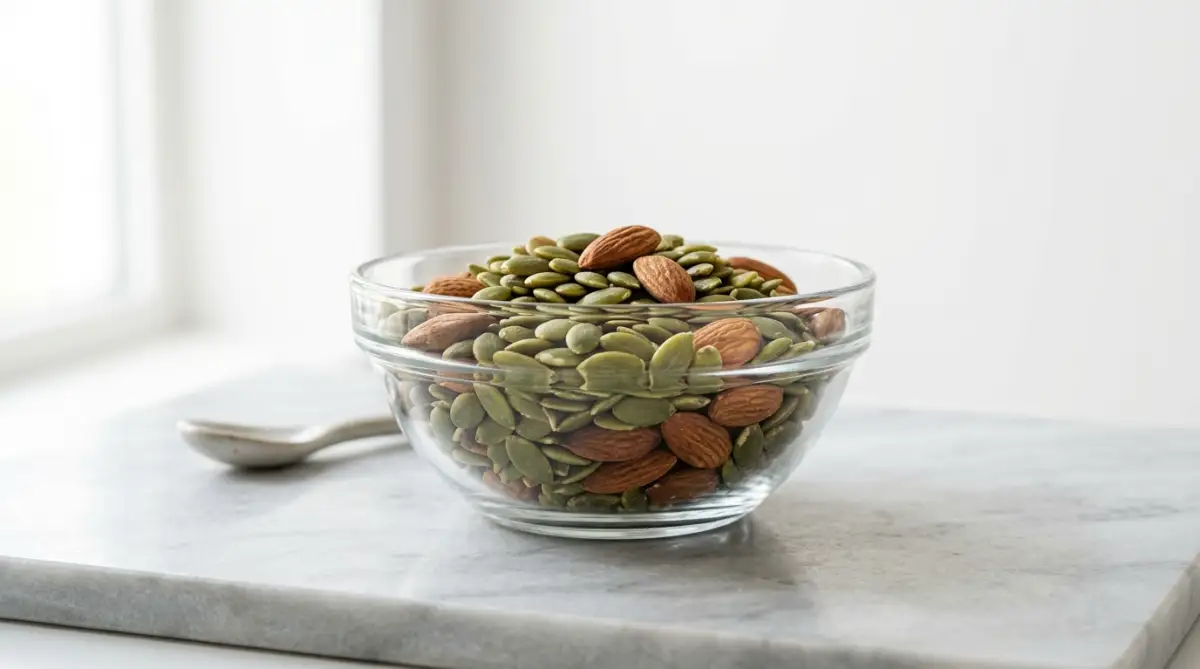
If you are genuinely hungry before bed, do not force yourself to starve. Eat a small, protein-rich snack that stabilizes your blood sugar. A handful of almonds, a boiled egg, or some greek yogurt will help you sleep better without hurting your metabolism.
Myth 5: Green Tea and Spicy Foods Permanently Fix Your Metabolism
The supplement and diet industry loves this specific myth. They sell expensive fat-burning pills containing green tea extract and cayenne pepper. They promise these ingredients will turn your body into a fat-melting furnace.
It is true that spicy foods and caffeine can cause a tiny spike in your metabolic rate. Science calls this a minor thermic effect. However, this small boost only lasts for a very short period.
Imagine throwing a single, tiny piece of paper into a dying campfire. The fire will flare up brightly for exactly two seconds. After that, it goes right back to dying out.
These "fat-burning" foods work the exact same way. They give you a microscopic boost that burns maybe ten or twenty extra calories. That is not nearly enough to create any noticeable change in your body shape or energy levels.
Relying on spicy foods or expensive teas is a complete waste of your hard-earned money. You cannot outsmart your basic biology with a fancy drink. You need a strong foundation of real food and daily movement instead.
Your Pro-Level Action Step:
Stop looking for magic ingredients in your kitchen cabinet. Drink green tea because you enjoy the taste, not because you expect it to burn belly fat. Focus your energy on eating complete meals with high-quality protein instead of hunting for shortcuts.
Myth 6: Sweating Heavily Means You Are Burning Maximum Fat
Have you ever seen someone wearing a heavy plastic sweat suit on a treadmill? They believe that the more they sweat, the more fat they are melting away. This is a dangerous misunderstanding of how human biology works.
Sweating is simply your biological air conditioning system. When your core temperature rises, your body releases water onto your skin. As this water evaporates, it cools you down and keeps you safe from overheating.
Sweat has absolutely nothing to do with burning body fat. When you step on the scale after a heavy sweat session, you weigh less because you lost water, not fat.
Think of your body like a wet kitchen sponge. If you squeeze the sponge hard, water drips out and the sponge becomes lighter. But the sponge itself has not actually changed its physical size or structure.
The moment you drink a large glass of water, your body weight will go right back up. Sweating too much without drinking water actually dehydrates you. Dehydration creates massive stress in your body, which can actually slow your metabolism down.
Your Pro-Level Action Step:
Judge your workouts by how strong and energized you feel, not by how much you sweat. Keep a large bottle of water with you during exercise and drink often. Your metabolism needs plenty of hydration to process nutrients and burn fat efficiently.
Myth 7: A Calorie is Always Just a Calorie
Many diet apps teach you to treat your body like a simple math calculator. They say that 500 calories of fresh salmon is exactly the same as 500 calories of chocolate candy. This ignores the powerful hormonal effects of different foods.
When you eat food, your body has to spend energy to digest it. This is called the Thermic Effect of Food (TEF). Different foods require different amounts of energy to break down.
Imagine building a house using two different materials. You could build a house out of strong bricks, or you could build it out of cheap straw. Both might look like houses at first, but the brick house is much stronger and takes more effort to build.
Protein is like the strong brick. Your body actually burns up to 30% of the calories in protein just trying to digest it. Protein also keeps your blood sugar perfectly stable and stops you from feeling hungry later.
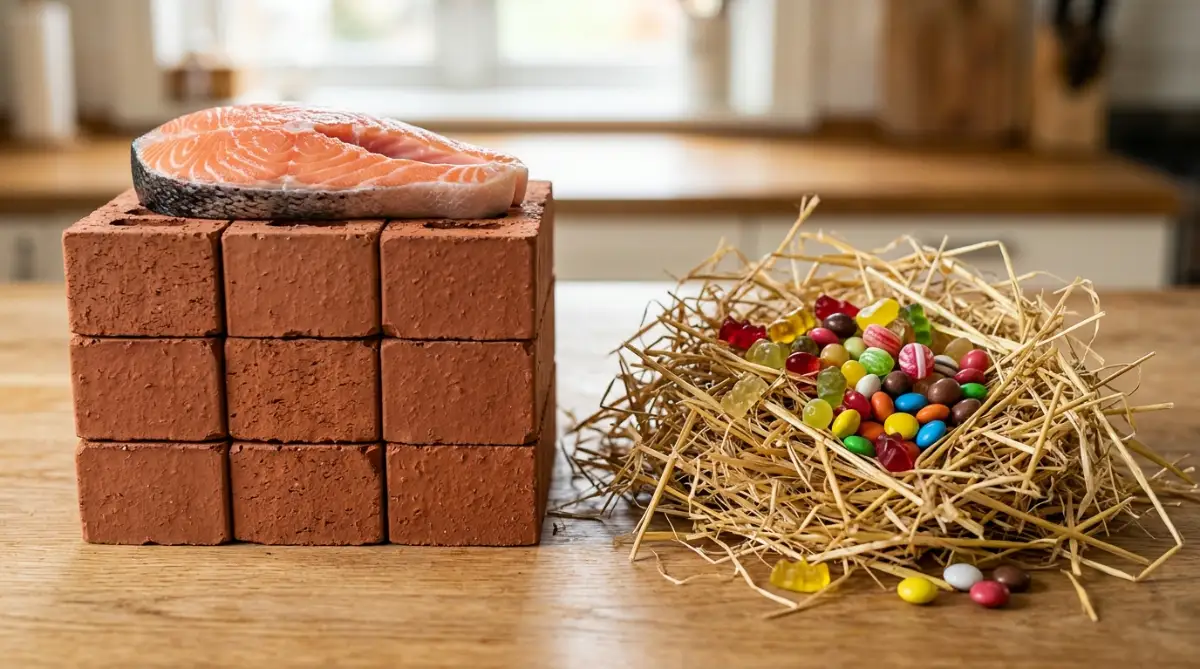
Sugar and highly processed carbohydrates are like the cheap straw. Your body absorbs them instantly with almost zero effort. This causes a massive insulin spike, which signals your body to store fat and leaves you feeling hungry an hour later.
Your Pro-Level Action Step:
Stop counting numbers on an app and start looking at the quality of your food. Make sure every single meal is built around a solid source of protein. Add plenty of colorful vegetables for fiber, and your metabolism will naturally regulate itself.
The Trap of Good Intentions: 5 Massive Mistakes Slowing Your Progress
Now that you know the truth about how your body works, you are ahead of 90% of people. However, the healing journey is rarely a straight line. Even smart people fall into hidden traps when trying to improve their health.
If you want to protect your metabolism, you must recognize these dangerous pitfalls. Avoiding these five common mistakes will save you months of deep frustration and wasted effort.
1. Relying Entirely on the Bathroom Scale
The standard bathroom scale is a terrible tool for measuring your overall health. It only measures the total gravitational pull on your body. It cannot tell the difference between fat, muscle, water, or even your bones.
If you start lifting weights, you will build dense, heavy muscle. At the same time, you will lose fluffy body fat. The number on the scale might stay exactly the same, even though your clothes fit beautifully.
When you obsess over that single number, you destroy your own motivation. You might quit a brilliant workout routine just because the scale did not move for three days. Throw the scale away and measure your progress by how your clothes fit and how much energy you have.
2. Slashing Your Sleep for Early Morning Workouts
We have all seen the motivational videos telling us to wake up at 4 AM to exercise. People think that sacrificing sleep to do early morning cardio shows intense dedication. In reality, sleep deprivation is one of the fastest ways to break your metabolism.
When you do not get enough deep sleep, your body panics. It releases a massive amount of the stress hormone called cortisol. High cortisol levels make your body highly resistant to insulin and encourage it to store fat directly around your stomach.
Furthermore, being tired makes you crave sugary, high-calorie foods all day long. A full eight hours of restful sleep is infinitely better for your metabolism than a sleepy, forced workout at dawn.
3. Cutting Out Carbohydrates Completely
Low-carb diets are extremely popular right now. Many people believe that eating a single piece of fruit or a bowl of rice will ruin their progress. This extreme restriction is simply not sustainable for most human beings.
Your brain and your muscles love using carbohydrates for quick energy. If you completely remove them, you will likely experience severe brain fog, intense mood swings, and a terrible drop in your workout performance.
You do not need to fear carbohydrates. You just need to choose the right ones. Swapping sugary donuts for sweet potatoes, oats, and fresh fruits will feed your metabolism without causing sugar crashes.
"But won't eating carbs make me feel sleepy?"
I get this question all the time! The short answer is no, as long as you pick the right ones. If you eat a massive plate of white pasta all by itself, yes, you will probably need a nap. But if you pair a complex carb (like a baked potato) with a good piece of chicken and some green beans, your blood sugar stays steady. It is all about how you mix your food!
4. Drinking Your Hidden Calories
Many people eat perfectly healthy meals but still struggle to see any progress. The hidden culprit is almost always in their daily drinks. Liquid calories sneak into your body without ever making you feel full.
A large caramel coffee drink can easily pack 400 to 500 calories of pure sugar. A glass of store-bought orange juice can have as much sugar as a can of soda. Because there is no chewing involved, your brain never registers that you just consumed a massive meal.
These sugary drinks spike your insulin rapidly and leave you crashing shortly after. Stick to plain water, black coffee, or herbal teas to keep your metabolism running cleanly and smoothly.
5. Sticking to the Exact Same Workout Routine for Months
The human body is an incredible adaptation machine. If you do the exact same workout every single day, your body becomes highly efficient at it. Over time, you will burn fewer and fewer calories doing the exact same movements.
Imagine learning to ride a bicycle for the first time. It takes immense mental and physical effort. But after a year of riding, you can do it without even thinking, using very little energy.
Your muscles work the same way. You must challenge them with new movements, heavier weights, or different workout styles. Changing your routine every four to six weeks keeps your muscles guessing and your metabolism highly active.
Your New Beginning: Take Charge of Your Body Today
You have just learned the deep, scientific truths about how your body actually functions. You now know that starving yourself, stressing over the clock, and punishing your body with endless cardio will never work. Your metabolism is not a broken machine; it is simply asking for the right kind of care.
Healing your body takes time, patience, and self-love. You did not develop these issues overnight, and you will not fix them overnight either. Give yourself the grace to make small, daily changes that add up to massive results.
Start by prioritizing your protein intake at every meal. Begin to incorporate light resistance training to build that strong, metabolic muscle oven. Most importantly, allow yourself to sleep deeply and rest without feeling guilty.
You hold the power to reset your energy levels and reclaim your health. Step forward today with this new knowledge, trust the process, and watch as your body transforms from the inside out.