📌 Key Takeaways at a Glance:
- Listen to Early Warnings: Unexplained afternoon brain fog, tight shoulder muscles, and restless sleep are early signs of nervous system overload.
- Use the 2-Minute Reset: Practice 3 to 5 rounds of the physiological sigh to instantly shift your body from fight-or-flight into rest mode.
- Align Your Internal Clock: Get 10 to 15 minutes of direct morning sunlight to set healthy daytime cortisol and improve nighttime sleep.
- Stabilize Your Morning Fuel: Eat 25 to 30 grams of protein for breakfast to avoid the blood sugar crashes that trigger panic hormones.
When Your Body Whispers Before It Screams
Your body rarely breaks down out of nowhere. Long before full-blown exhaustion stops you in your tracks, your nervous system sends subtle physical alerts—a tight chest at your desk, sudden afternoon brain fog, or waking up restless at 3:00 AM. When you understand how to catch these early signals, you can protect your energy and reset your body before you hit a wall.
By noon, your shoulders sit up around your ears from silent tension. You feel drained, irritable, and disconnected from the people you love most. Even tiny tasks, like answering a simple email or deciding what to cook for dinner, feel like climbing a mountain.
Most people dismiss these early red flags as simple daily fatigue. We live with the false belief that resting over the weekend will fix everything.
Here is why so many people struggle to spot the real problem in time:
- Treating Symptoms Instead of Root Causes: You reach for more caffeine, energy drinks, or sugar to push through afternoon crashes. This gives you a quick spike in alertness while running your adrenal system into the ground.
- Misinterpreting Body Signals: You blame your upset stomach on bad food or your frequent headaches on dehydration. In reality, your digestive tract and head muscles are responding directly to chronic stress hormones.
- Relying on Generic Advice: Common tips tell you to take a warm bath or practice bubble-gum self-care. While relaxing, these surface-level habits do not repair an overloaded nervous system.
When you stay stuck in this loop, it silently damages your self-esteem. You start wondering why everyone else seems to manage their lives easily while you struggle just to keep up.
This constant inner struggle creates a heavy emotional burden:
- The Loss of Personal Confidence: You begin to second-guess your skills at work and at home because your memory feels foggy.
- Guilt and Emotional Distance: You snap at your kids or your partner over small things, only to feel intense regret minutes later.
- A Constant Sense of Dread: You go to sleep worrying about tomorrow's to-do list, which keeps your brain wired and prevents deep rest.
Think of your body like a car running on the highway. When your oil light blinks, you do not place a piece of tape over the light and keep driving at top speed.
Yet that is exactly what we do when we ignore muscle aches, brain fog, and restless nights. Your internal engine is running hot, and continuing to press the gas pedal will lead to a complete breakdown.
Recognizing these physical signs is not a defeat. It is the first step toward getting your natural energy and clarity back.

A Practical Blueprint to Reset Your Nervous System
Reversing this physical crash does not require you to quit your job or move to a remote island. It requires small, intentional adjustments that tell your biological systems that you are safe.
When your brain understands that it is not under constant threat, your muscles relax, your digestion improves, and your deep sleep returns.
Let us walk through the first three foundational steps you can put into practice starting today.
Step 1: Turn Down Your Internal Alarm (Vagus Nerve Reset)
Your body operates on two main wiring systems: the fight-or-flight branch and the rest-and-digest branch. When burnout approaches, your fight-or-flight switch gets stuck in the "ON" position.
This floods your bloodstream with adrenaline and cortisol. Your heart beats faster, your blood pressure rises, and your body halts repair work.
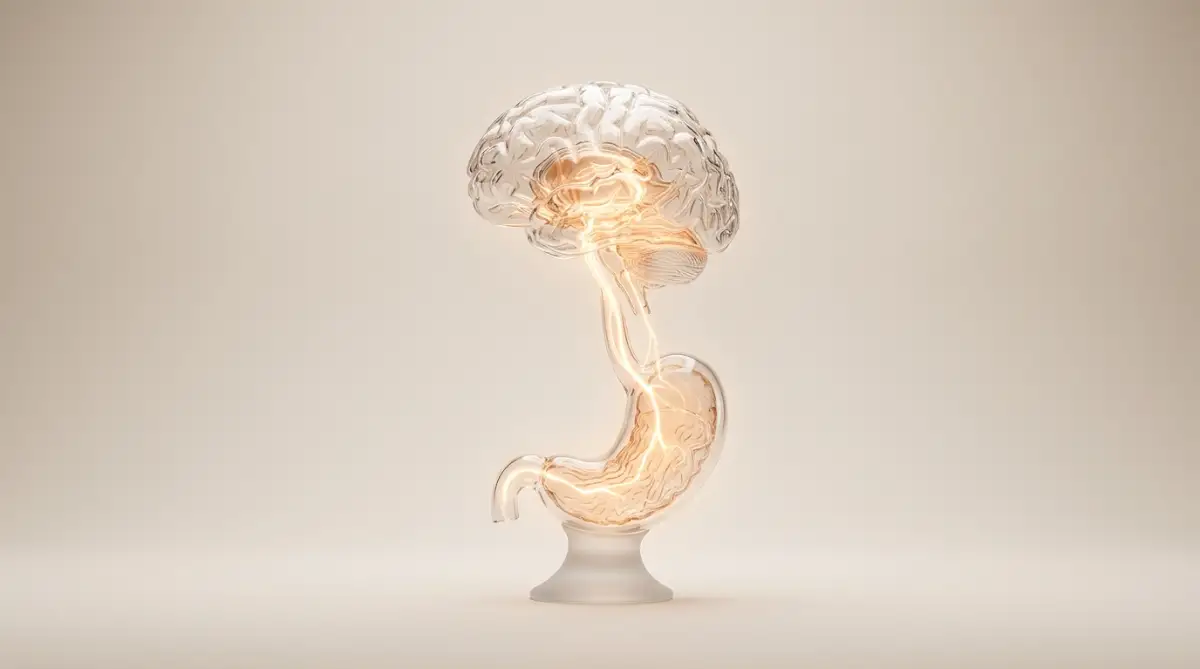
To flip the switch back to rest mode, you must stimulate your vagus nerve. This nerve runs from your brain down into your gut and acts as the master brake pedal for stress.
One of the fastest biological ways to reduce stress in real time is the Physiological Sigh. Researchers have shown that this specific breathing pattern pops open collapsed air sacs in your lungs and lowers your heart rate within seconds.
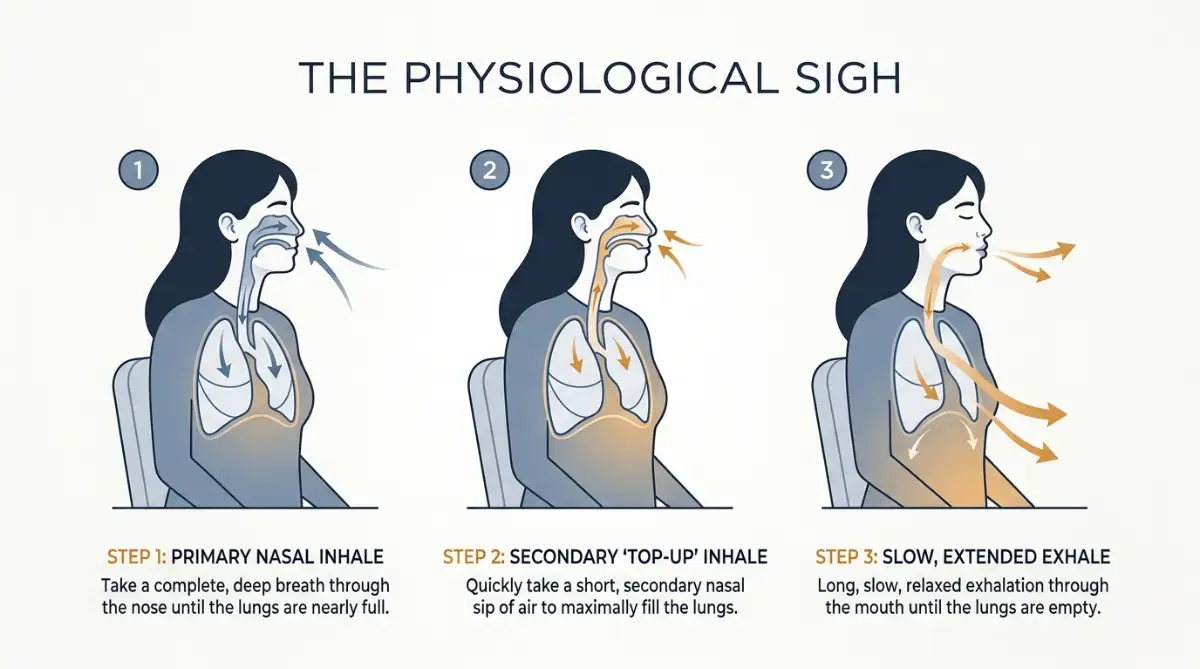
Here is how to do it anywhere, whether at your desk or in your car:
- Take a deep, smooth breath in through your nose for two seconds.
- At the very top of your breath, take a second, sharp sip of air to completely fill your lungs.
- Open your mouth and let out a long, slow sigh for six to eight seconds.
- Repeat this simple cycle just three to five times in a row.
Real-Life Scenario: Imagine you are about to walk into a high-stress meeting. Your chest feels tight and your hands feel cold. Instead of clenching your jaw, step into the restroom and complete three rounds of the physiological sigh. Notice how your shoulders instantly drop and your pulse stabilizes.
Step 2: Fix Your Internal Clock (Light and Cellular Timing)
When you are heading toward burnout, your natural circadian rhythm becomes chaotic. You feel sluggish in the morning when you need energy, and you feel wired at night when you need to sleep.
This happens because your cells have lost their daily timing cues. You can easily reset this clock by using the most powerful natural signal available: natural light.
The Morning Light Routine
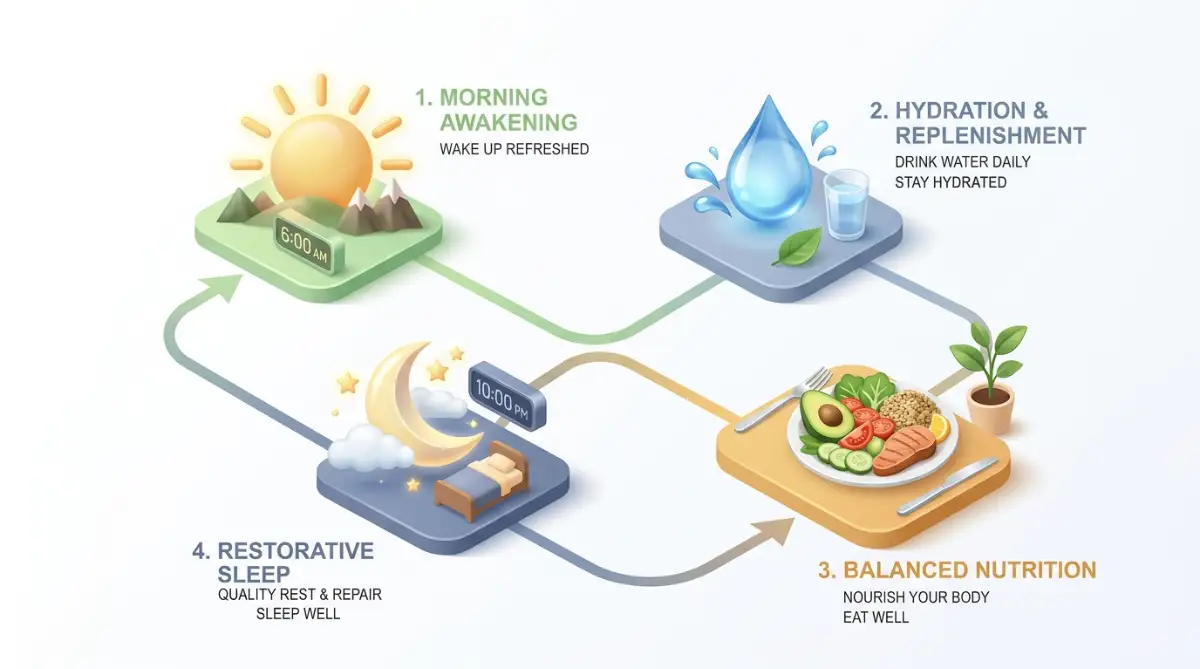
Getting bright natural light into your eyes within one hour of waking up sets off a healthy surge of morning cortisol. This gives you clean alertness and starts a 14-hour timer for your body to release melatonin at night.
- Step Outside Early: Spend 10 to 15 minutes outdoors within an hour of getting out of bed. Even on a cloudy day, outdoor light is far brighter than indoor lighting.
| Signal Type | Normal Daily Tiredness | Approaching Nervous System Burnout |
| :--- | :--- | :--- |
| Morning Energy | Clears within 20 mins after water | Stays heavy and groggy past noon |
| Caffeine Response | Gives clean, sustained focus | Triggers heart jitters and gut tension |
| Recovery Time | Restored after one good night of sleep | Still exhausted after an entire weekend off |
| Mental Patience | Normal handling of daily tasks | Minor requests trigger instant overwhelm |
- Skip the Sunglasses Temporarily: Allow the natural light to reach your retinas without looking directly at the sun.
- Delay Your First Coffee: Wait 60 to 90 minutes after waking before drinking coffee. This allows your brain to clear out residual sleep chemicals naturally, preventing the dreaded 2 PM afternoon energy crash.
Step 3: Rebuild Your Physical Energy Reserves
When you run on fumes, your body burns through stored minerals and nutrients at double speed. Stress quickly drains your body of magnesium, sodium, and potassium, which are needed for nerve signals and muscle relaxation.
Eating simple sugars or skipping meals causes your blood sugar to spike and crash. Every blood sugar crash triggers another emergency release of stress hormones, making you feel anxious and shaky.
Build a Fuel Shield with Balanced Meals
Think of your body's energy like a campfire. Sugary snacks and refined pastries are like dry leaves; they create a quick burst of heat and then burn out instantly. Protein and healthy fats are like solid oak logs that burn slowly and steadily for hours.
- Anchor Your Breakfast with Protein: Aim for 25 to 30 grams of protein in your first meal of the day. Eggs, Greek yogurt, or a clean protein smoothie keep your blood sugar flat and steady.
- Replenish Lost Minerals: Add a small pinch of unprocessed sea salt to your morning water, or eat foods rich in potassium like avocados and bananas.
- Hydrate Before You Caffeinate: Drink 16 ounces of plain water right after waking up to rehydrate your brain and kick-start your metabolism.
Quick Self-Check: Tracking Your Daily Stress Load
To help you monitor where you stand each day, use this quick checklist. If you check off three or more items, pause and apply one of the steps above:
- Waking up with a dry mouth or clenched teeth
- Feeling an energy crash between 2:00 PM and 4:00 PM
- Craving salty or highly sweet snacks mid-morning
- Feeling easily annoyed by normal ambient sounds
- Struggling to fall asleep despite feeling totally exhausted
Taking care of your body is not something you save for vacation days. By using simple breathing resets, getting morning sunlight, and stabilizing your meals, you build a protective barrier that stops burnout before it takes hold.
Advanced Strategies to Restore Your Nervous System
Now that you understand how to reset your morning clock and balance your daily meals, it is time to look at deeper restoration. True physical recovery requires targeted practices that help your nervous system repair itself while you rest.
Let us explore two advanced methods you can add to your routine to rebuild long-term stamina.
Step 4: Master Non-Sleep Deep Rest (NSDR)
When you feel mentally overloaded in the middle of the afternoon, taking a nap is not always possible. This is where Non-Sleep Deep Rest (NSDR) becomes your secret tool.
NSDR is a structured relaxation technique that slows your brainwaves down from active beta frequencies to calming theta waves. It gives your brain the benefits of light sleep while you remain fully awake.
How to Practice a 10-Minute NSDR Session
You can practice this routine at your desk, on your living room couch, or even in a parked car during a lunch break:
- Sit or lie down in a comfortable position and gently close your eyes.
- Take three slow, deep breaths, letting your belly expand fully on each inhale.
- Bring your mental attention down to your feet, consciously releasing all muscle tension.
- Slowly move your awareness upward through your calves, thighs, stomach, chest, and jaw.
- Spend ten minutes in this state of passive body awareness without trying to force sleep.
Practical Example: When Mark, an accountant, felt his focus fading at 2:00 PM, he stopped grabbing energy drinks. Instead, he put on noise-canceling headphones and did a 10-minute NSDR track. Within two weeks, his afternoon brain fog vanished completely.
Step 5: Build a Low-Stimulation Evening Runway
Most people work on bright laptop screens until 10:30 PM and then expect their brain to fall asleep instantly at 11:00 PM. Your brain needs a gentle ramp-down period to shift into deep recovery mode.
If you jump straight from high mental stimulation into bed, your nervous system remains on alert. This causes fragmented sleep, frequent night wakings, and morning grogginess.
The Temperature Drop Secret
Your core body temperature must drop by about two degrees Fahrenheit to initiate sound sleep. You can speed up this process by taking a warm bath or shower 60 minutes before bed.

When you step out of the warm water into a cooler room, your blood vessels dilate. This quickly cools your internal core and sends a powerful biological sleep signal straight to your brain.
How to Maintain High Energy for the Long Run
Rebuilding your body after long periods of stress is not a one-week project. To make these changes stick for good, you must learn how to budget your personal energy just like money.
Use this simple energy budgeting framework to keep your daily schedule balanced:
Set Clear Stopping Points: Pick a firm time each evening when all work communication stops completely.
- Take Micro-Breaks: Step away from your computer screen for three minutes every hour to stretch your neck and look into the distance.
- Track How You Feel: Keep a simple pocket notebook to write down what activities give you energy and what habits drain you.
Five Major Mistakes That Derail Recovery
When people try to fix chronic fatigue, they often make innocent mistakes that make the problem worse. Avoiding these common traps will save you months of frustration and protect your physical health.
1. The Weekend Sleep Binge
Sleeping in until noon on Saturdays to make up for lost sleep during the week actually damages your internal clock. This habit creates social jetlag, making it impossible to fall asleep on Sunday night and leaving you exhausted on Monday morning.
Keep your wake-up time within a 60-minute window every day of the week to protect your rhythm.
2. Pushing Through Intense Workouts When Drained
Exercise is great for healthy bodies, but heavy high-intensity interval training (HIIT) adds massive physical stress to an already depleted body. When your adrenal system is exhausted, intense exercise just raises your cortisol levels even higher.
Switch to light walking, gentle swimming, or restorative stretching until your baseline morning energy returns.
💡 Quick Rule of Thumb for Workouts: If your resting morning heart rate is 5 to 7 beats higher than your normal average, skip the heavy weights or intense running. Give your body a 20-minute gentle outdoor walk instead. Active recovery protects your adrenal system while keeping your circulation moving.
3. Revenge Bedtime Procrastination
When you spend your entire day taking care of work and family duties, you might stay up late watching shows or scrolling on your phone just to feel like you have free time.
This steals your most valuable deep-sleep hours and exposes your eyes to blue light, completely halting natural melatonin release.
4. Ignoring Weak Boundaries
You cannot heal an overworked body if you keep saying "yes" to every single project, favor, and social invite. Every commitment you accept requires energy that your body is currently trying to use for physical repair.
Protecting your calendar is a necessary medical choice, not an act of selfishness.
5. Stopping Good Habits Too Soon
Many people start feeling slightly better after five days of good sleep and balanced meals, so they immediately return to 14-hour workdays and skipped lunches.
Your nervous system needs weeks of steady care to build deep resilience. Stick with your new routines even after your initial energy returns.
Your Daily Path Forward to True Energy and Calm
Recovering from deep exhaustion is not about doing everything perfectly from day one. It is about making small, kind choices that respect your body's natural limits.
Start by choosing just one tool from this guide today. Step outside for ten minutes of sunlight tomorrow morning, practice three physiological sighs when you feel stressed, or step away from screens thirty minutes earlier tonight.
Your body is remarkably resilient and always wants to heal. When you give it the simple signals of safety, real food, and regular rest, it will reward you with steady focus, balanced mood, and vibrant daily energy.