The Silent Nightmare of Unfair Loan Agreements
You took out a quick loan to cover a sudden emergency, and now it feels like you are stuck in a financial maze with no clear exit. I have seen exactly how these shady agreements slowly drain bank accounts, leaving hardworking people stressed and broke. The good news? You actually have strong legal rights to fight back, stop the harassment, and protect your money right now.
Every hard-earned paycheck disappears before you can even buy basic groceries. You are working harder than ever, yet you are constantly falling further behind. This is the harsh reality of falling into a toxic loan trap.
The heavy stress spills into your family life, making you snap at the people you love the most. You feel completely trapped, isolated, and ashamed of your situation. But I want you to know that you are not alone, and it is entirely not your fault.
Unscrupulous lenders design these financial traps very carefully. They actually want you to fail so they can keep charging you forever.
People search desperately for a way out, but they often stumble into much worse situations. Misinformation is everywhere on the internet, and following bad advice will cost you serious money.
Here is how false information keeps you trapped in the cycle:
- Fake rescue programs: Many online ads promise to wipe away your debt instantly. They simply charge you heavy upfront fees and then completely disappear.
- The "roll-over" myth: Lenders will often convince you that taking a new loan to pay off the old one is a smart move. In reality, it just triples your interest rate.
- Scare tactics disguised as law: Aggressive debt collectors lie about having the power to arrest you. They threaten to seize your home without ever showing a real court order.
- Ignoring the fine print: Many people believe that if a company operates publicly, their contracts must be fair. Sadly, legal loopholes allow hidden penalties to slowly drain your savings account.
This continuous cycle of deception does more than just empty your wallet every month. It completely shatters your mental wellbeing and ruins your daily peace.
Here is how these toxic loans attack your mental health:
- Constant anxiety: The dread of answering unknown phone calls makes you jump every time your phone vibrates.
- Loss of self-worth: You begin to severely blame yourself for being "foolish" or "irresponsible." You forget that you were intentionally tricked by professional manipulators.
- Strained relationships: Keeping money secrets from your spouse or partner creates a toxic home environment. Everything becomes built on heavy guilt and constant fear.
- Paralysis by overanalysis: The deep fear of making another money mistake stops you from taking any action at all. You just freeze, hoping the massive problem will magically disappear.
You just need immediate relief, and these bad lenders know this fact very well. They use confusing legal jargon and complicated math to hide the true cost of borrowing money. They smile warmly, shake your hand, and quickly hand you the cash.
But right behind that friendly smile is a calculated system designed to keep you paying them forever. I have seen countless hardworking individuals lose their entire life savings because they trusted the wrong financial institution. The whole system often seems completely rigged against the average working consumer.
However, the law provides very specific tools to help you fight back and win. You just need to know exactly where to look and how to use these tools properly. By clearly understanding your legal rights, you can completely flip the script on these bad actors.
Your Next Steps
- Find the real math: Always calculate the Annual Percentage Rate (APR) before signing any paper.
- Block bank access: You have the legal right to stop automatic withdrawals at your bank today.
- Stop the calls: Sending a certified letter legally forces debt collectors to stop calling your phone.
- Check the legal limits: Your state sets strict rules on interest rates; if lenders break them, your contract might be void.
How to Defend Yourself Against Toxic Lenders
Getting out of a bad financial deal requires a clear head and a solid game plan. You cannot fight predatory lenders using emotions or anger. You must use logic, cold hard facts, and the law to protect your money.
I am going to show you three highly practical steps to shield yourself from these financial predators. You can start applying this exact advice to your life today.
Step 1: Decode the True Cost Hidden in the Contract
The biggest weapon a predatory lender has is intentional confusion. They will talk to you all day about your "low monthly payment" to make the deal sound great. But they will actively distract you from the actual total cost of the loan.
You must always look past the monthly payment and find the Annual Percentage Rate (APR). The APR includes the interest rate plus all the hidden fees they baked into the contract.
Let us look at a real-life example to make this perfectly clear. Imagine your friend Sarah needs a quick loan, and the lender promises a simple "5% fee." It sounds incredibly cheap and easy, right?
But because the loan is only for two weeks, that tiny 5% fee actually translates to a 400% APR. This is a scientific mathematical fact based on how compound interest silently destroys your wealth. When you calculate the yearly cost, you realize you are paying back four times what you borrowed.
Myth vs. Fact: Unmasking Hidden Loan Costs
- The Myth: "We only charge a flat 15% fee, which is cheaper than a credit card."
- The Fact: A 15% flat fee on a two-week loan actually equals a massive 391% APR. Always ask the lender for the annual rate, not the flat fee.
- The Myth: "Paying it off early will save you money."
- The Fact: Many bad contracts include a sneaky "prepayment penalty," meaning they punish you financially for clearing your debt too fast.
To protect yourself, always demand to see the Amortization Schedule before you sign anything. This is simply a printed table showing exactly how much of your payment goes to the main loan and how much goes to interest.
If a lender refuses to give you this simple document, you must walk away immediately. A legitimate financial institution will never hide their math from a customer. A close-up, highly professional shot of a person's hand holding a bright red marker, circling hidden penalty fees on a complicated loan contract. The lighting is bright and modern, showing a sense of financial awareness and legal protection. Shot in 4k, photorealistic, clean office desk background.
Pro Tip for Consumers: Watch out for "prepayment penalties" buried in the fine print. Predatory lenders will actually charge you a massive fine if you try to pay off your debt early. They do this because they want to milk you for monthly interest charges for as long as possible.
Step 2: Recognize the Psychological Traps and Red Flags
Predatory lenders rely heavily on psychological pressure to close their bad deals. They want to rush your decision-making process so you do not ask important questions. If you feel rushed or pressured, you are likely dealing with a bad actor.
One of the biggest red flags is the "Guaranteed Approval" promise. If a lender tells you they do not care about your credit score at all, run the other way. This is not a kind favor; it is a calculated business trap.
Here is the logical reason why this happens. When lenders do not check your ability to repay, they are assuming massive risk. To cover that risk, they plan to extract money from you through highly aggressive collection tactics.
They might demand direct, uncontrolled access to your personal checking account. They might even ask for the title to your car as collateral for a very tiny loan.
Consider the scenario of John, who gave a payday lender his bank account routing number. The lender started pulling money out on random days, causing John's bank to hit him with dozens of overdraft fees. John lost hundreds of dollars in bank penalties just because he gave away his banking control.
Never sign a contract that has empty or blank spaces left on the paper. Unscrupulous companies will happily write in extra fees or new terms after you leave their office. Always draw a thick line through any blank spaces before you put your signature on the document.
You must also be very careful about signing any forced arbitration clauses. These sneaky clauses legally prevent you from joining a class-action lawsuit if the company scams you. They force you to handle disputes in a private meeting where the lender usually holds all the power.
Step 3: Assert Your Legal Consumer Rights on Paper
If you are already trapped in a terrible loan, you must shift from being a victim to an empowered consumer. You have very strong legal rights designed to stop harassment and financial abuse. The key is knowing exactly how to enforce these specific rules.
When aggressive debt collectors start calling your phone non-stop, you can legally make them stop. Under consumer protection laws, you have the absolute right to demand all communication be in writing.
You simply need to send a formal Cease and Desist Letter to the collection agency. Send this letter through certified mail so you get a legal receipt showing they received it.
What to Include in Your Cease and Desist Letter
To make your letter legally binding, ensure you include these three things:
- Your full name, address, and the specific account number.
- A clear, direct statement saying: "I demand that you stop contacting me regarding this debt."
- A sentence requesting that they only contact you in writing from now on.
Why is a piece of paper so powerful? When you write a formal letter, it creates a permanent legal paper trail. Lenders and collectors are terrified of paper trails because government regulators can audit them easily.
Once they receive your certified letter, it becomes highly illegal for them to call your phone. They cannot call your boss, they cannot call your family, and they cannot harass you at work. If they do call you after receiving the letter, you can actually sue them for a lot of money.
You must document absolutely everything they do from this point forward. Keep a small notebook near your phone and write down the date and time of every single interaction. If they leave a threatening voicemail, save that audio file in multiple places.
If you find yourself in too deep, do not hesitate to contact a qualified consumer protection attorney. Many good lawyers offer free initial consultations to review your specific contract. They can easily spot illegal terms that might completely invalidate the debt you owe.
You can also file a formal complaint with government financial regulatory agencies. These agencies exist specifically to investigate bad lenders and force them to play by the rules. Sometimes, just the threat of a government investigation is enough to make a predatory lender back off entirely.
Remember, taking that first small step towards protecting yourself is always the hardest part. But once you start pushing back with legal facts, the fear begins to slowly fade away. You have the power to stop the harassment, protect your bank account, and reclaim your financial freedom today.
Mastering Advanced Strategies to Outsmart Financial Predators
Once you have identified a toxic loan and understand your basic rights, it is time to take aggressive defensive action. You need to build a strong legal wall around your personal assets immediately.
The following advanced strategies will help you cut off a predatory lender’s power source. We are going to lock down your money and use state laws to your absolute advantage.
Strategy 1: Revoke Automatic Bank Withdrawals Instantly
Most bad lenders require you to set up automatic payments directly from your checking account. They use a system called ACH (Automated Clearing House) to pull money whenever they want.
This gives them total control over your paycheck before you can even buy groceries. You might feel totally helpless, but you actually have the legal right to stop this process today.
Think of an ACH authorization like giving a stranger the front door key to your house. You have the absolute right to change the locks whenever you feel unsafe.
To stop these automatic withdrawals, you must revoke your authorization in writing. First, send a formal letter to the lender clearly stating they no longer have permission to debit your account.
Next, you must contact your bank directly and issue a Stop Payment Order on that specific company. Do not just take the bank teller's word for it; insist on filling out the official stop-payment forms.
Let us look at a real-life scenario to see how this works. David noticed his lender was withdrawing random amounts, leaving him with heavy overdraft fees every single week. He finally went to his bank manager, filled out the revocation form, and completely blocked the lender.
By taking this one simple step, David instantly protected his next paycheck. He forced the lender to negotiate with him instead of just stealing his money in the middle of the night. A relieved and confident young man walking out of a modern bank building on a sunny day. He is holding a white paper document that has a red "STOP PAYMENT APPROVED" stamp on it. Natural sunlight, blurred bank interior in the background, highly realistic, emotional storytelling photography.
Strategy 2: Weaponize State Usury Laws to Invalidate Contracts
Did you know that local governments set strict limits on how much interest a company can charge? These limits are called Usury Laws, and they act like a strict speed limit for financial institutions.
If a lender ignores these legal speed limits, their entire contract might become completely void. This means you might not legally owe them any of the extra money they claim you do.
Predatory lenders try to bypass these laws by operating out of foreign countries or specific native reservations. However, courts frequently rule that the laws of your home state still protect you.
If you live in a state where the maximum interest rate is 36%, a lender cannot legally charge you 400%. If they try to enforce an illegal interest rate, a smart consumer protection attorney can get the case thrown out.
You can easily find your state's specific usury limits by checking your local Attorney General's website. If you discover your lender is breaking this law, you hold all the leverage in the negotiation.
You can use this powerful information to demand a fair settlement on the original principal amount. You should never pay illegal interest rates just because a greedy company printed them on a piece of paper.
Strategy 3: File a Bulletproof Federal Complaint
When local tactics are not enough, you need to call in the heavy hitters from the federal government. Bad lenders are terrified of federal regulatory agencies because these groups can shut down their entire business.
The most powerful ally you have is the Consumer Financial Protection Bureau (CFPB). This government agency exists solely to investigate shady financial practices and protect ordinary consumers like you.
Filing a complaint with the CFPB is completely free and surprisingly easy to do online. You just need to provide your contract details, proof of payment, and a clear explanation of the harassment.
Once you hit submit, the CFPB assigns a tracking number and forwards your complaint directly to the lender. The lender is legally required to respond to the government within a very short timeframe.
I have seen incredibly aggressive debt collectors back down immediately after receiving a CFPB notice. They know that ignoring the government will result in massive corporate fines and heavy legal audits.
By filing this complaint, you are not just helping yourself get out of a bad deal. You are actually helping the government build a massive case to shut down that predatory business forever.
How to Maintain Your Long-Term Financial Shield
Escaping a bad loan is only half the battle; staying out of the trap forever is your ultimate goal. You need to build a system that prevents you from ever needing a toxic payday loan again.
The secret lies in creating a tiny, fully automated emergency fund at a local credit union. Unlike giant corporate banks, local credit unions are non-profit organizations designed to genuinely help their members.
Start by automatically transferring just twenty dollars from every paycheck into a hidden savings account. Over time, this small habit builds a solid cash buffer for unexpected medical bills or car repairs.
When you have your own cash buffer, you never have to walk into a predatory lending store again. You finally become your own bank, granting yourself peace of mind and true financial independence.
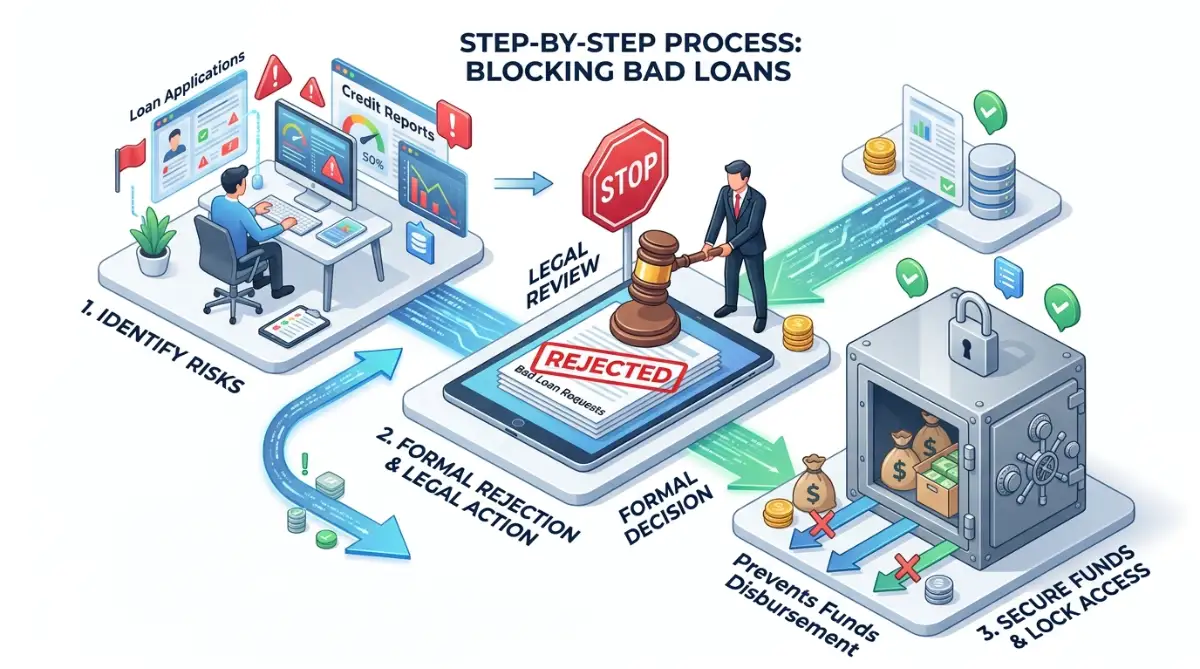
The Most Dangerous Traps Borrowers Fall Into
When you are fighting against aggressive financial institutions, a single wrong move can cost you thousands of dollars. Predatory lenders actually rely on you making simple mistakes out of deep fear and extreme panic.
You must stay incredibly vigilant and avoid these common pitfalls at all costs. Here are the five biggest mistakes you must avoid when dealing with unfair debt.
Mistake 1: The Endless Refinancing Treadmill
Lenders will often call you with a "friendly" offer to lower your current payment by rewriting the loan. They make it sound like they are doing you a massive favor to help you out of a bind.
In reality, they are just rolling your old debt into a brand-new loan with fresh, expensive fees. This incredibly dangerous practice is known as loan flipping.
Every time you flip the loan, your original principal balance actually grows larger. You could end up paying for five years and still owe more than you originally borrowed. Never refinance a bad loan with the exact same company that trapped you in the first place.
Mistake 2: Ignoring Official Court Summons
Debt collectors love to use fake legal threats to scare you into paying over the phone. But if a real process server hands you an official lawsuit, you must take it very seriously.
Many terrified consumers simply throw the court papers in the trash, hoping the problem will magically disappear. This is the absolute worst thing you can possibly do for your financial future.
If you do not show up to court, the judge will issue an automatic Default Judgment against you. This gives the predatory lender the legal power to drain your bank account or garnish your hard-earned wages. You must always show up to court, ideally with a lawyer, and force them to prove the debt is real.
Mistake 3: Accidentally Waking Up Zombie Debt
Every state has a strict "Statute of Limitations" on old debt, which usually ranges from three to six years. Once this time limit fully expires, collectors can no longer sue you for the money.
We call this expired obligation "Zombie Debt" because it should be legally dead and buried in the past. However, shady collectors will call you begging for a tiny "good faith" payment of just five dollars.
If you agree and make that tiny payment, you instantly reset the legal clock to day one. You have just brought that Zombie Debt back to life, giving them full power to sue you again. Never make a payment on an old, forgotten debt without consulting a consumer rights attorney first.
Mistake 4: Taking Legal Advice from Your Enemy
When a debt collector gets you on the phone, they will often pretend to be your legal advisor. They will confidently tell you that bankruptcy will not work or that you will go to jail for unpaid bills.
Please remember that this person works on a heavy commission and only gets paid if they successfully scare you. Debt is a civil matter, and there are absolutely no debtor's prisons left in the modern legal system.
They are intentionally lying to you to bypass your logical thinking and trigger a deep emotional response. Never accept financial advice from the exact person who is actively trying to take your money.
Mistake 5: Failing to Create a Paper Trail
If a debt collector promises you a reduced settlement over the phone, do not celebrate just yet. Verbal agreements are completely worthless when dealing with predatory financial institutions.
They will gladly take your settlement money today and then sue you for the remaining balance tomorrow. If you complain, they will simply deny that the phone conversation ever took place.
You must get every single promise, settlement offer, and payment arrangement in a signed written document. If it is not printed on official paper, it simply does not exist.
Your Roadmap to Reclaiming Complete Financial Freedom
Fighting back against a predatory lender might feel incredibly overwhelming right now. But you now possess the exact legal knowledge and strategic tools needed to defend your family's money.
You know how to spot the hidden traps, revoke illegal bank access, and force collectors to follow the law. You are no longer a helpless victim; you are an educated, empowered consumer who refuses to be bullied.
Start by gathering all your loan documents today and calculating the true cost of your current agreements. Send out those certified cease and desist letters to stop the endless daily harassment calls.
Remember, these greedy companies rely entirely on your silence and your deep fear to make their profits. When you finally stand up and use the law against them, their entire aggressive system quickly falls apart.
Take a deep breath, trust the legal process, and take that very first step toward financial peace today. You absolutely deserve to sleep well at night, completely free from the heavy burden of toxic debt.