
The Heavy Burden of Unpaid Bills
I know exactly how terrifying it is to hide from unknown phone numbers while your mailbox overflows with angry final notices. You probably think your only way out is handing everything you own over to a bankruptcy court, but that is simply not true. You actually have powerful legal loopholes right at your fingertips to force aggressive creditors to back down, and I am going to show you exactly how to use them to protect your paycheck today.
You originally borrowed money to cover basic living expenses or unexpected medical emergencies. But high interest rates quickly turned a small, manageable problem into a giant financial monster. Every time you get paid, your hard-earned money vanishes instantly into minimum payments.
You feel completely trapped in a dark room with the walls slowly closing in on you. It feels like you will never be able to build savings or provide a secure future for your family. But I want you to know that you have real options, and you are not entirely to blame for this mess.
Finding a real, honest solution feels impossible because bad advice is simply everywhere. When you search for legal help online, you usually end up with much worse problems.
Here is how false information keeps you trapped in this endless cycle:
- Scam relief companies: Many shady agencies promise to magically cut your debt in half overnight. They simply steal your heavy upfront fees and then disappear completely without negotiating anything.
- The bankruptcy myth: Well-meaning friends might tell you that filing for bankruptcy is a quick and easy reset button. They leave out the painful fact that it destroys your credit score and financial reputation for up to ten years.
- Hiding your physical assets: Some dangerous internet forums suggest transferring your car or house to a relative's name to hide it. This is actually a serious crime called fraudulent conveyance, and it can land you in deep legal trouble with a judge.
This massive financial weight does heavy, continuous damage to your daily life. It slowly chips away at your confidence, leaving you feeling entirely exhausted.
Here is how these unpaid accounts attack your mental peace:
- Endless sleepless nights: Your tired brain refuses to shut down at midnight. You are constantly calculating how to pay the rent while keeping the electricity turned on.
- Deep shame and isolation: You stop answering phone calls from good friends because you cannot afford to go out for dinner. You feel like a massive failure, hiding your empty wallet from the people you love.
- Relationship burnout: Money arguments become a daily routine at the dinner table. The heavy stress turns normal, quiet conversations into explosive fights with your spouse or partner.
They actually want you to pay just the tiny minimum amount every single month. When you only pay the minimum, nearly all of your cash goes straight to their profit margins as pure interest. You end up paying for that single tank of gas or grocery trip for over five years.
If you owe a large hospital bill, the hospital billing department often uses aggressive collection agencies to hunt you down. These aggressive agencies buy your old account for just pennies on the dollar. They then use intense psychological pressure to force you into paying the full original amount.
Most hardworking people believe their only legal way out is to declare total bankruptcy. You might think handing over all your personal assets to a strict court trustee is the only option left. But you have other incredibly powerful tools hiding right in plain sight.

Your Quick Action Blueprint
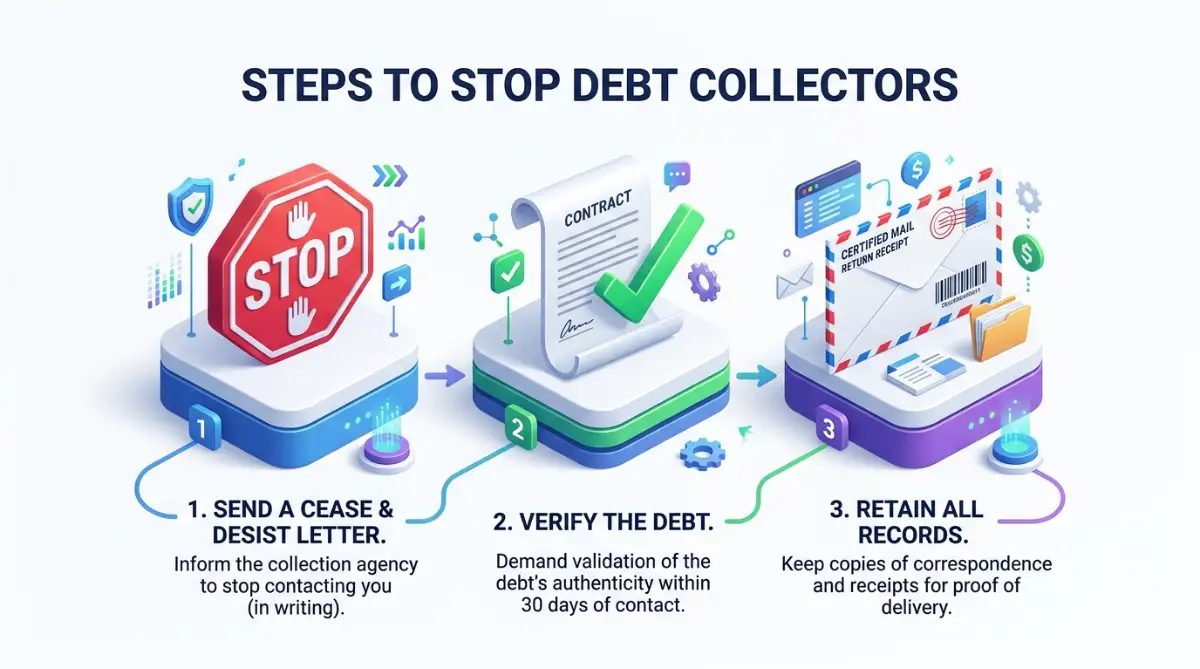
- Demand hard proof: Always force collection agencies to provide the original, signed contracts before you ever pay them a single dime.
- Command the communication: Use a certified Cease and Desist letter to legally block those annoying and stressful daily phone calls.
- Leverage the legal clock: Check your state's expiration dates—if an unpaid account is too old, the company legally cannot sue you in court.
- Settle for less: Offer a one-time, lump-sum payment of 20% to 40% to clear an account entirely without ever needing a bankruptcy judge.
Proven Legal Defenses to Settle Your Accounts
Getting out of a deep financial hole requires a very clear head and a solid legal game plan. You cannot negotiate with aggressive banks using fear, anger, or high emotions. You must use logic, cold hard facts, and consumer protection laws to guard your money.
I am going to show you three highly practical and legally sound steps to shield yourself from creditors. You can start applying this specific advice to your daily life right now.
Step 1: Force the Collector to Prove You Owe the Money
The biggest weakness a debt collector has is their terrible record-keeping system. When original creditors sell your account to a third-party agency, a lot of critical data gets lost in the transfer. They often buy spreadsheets containing thousands of names, but they rarely receive the actual signed contracts.
Under the Fair Debt Collection Practices Act (FDCPA), you have the legal right to challenge them. You can demand that they legally prove you owe the exact amount they are asking for. This powerful process is called Debt Validation, and it is your strongest first line of defense.
Let us look at the science and logic behind why this works so well. In a court of law, a company cannot just say you owe them money; they must show the original paper trail. If they do not have your original signature or a full accounting of all added fees, their legal claim is completely weak.
To trigger this protection, you must send a formal Debt Validation Letter within thirty days of their first contact. Send this letter through certified mail so you get a green receipt proving they received it. Once they get this letter, the law strictly forces them to stop all collection efforts until they provide solid proof.
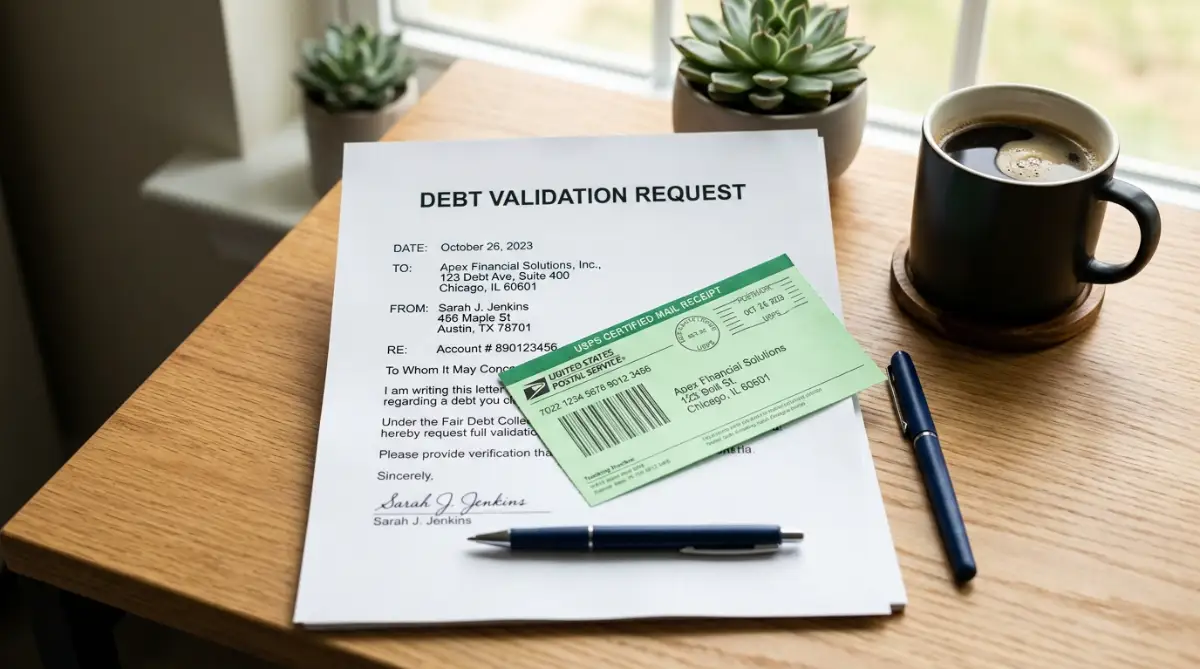
Imagine a real-life scenario with a man named Mark. A collection agency called Mark demanding four thousand dollars for an old medical bill. Mark did not panic; he simply mailed a strict validation letter requesting the original itemized hospital invoice.
The collection agency could not find the original paperwork in their messy digital files. Because they could not legally validate the balance, they had to delete the account from Mark's credit report entirely. Mark legally cleared a massive bill just by asking for written proof.
The Debt Validation Process
- What if they ignore my letter? If the agency does not reply within 30 days but continues calling you, they are actively breaking federal law. You can actually sue them for monetary damages.
- Does this trick work on original creditors? It works best on third-party collection agencies who buy old accounts in bulk. They almost always lose your original signed paperwork during the massive data transfer.
Pro Tip for Consumers: Never admit that the debt belongs to you while talking on the phone. Simply state that you are requesting formal validation through the mail. Admitting you owe the money can accidentally reset the legal time limit they have to sue you.
Step 2: Shield Your Income From Illegal Harassment
Creditors rely heavily on psychological pressure and extreme annoyance to break your spirit. They want to rush your decision-making process by calling you at work or bothering your family members. If you feel rushed or deeply pressured, you are likely to make a bad financial choice just to make the phone stop ringing.
One of the greatest legal protections you have is the power to control how they communicate with you. The FDCPA gives you the absolute right to demand that all communication be strictly in writing. This stops the endless phone ringing and immediately lowers your daily anxiety levels.
Here is the logical reason why paper trails are your best friend. When debt collectors talk on the phone, they frequently make illegal threats or promise fake discounts. But they are absolutely terrified of putting those same lies on a piece of paper. Government regulators can easily audit written letters to catch companies breaking the law.
To stop the phone calls, you need to mail a formal Cease and Desist Letter to the agency. You explicitly state that they are no longer allowed to call your home, cell phone, or workplace. Once they receive this certified document, calling you becomes a clear violation of federal law.
Consider the case of Sarah, who was receiving ten calls a day from an aggressive credit card collector. She was terrified of losing her job because the collectors kept calling her office desk. Sarah sent a simple, one-page cease and desist letter by certified mail.
The very next day, her phone was completely silent, giving her the mental space to think clearly. If the agency had continued calling her, Sarah could have legally sued them for one thousand dollars per illegal phone call. You hold the power to dictate the terms of communication, so use it aggressively.
Step 3: Execute a Strategic Lump-Sum Settlement
If the collection agency successfully validates the debt, you still do not have to pay the full balance. You can legally negotiate a highly reduced payoff amount, which is known as a debt settlement. This is often the smartest alternative to completely ruining your credit with a bankruptcy filing.
Debt Settlement vs. Bankruptcy
- Credit Score Impact: A settlement causes a temporary dip, while a bankruptcy stays permanently glued to your public record for 7 to 10 years.
- Asset Protection: With a strategic settlement, you keep your car and home. In Chapter 7 bankruptcy, a court trustee can actually sell your personal property to pay off the banks.
- Upfront Costs: Negotiating a settlement yourself costs just the price of a few postage stamps. Filing bankruptcy requires expensive court fees and heavy lawyer retainers
You might wonder why a company would ever agree to take less money than you actually owe. The economics of the collection industry explain this perfectly. Third-party buyers usually purchase your account for roughly four to ten cents on the dollar.
If you owe a thousand dollars, they probably bought the right to collect it for about fifty bucks. This massive profit margin gives you an incredible amount of room to negotiate a fair deal. They would much rather take a guaranteed small profit today than spend thousands of dollars trying to sue you in a courtroom.
To start a successful negotiation, you must gather a small chunk of cash to offer as a one-time payment. Let us say you owe five thousand dollars on an old credit card. You can call their settlement department and firmly offer to pay them two thousand dollars to clear the account today.
They will likely reject your first offer and try to push you into a long monthly payment plan. Never accept a monthly payment plan from a collection agency. Payment plans keep you in their system, and if you miss one payment, they add heavy penalty fees right back onto the balance.
Stick strictly to your lump-sum offer and politely explain that this is the only money you have available. If they say no, just hang up the phone and try calling back a few weeks later. Eventually, especially toward the end of the month when collectors need to meet their quotas, they will accept your reduced offer.
Once they verbally agree to the lower amount, you must demand a Settlement Agreement Letter in writing. Do not ever give them your bank account information until you hold that physical letter in your hands. This official paper proves that your single payment completely satisfies the entire balance forever.
By using these precise legal steps, you can save thousands of dollars and protect your family from severe financial harm. You are slowly building a protective wall around your money without ever stepping foot inside a bankruptcy courtroom. Stay completely organized, keep your emotions in check, and let the law do the heavy lifting for you.
Next-Level Strategies to Outsmart Creditors
Building on the first set of strategies, you now need some heavy legal firepower to finish the job. Creditors get very frustrated when consumers actually understand how the financial system works behind closed doors. By using these advanced tactics, you can legally force them to drop their claims entirely.
We are going to look at how to use their own rules against them. These steps will help you build a massive shield around your family's hard-earned money.
Strategy 4: Utilize the Expiration Date on Old Accounts
Did you know that unpaid bills actually have a strict legal expiration date? Every single state has a strict timeline called the Statute of Limitations. This rule acts like a ticking countdown clock for collection agencies.
Once this legal clock runs out, the company completely loses its right to sue you in a courtroom. They can still call you and ask for the money nicely, but their legal teeth are entirely gone. This timeline usually ranges from three to six years, depending entirely on your local state laws.
Let us look at a real-life example to make this perfectly clear. Imagine a woman named Linda who had a large medical bill from several years ago. A new collection agency bought the account and started threatening to garnish her wages immediately.
Linda checked her local laws and realized her specific statute of limitations was only four years. She calmly sent a certified letter stating the debt was legally "time-barred" and requested they stop calling. The agency immediately backed off because they knew they had absolutely no legal power left to fight her.

Strategy 5: Challenge Inaccurate Credit Report Entries
Sometimes, the easiest way to defeat a collection agency is to hit them where it hurts the most. You can legally challenge their right to report bad information on your public credit profile. The Fair Credit Reporting Act (FCRA) gives you the absolute power to dispute any inaccurate data.
Collection agencies are notoriously sloppy when they report data to the major credit bureaus. They frequently spell names wrong, list the incorrect balance, or report the exact same account multiple times. If any piece of that reported information is incorrect, the bureau must delete the entire negative entry.
You just need to send a formal, written dispute letter directly to Equifax, Experian, and TransUnion. The credit bureaus then have exactly thirty days to investigate your specific claim. If the collection agency cannot prove the information is one hundred percent accurate, the negative mark vanishes.
Consider a young man named James who found a mystery account dragging his score down. He sent a simple dispute letter pointing out that the opening date was mathematically impossible. The agency failed to respond in time, the mark was deleted, and his credit score jumped forty points in a single month.
How to Build a Permanent Financial Shield
Solving your current crisis is wonderful, but you must make sure you never end up here again. You need to build a permanent defense system that keeps you completely out of the borrowing trap. The secret lies in changing how you handle unexpected life emergencies.
You must build an automatic, untouchable cash reserve at a local credit union. Unlike giant corporate banks, local credit unions actually want to see their members succeed financially. You just need to set up a small, automatic transfer from every single paycheck you receive.
Even moving just twenty dollars a week will quickly build a solid barrier between you and financial disaster. When your car breaks down next time, you will pay cash instead of swiping a high-interest credit card. You become your own personal bank, giving you ultimate peace of mind.
You should also freeze your credit reports as a permanent protective measure against fraud. This completely stops identity thieves and shady companies from opening new accounts in your name. You hold the secret PIN code, meaning you control exactly who gets to look at your financial history.
Dangerous Pitfalls That Will Cost You Thousands
Navigating the legal system is exactly like walking through a heavily armed minefield. One wrong step can easily blow up your entire financial rescue plan and cost you dearly. Collection agencies actually rely on you making emotional mistakes out of pure panic and fear.
You must stay completely logical and avoid these common traps at all costs. Here are the five biggest errors that keep hardworking people trapped in the collection system forever.
Mistake 1: Making a Tiny "Good Faith" Payment
Collectors will often call and beg for a tiny payment of just ten or twenty dollars. They will smoothly tell you this shows "good faith" and will stop the daily phone calls. This is a massive legal trap designed specifically to destroy your legal protections.
If you make even a one-dollar payment on an expired account, you instantly reset the legal clock. That old, harmless account suddenly becomes legally active again, giving them full power to sue you. Never pay a single cent on an old account without checking the expiration date first.
Mistake 2: Giving Away Your Bank Details
During a highly stressful phone call, a collector might pressure you to set up automatic payments. They will ask for your checking account routing number to make the whole process "easier." Giving them this information is like handing a known thief the keys to your front door.
Once they have direct access, they can legally drain your account on random days of the week. They might pull out three hundred dollars on the day your rent is due, causing massive overdraft fees. Always pay your final settlements with a cashier's check or a money order to keep your real bank account hidden.
Mistake 3: Throwing Court Papers in the Trash
Many people get so overwhelmed by intense legal threats that they just ignore them completely. If a process server knocks on your door and hands you a real lawsuit, you must act immediately. Ignoring a real court summons is the absolute worst financial decision you can possibly make.
If you do not show up to your court date, the judge automatically rules in favor of the bank. This is called a Default Judgment, and it gives the collector terrifying new powers over your life. They can now legally freeze your bank account or take money directly out of your weekly paycheck.
Mistake 4: Taking Legal Advice from the Enemy
When debt collectors get you on the phone, they love pretending to be a helpful legal advisor. They will boldly lie and say that bankruptcy will permanently ruin your entire life. They might even threaten to have the local police arrest you for unpaid medical bills.
Please remember that owing money is a civil matter, not a criminal one. There are absolutely no debtor's prisons operating in the modern legal system. Never accept financial advice from the exact person who is actively trying to take your money.
Mistake 5: Trusting a Verbal Settlement Offer
Imagine you finally negotiate a great settlement deal over the phone with a collection agent. You feel incredibly relieved and immediately wire them the agreed-upon money. A month later, you are shocked to see they are suing you for the remaining balance anyway.
When you call to complain, they will simply claim that the previous phone conversation never happened. Because you do not have written proof, the judge will almost always side with the collection agency. If a settlement agreement is not printed and signed on official paper, it simply does not exist.
Your Blueprint for a Stress-Free Financial Future
Breaking free from heavy financial burdens might seem like an impossible mountain to climb right now. However, you now hold the exact legal strategies needed to outsmart the system and protect your wealth. You are no longer playing defense; you are actively taking control of your family's financial future.
You know exactly how to force companies to prove their claims logically. You understand the incredible power of a simple, certified letter sent through the mail. Most importantly, you know how to negotiate like a true professional and get absolutely everything in writing.
Remember, these aggressive financial companies rely entirely on your silence and your deep fear. When you finally stand up and use the real law against them, their entire collection machine breaks down. You hold significantly more legal power than they want you to believe.
Start by gathering all your messy paperwork today and reviewing your most aggressive accounts. Draft your very first validation letter and send it out before the weekend arrives. Taking that first small physical step will instantly reduce your anxiety and give you massive momentum.
You absolutely deserve to answer your phone without your heart racing in pure fear. You deserve to sleep deeply at night knowing your hard-earned paycheck is completely safe from corporate greed. Take a deep breath, trust the legal process, and start reclaiming your financial freedom today.