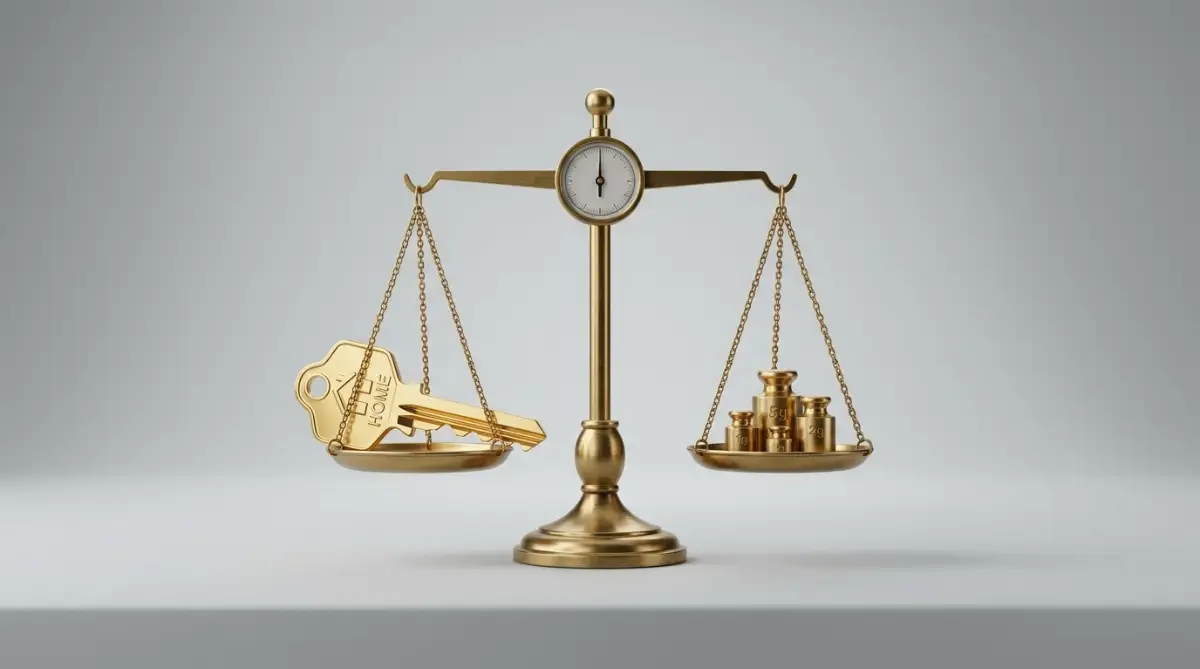
The Silent Financial Squeeze: Why Your Fixed-Rate Loan Feels Heavy Right Now
A few years ago, I proudly locked in a fixed-rate mortgage, thinking my monthly budget was safe forever. But when grocery bills and gas prices suddenly started climbing, my locked-in payment began to feel like a heavy anchor rather than a safe harbor. I had to learn the hard way how to protect my wallet, and that is why I am sharing my personal journey with you today. You sit at your kitchen table with a stack of bills in front of you. Your grocery receipt is longer, and the total is much higher than it used to be. Even though your fixed-rate loan payment stays the exact same every month, your bank account feels emptier. This is the daily reality of living through inflation. Your fixed mortgage or car payment was supposed to be your safe haven. Instead, you feel a quiet pressure building up in your household budget.
Every time you fill up your gas tank, you wonder where your extra money went. You try to cut back on small luxuries, but the numbers still do not add up. It feels like you are running on a treadmill that keeps moving faster. You are working just as hard as before, yet your financial security seems to slip away. This struggle is real, and you are definitely not alone in feeling this way. Many families are quietly fighting the same battle every single month.
Why Most Borrowers Struggle to Find the Right Path
Finding honest and clear answers online is surprisingly difficult for most borrowers. Here is why many people struggle to find the right path:
- Too Much Jargon: Most finance blogs use complex terms that make your head spin instead of giving clear advice.
- Conflicting Theories: You hear experts say inflation is great for borrowers, but your empty wallet tells you a different story.
- Bad Refinancing Advice: Some websites urge you to change your loan terms, which can lock you into worse interest rates.
- Lack of Practical Steps: You find plenty of economic history lessons but very few daily survival tips.
How Rising Costs Drain Your Peace of Mind
The constant stress of rising costs does more than just drain your wallet. It also takes a heavy toll on your daily life:
- Sleepless Nights: You lie awake wondering if you can keep making your payments if prices keep rising.
- Loss of Confidence: You start to doubt your ability to manage your money, even though you did nothing wrong.
- Family Tension: Arguments about small spending choices become more common as the budget gets tighter.
- Fear of the Future: Long-term financial plans like retirement begin to feel like an impossible dream.
Let us look closely at how this situation plays out in the real world. In theory, high inflation is supposed to favor people with fixed-rate debt. Economists say you are paying back your loan with money that is worth less than when you borrowed it. That sounds like a great deal on paper, does it not? If you owe a fixed amount, the real value of that debt shrinks over time. But this economic theory ignores a major factor: your personal income.
If your wages do not rise at the exact same pace as inflation, this theory breaks down. You still have to pay the same amount to your lender, but your dollar buys fewer groceries and less fuel. Your fixed loan payment does not shrink in dollar terms; it only shrinks in theoretical terms. Meanwhile, your daily living costs continue to rise. This creates a painful gap between what economic textbooks promise and what you actually experience in your life. You are left trying to balance a real-world budget with theoretical savings.
 How to Protect Your Finances and Manage Your Debt Today
Fortunately, you do not have to let rising prices control your financial future. You can take smart, logical steps to protect your budget and keep your loans on track. Here is a clear guide to help you manage your fixed-rate borrowing when prices climb.
Step 1: Track the Real Impact on Your Purchasing Power
Look at Your Loan Through an Inflation Lens
First, you must understand how inflation changes the actual value of your money. We can use a simple example to show how this works. Imagine buying a basic basket of groceries today versus a few years ago. The basket has the exact same items, but the price tag is much higher now. This is because inflation reduces what each dollar can buy. Your fixed-rate loan works in a similar way but in reverse. Your monthly payment remains frozen, while the prices of everything else around you rise. This means your lender is receiving money that has less purchasing power.
The Simple Dollar Test
To take advantage of this, you need to track your personal inflation rate. Write down your main expenses from six months ago and compare them to today. This simple step helps you see exactly where your money is going. You will quickly spot which areas of your spending are growing the fastest. Knowing these numbers gives you the power to make smart, informed choices.
Step 2: Plug the Silent Budget Leaks
Stop Cash from Slipping Through the Cracks
Second, you need to protect your monthly income from getting eaten away by rising costs. Since your fixed loan payment cannot be changed, you must focus on the money you can control. This is where many people make mistakes by ignoring small, hidden expenses.
The Sarah and Mark Scenario
Let us look at a real-life scenario to see how this works. Consider a couple named Sarah and Mark who bought a home with a fixed-rate mortgage. Their monthly payment was comfortable when they first signed the papers. However, as utility bills and food prices went up, they found themselves struggling to pay their mortgage on time. The rising costs were slowly eating away their monthly savings. Sarah and Mark decided to run a budget leak test. They looked at their bank statements and found three streaming services they barely used. They also noticed they were spending a lot on takeout meals out of convenience. By cutting these minor costs, they saved enough cash to cover the rise in their utility bills. This small change kept their mortgage payment safe and reduced their daily stress.
Step 3: Build a Smart Cash Reserve
Create a Buffer to Protect Your Fixed Loan
Third, you should build a dedicated emergency buffer specifically for price hikes. Many financial advisors suggest saving three to six months of living expenses. While this is good advice, inflation makes it harder to save huge amounts of cash quickly.
The Cash Cushion Strategy
Instead, focus on building a small, focused safety net. Aim to save just one extra monthly payment for your long-term loan. Keep this money in a separate account that is easy to access. This buffer acts as a shield for your loan payments. If your electric bill spikes during a hot summer, you will not have to choose between keeping the lights on and paying your loan. You can use your buffer to cover the difference temporarily. This keeps your credit score safe and gives you peace of mind.
Step 4: Avoid the Temptation of Quick Financial Fixes
The Refinancing Trap Explained
Fourth, you must avoid making quick decisions based on fear. When times are tough, you might see advertisements offering to refinance your loan. These ads often promise lower monthly payments by stretching out your loan term. However, refinancing during inflation can be a dangerous trap. Interest rates are usually higher when inflation is high. If you switch from an old fixed-rate loan to a new one, you might end up paying a much higher interest rate. Stretching your loan over more years also means you will pay far more in total interest. Always calculate the total cost over the life of the loan before making any changes. In most cases, keeping your original fixed-rate loan is the safest path. Do not let panic tempt you into a worse financial deal.
Want to see exactly how the refinancing trap works in real life? Watch this quick, simple video breakdown to save thousands of dollars before reading the next steps below!
Step 5: Boost Your Income to Keep Pace with Rising Prices
Simple Ways to Leverage Your Skills
Fifth, look for natural ways to increase your income to offset rising prices. Since you cannot lower your fixed loan payment, raising your earnings is a highly effective solution. This does not mean you have to take on a second demanding job. Instead, look at the skills you already have. You might offer freelance services in your free time or sell items you no longer need. Even a small side income can make a massive difference in your budget. Think of your income as a shield against rising costs. Every extra dollar you earn helps protect your fixed-rate debt from becoming a burden. It gives you the breathing room you need to stay on track.
Planning for the Future: Long-Term Debt as a Tool
How to Use Your Fixed Debt to Your Advantage
Finally, it is helpful to view your fixed-rate debt as a tool rather than just a burden. Once you have stabilized your monthly budget, you can look at the bigger picture. Long-term fixed debt can actually help you build wealth during inflationary times. For example, if you own a home with a fixed mortgage, the value of your property may rise with inflation. Meanwhile, your mortgage balance stays the exact same. This increases your home equity over time without requiring extra payments.
If you have extra cash, avoid using all of it to pay down your low-interest fixed debt early. Instead, consider putting those extra funds into a high-yield savings account. This strategy allows your money to grow safely while your debt stays locked in at a low, fixed rate. You are essentially using the bank's money to build your own financial security.
Wrapping Up
Managing a fixed-rate loan during periods of rising prices does not have to be scary. By understanding how inflation works and adjusting your budget, you can stay ahead. Focus on the factors you can control and protect your daily cash flow. With the right steps, you can turn a stressful financial situation into an opportunity for growth.
Mastering Your Money: Advanced Ways to Play the Inflation Game
Mastering your personal finances when costs are climbing requires a deeper level of planning. It goes beyond simple budgeting or cutting back on your weekend coffee. You need to understand how the broader financial environment impacts your daily wallet. Let us explore a few advanced methods that successful borrowers use to stay ahead. These strategies are easy to understand and can be applied to almost any long-term fixed-rate loan.
The Arbitrage Advantage: Earning More Than You Owe
Making Your Savings Rate Work for You
When you have a fixed-rate loan at a low interest rate, you might feel a natural urge to pay it off as quickly as possible. Many people associate debt-free living with complete peace of mind. However, high inflation actually changes the rules of this game. Imagine your fixed loan has an interest rate of three percent. If a safe savings account or government bond pays you five percent, you are actually making a profit by keeping your money in the bank. This is a simple concept known as financial arbitrage.
By keeping your extra cash in a high-yield account, you maintain your liquidity and grow your savings. If you use that cash to pay off your low-rate loan, you lock your money away forever. In a period of rising prices, having liquid cash is far more valuable than a slightly lower loan balance.
Locking in Secondary Borrowing Costs
Staying Ahead of Property Taxes and Insurance
While your main loan payment is fixed, the secondary costs associated with your loan are highly variable. For home borrowers, this includes your property taxes, home insurance, and annual maintenance. These expenses tend to rise very quickly when prices go up. To protect your budget, you must actively manage these side costs. You can shop around for new insurance quotes every year to make sure you are getting the best deal. You can also appeal your local property tax assessments if you believe your property value was overestimated. Taking these small steps prevents your total monthly housing cost from creeping upward. It helps keep your fixed loan truly predictable and protects your overall cash flow.
The Real Debt-to-Income Calculation
Finding Your True Financial Runway
Most standard financial advisors look at your basic Debt-to-Income (DTI) ratio. This is simply your fixed monthly debt payment divided by your gross monthly income. But this traditional calculation does not show the whole picture when daily costs are rising. To find your true financial runway, you must calculate your Real DTI. Take your monthly income and subtract your actual living costs, such as food, gas, and utility bills. Then, compare the remaining cash to your fixed loan payment. This simple exercise shows you exactly how much pressure your budget is under. It gives you the clear data you need to make smart decisions about taking on new expenses. It also helps you understand how long your current savings buffer will last if prices continue to rise.
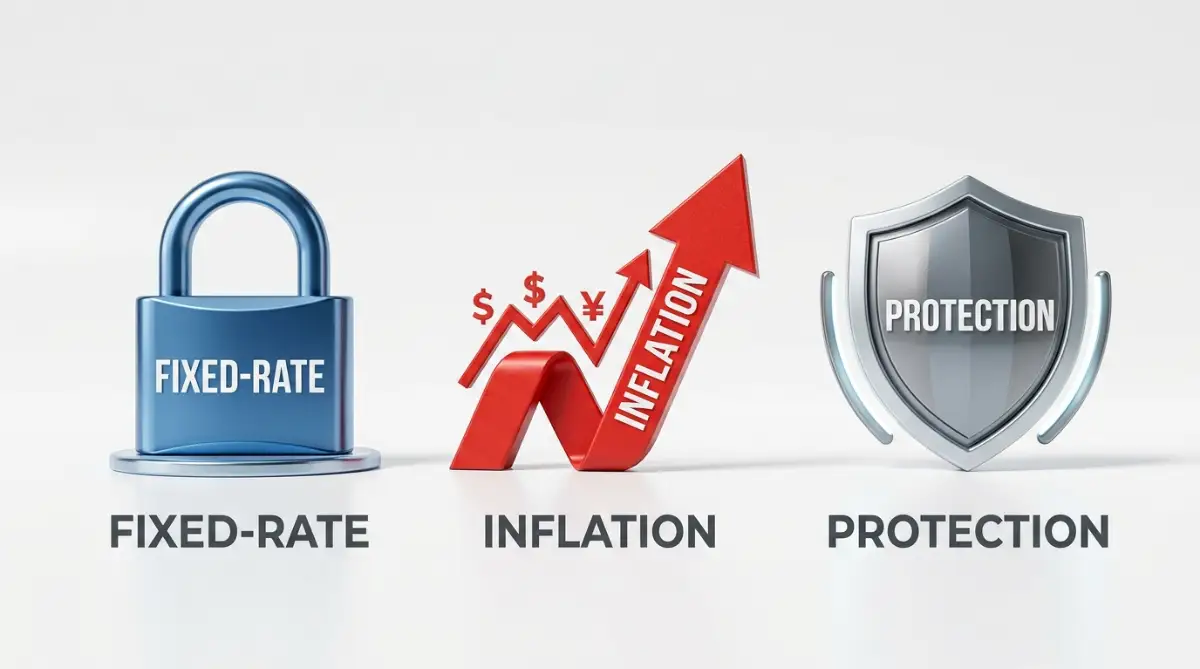
Hidden Trapdoors: Five Costly Mistakes Borrowers Make During Inflation
When we feel financially squeezed, it is very easy to make hasty choices based on stress. Unfortunately, some of these quick fixes can end up costing you thousands of dollars in the long run. Let us look at five common mistakes you should actively avoid to protect your financial safety.
1. Rushing to Prepay Your Cheap Fixed Debt
I used to think that throwing every extra dollar at my mortgage was the smartest move to become debt-free. But I quickly realized that doing this during high inflation left me completely broke when unexpected expenses popped up. Now, my golden rule is to keep my extra savings in a high-yield account where it can earn interest and remain easy to reach. Many people desperately want to become debt-free as quickly as possible. They use all of their extra savings to make extra payments on their low-interest mortgage or personal loan. While this feels like a victory, it is often a major mistake when prices are rising. When you prepay your loan, you convert liquid cash into home equity or paid-off car value. If an emergency happens and you need cash, you cannot easily pay for groceries with a paid-off portion of your home. Keeping your cash liquid and earning interest is a much safer path during unstable times.
2. Neglecting to Update Your Insurance Coverage
As inflation drives up the cost of building materials and labor, rebuilding costs skyrocket. If your homeowner or auto insurance policy is based on old prices, you might be severely underinsured today. This means a major accident could leave you with massive out-of-pocket bills. We must periodically check our coverage limits to ensure they match today's actual replacement costs. It only takes a short phone call to your insurance agent to verify this information. Protecting your assets with correct insurance limits is a key step to keeping your fixed loan safe.
3. Switching to Variable-Rate Loans for Temporary Relief
When your monthly budget feels incredibly tight, some lenders might offer you a variable-rate loan with a lower initial payment. This might look like an easy way to lower your expenses right now. However, this is one of the most dangerous traps you can fall into. Variable rates can shoot up dramatically as central banks raise rates to fight inflation. If your rate increases, your monthly payments will climb, putting your entire budget in danger. Stick to your fixed-rate loan because the predictability is your greatest shield.
4. Delaying Routine Asset Maintenance
To save a little bit of cash, you might decide to delay routine repairs on your home or car. You might skip a simple oil change or ignore a small spot of water on your ceiling. While this saves you a tiny amount today, it creates massive bills down the road. A simple neglected leak can easily turn into a major mold issue that costs thousands of dollars to fix. Regular preventive maintenance is always cheaper than dealing with a major structural failure. Keep a small portion of your monthly savings dedicated strictly to routine care.
5. Relying on High-Interest Credit Cards
If your fixed-rate loan takes up a large portion of your income, you might start using credit cards for basic daily costs. This is a very slippery slope that can quickly ruin your financial health. Credit card interest rates are notoriously high and can compound your debt incredibly fast. If you carry a credit card balance, those high-interest fees will quickly erase any benefits of your cheap fixed-rate loan. Instead of using credit, look for ways to cut back on variable expenses or find small ways to increase your income. Protecting yourself from credit card debt is absolutely necessary during inflation.
Taking Charge of Your Financial Journey
Living through high inflation can certainly feel like an uphill battle. But it is important to remember that your fixed-rate loan is a powerful tool in your financial toolbox. You have a locked-in, predictable payment that cannot rise, which is a massive benefit in a changing economic environment. By focusing on what you can control, you can navigate this period with complete confidence. Start by taking one small, simple action today. Check your monthly subscriptions to plug any budget leaks, or verify your asset insurance limits with a quick call.
When I first faced these rising costs, I felt completely overwhelmed and doubted my own choices. However, taking back control of my daily cash flow gave me my peace of mind back, and I know it can do the exact same for you. Do not wait for the economy to change; take your first small step today and watch your confidence grow. These small, consistent choices build momentum and help you regain a sense of mastery over your money. Keep tracking your spending, make decisions based on clear logic, and protect your cash reserves. Your path to long-term financial security and peace of mind is entirely within your reach.