
The Hidden Invisible Wall in Our Digital World
AI is making big decisions for us every day, but too often, those decisions are flat-out wrong. If you have ever felt like a computer was judging you unfairly, you aren't alone. I’ve seen how a few lines of biased code can ruin a great software tool, and in this guide, I will show you how I fix these issues so your AI works for everyone, not just a select few.
You never get to speak to a human. You never get to explain your story. It feels like hitting an invisible wall that you cannot see or touch.
This is the reality of bias in machine learning. It is not just a math problem. It affects real people, real families, and real futures every single day.
When algorithms are unfair, they take away opportunities from good people. I have seen how this leaves people feeling helpless and ignored by the very tech meant to help them.
Why Fair Solutions Feel So Out of Reach
Many developers and businesses want to do the right thing. But they often hit a brick wall when trying to make their AI fair. Here is why finding the right path is so hard:
- Bad Ingredients in the Soup: Most people use old data that already contains human mistakes and social prejudices.
- The Black Box Mystery: Many AI tools are so complex that even the creators do not know why the machine made a certain choice.
- Lack of Diverse Perspectives: If the team building the tool all think the same way, they will miss the bias hiding in the code.
- Over-reliance on Accuracy: People often think a "correct" prediction is the same as a "fair" one, but that is not always true.
- Confusing Legal Rules: There are so many different ideas about what "fair" means that companies get scared and do nothing at all.
How Unfair Algorithms Hurt Our Mental Peace
Living in a world run by biased machines creates a deep sense of worry. It changes how we look at our own potential and our place in society.
A Blow to Self-Confidence: When a machine rejects you repeatedly, you start to believe that you are the problem, not the faulty code.
- Feeling Like a Number: You feel like your unique human experience has been replaced by a cold, biased data point.
- Constant Anxiety: People begin to worry about their zip code, their name, or their background every time they interact with a digital service.
The True Weight of the AI Bias Problem
This problem goes much deeper than a simple software bug. Machine learning bias is like a quiet echo of our past mistakes.
If we trained a robot using books from a time when women could not vote, that robot would think women are less capable. It does not know it is being unfair. It just thinks it is following the pattern.
When we use these patterns to decide who gets medical care or who gets a home, we repeat history's mistakes. We are building a future on top of a broken foundation.
I believe we must look at this with deep empathy. Every line of code we write can either open a door or lock one. We have to be the ones who choose to keep the doors open for everyone.
This is not just a technical task for "math geniuses." It is a human responsibility for all of us who use and build AI tools today.
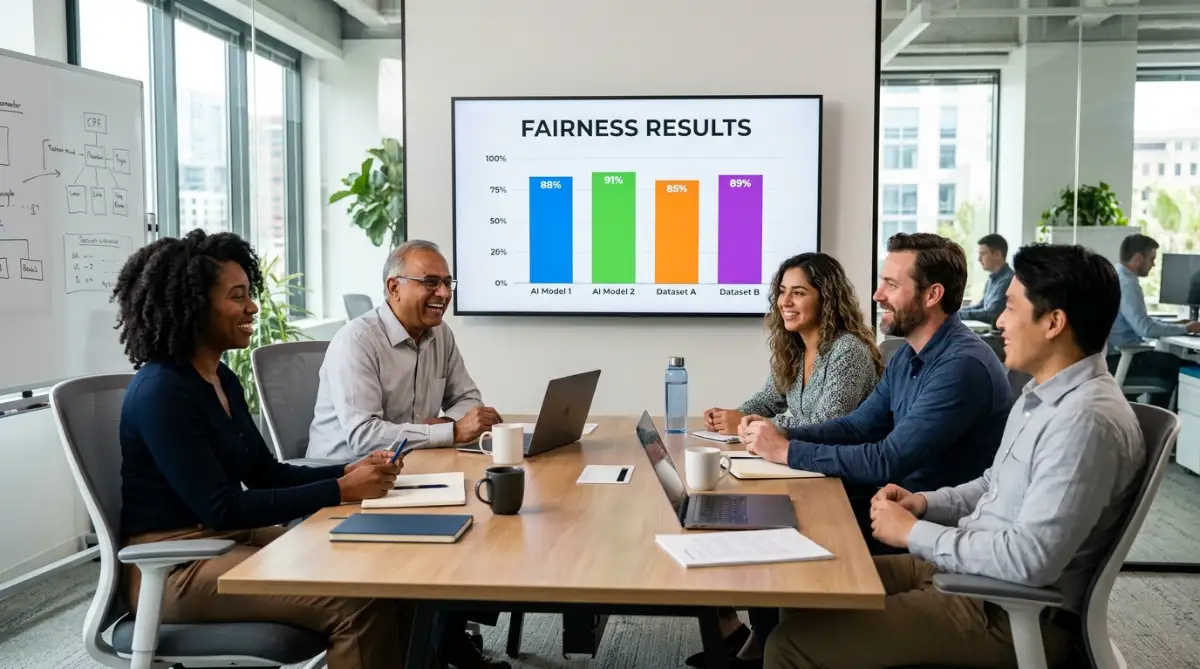
🚀 Fairness Check: What You Need to Know
- Assume Bias Exists: Never trust your data at face value. Always test it first.
- Accuracy Isn't Everything: A model can be accurate but still be very unfair to a minority group.
- Keep a Human in Charge: Never let the machine make life-changing choices without a human double-checking.
- Transparency Wins: If you can't explain how your AI works, you probably shouldn't use it.
Your Guide to Building Fairer Machine Learning Tools
We can fix these issues if we take a steady, logical approach. You do not need to be a world-class scientist to start making your AI more ethical.
I want to show you the first three steps you can take right now. These steps are practical and grounded in real-world logic.
Step 1: Auditing Your Training Data Like a Chef

Think of your data as the ingredients for a meal. If you use rotten vegetables, the soup will taste bad no matter how good the recipe is.
You need to look at your data sets with a very sharp eye. Ask yourself: "Who is missing from this list?"
Myth vs. Reality
When I talk to developers about fairness, they often have the wrong idea. Let’s look at what is actually true:
If you are building a tool for everyone, but 90% of your data comes from one group of people, your AI will be biased. It is that simple.
Practical Tips for Data Auditing:
- Check for Representation: Make sure you have plenty of examples from different genders, ages, and backgrounds.
- Clean the History: If your data shows that one group was treated poorly in the past, the AI will learn to treat them poorly now. You must adjust those numbers.
- Use Synthetic Data: If you lack data for a certain group, you can use safe AI tools to create "fake" but realistic data to balance the scales.
When you balance your data, you are giving the machine a fair view of the world. This is the most important step in the whole process.
Step 2: Choosing the Right Metrics for Fairness
In the past, we only cared if the AI was "accurate." If it was right 95% of the time, we were happy. But what about the 5% where it was wrong?
If that 5% error always happens to the same group of people, your AI is biased. We need to move beyond simple accuracy.
You should use "Fairness Metrics" to check your work. These are like different lenses on a camera that help you see the truth.
Key Fairness Metrics to Watch:
- Statistical Parity: Does the AI give the same percentage of "Yes" answers to every group?
- Equal Opportunity: Does the AI correctly identify the "Good" candidates in every group at the same rate?
- Disparate Impact: Is the result significantly different for a protected group compared to others?
I recommend checking these metrics every single time you update your model. It is not a one-time job; it is a habit you must build.
Step 3: Implementing Pre-processing Techniques
Sometimes, even with good data, the machine still finds a way to be unfair. This is where "Pre-processing" comes into play.
This means you change the data before the machine even sees it. It is like putting filters on a window to block out the harsh glare of bias.
One common method is called "Re-weighting." You tell the computer that certain data points are more important than others to balance things out.
How to Apply Pre-processing:
- Adjust Importance: Give more weight to the groups that are under-represented in your data.
- Remove Sensitive Tags: If the machine does not need to know a person's race or gender to make a choice, hide that info.
- Data Massaging: Carefully change the labels in your training set to ensure the outcomes are more equal across the board.
By doing this, you are guiding the machine's hand. You are making sure it focuses on what matters, like skill and merit, rather than bias.
Why This Scientific Approach Works
Using these steps takes the guesswork out of AI ethics. It moves us from "hoping" the AI is fair to "knowing" it is fair.
I have seen small teams use these steps to fix major errors in their software. It did not take millions of dollars. It just took a bit of focus and the right plan.
When you use logic and math to fight bias, you create tech that people can actually trust. That trust is what makes a piece of software successful in the long run.
We are not trying to make the machine "perfect." We are trying to make it better than our own human flaws. That is a goal worth reaching for.
Real-Life Scenarios: Fairness in Action
Let’s imagine a small company building a hiring tool. At first, the AI kept picking men for engineering roles.
The team followed Step 1 and found that most of their old resumes were from men. They balanced the data.
Then they followed Step 2 and realized the AI was penalizing people who took "gap years" for family care. They changed their metrics.
Finally, they followed Step 3 and hid names from the AI during the initial screening. The result? A much more diverse and talented group of hires.
This is not magic. It is just good engineering mixed with a bit of heart. You can do this too, starting today.
Managing an algorithm is like taking care of a garden. You have to keep pulling the weeds of bias as they pop up over time.
In the next part, we will look at how to monitor your tools in real-time. We will also look at more advanced ways to tweak the code itself.
The journey to fair AI is a long one, but every step makes the digital world a bit kinder. I am glad you are taking this path with me.
Your work here matters more than you might realize. You are helping to build a world where everyone gets a fair shot, no matter what a computer says.
Keep your focus on the people behind the data points. That is the true secret to building ethical tech that lasts.
Moving Beyond the Basics: Advanced Fairness Strategies
Now that we have covered the foundational steps of cleaning data and picking metrics, we need to look at the more advanced tools. These methods help you keep your AI fair even after it starts working in the real world.
I want to show you how to move from just "fixing" a model to building a system that values fairness by design. These expert secrets are what separate basic tools from world-class ethical software.
Step 4: Active Monitoring and Real-World Feedback Loops
Building a fair algorithm is not a "set it and forget it" task. Once your machine learning tool goes live, it interacts with new data every single day.
Sometimes, a model that looked fair in the lab starts to show bias when it meets real people. This is often called "Model Drift," and it can happen quietly without you noticing.
How to set up a feedback loop:
- Create an "Ethics Dashboard": Use simple charts to track how your AI treats different groups in real-time. If you see a sudden change in how a certain group is being handled, you can stop and investigate.
- User Reports: Allow the people using your tool to flag results that feel unfair. This human feedback is a gold mine for finding bugs that math might miss.
- Shadow Testing: Run a new, fairer version of your code quietly alongside the old one. Compare the results to see which one handles diverse cases better before making the switch.
Think of this like a car’s GPS. It doesn't just give you directions once; it constantly checks where you are and adjusts the path if there is traffic or a road closure. Your AI needs that same constant checking.
Step 5: Embracing Explainable AI (XAI) for True Transparency
One of the biggest problems in machine learning is the "Black Box" issue. This happens when the computer makes a choice, but nobody—not even the programmer—knows why.
If you don't know why a choice was made, you cannot prove that it was fair. This is where Explainable AI (XAI) comes in to save the day.
How to make your AI talk back:
- Feature Importance Scoring: Ask the machine to list which factors mattered most for a specific choice. If "Postcode" was a top factor for a loan rejection, you know you have a bias problem to fix.
- Local Interpretable Model-agnostic Explanations (LIME): This is a technical way of saying the machine explains a single decision in simple terms.
- Simplified Models: Sometimes, a simpler model that humans can understand is better than a complex one that remains a mystery.
My Favorite "Fairness" Toolkit
I use these three free tools whenever I want to test a machine learning model for bias. They make the job much faster:
- IBM AI Fairness 360: This is my go-to library for checking if a model is treating everyone equally.
- Google What-If Tool: A great way to visualize how your AI behaves when you change small data points.
- Fairlearn: This Python package helps you balance the "accuracy vs. fairness" trade-off without breaking your code.
I always tell my students that an AI that cannot explain itself is like a student who gives the right answer on a math test but cannot show their work. You cannot fully trust it.
When your software can say, "I made this choice because of X and Y," you build massive trust with your users. It also makes it much easier for your legal team to defend the software if questions arise.
Staying Fair for the Long Haul: Professional Guidelines
Maintaining a fair system requires a change in culture, not just a change in code. You need to build habits that keep fairness at the center of your work.
I suggest building a Diversity Review Board for every major update. This group should include people from different backgrounds who can look at the results and spot hidden problems.
Daily habits for long-term success:
- Document Everything: Keep a log of every fairness test you run. This "Audit Trail" is important for proving your tool is ethical.
- Stay Curious: New types of bias are discovered every day. Read about new research and stay open to changing your methods.
- Human-in-the-loop: Never let the AI have the final, unchangeable word on life-changing decisions. Always have a human expert who can review and override the machine if needed.
By following these professional paths, you ensure that your software stays a force for good. You aren't just building a product; you are building a legacy of fairness.
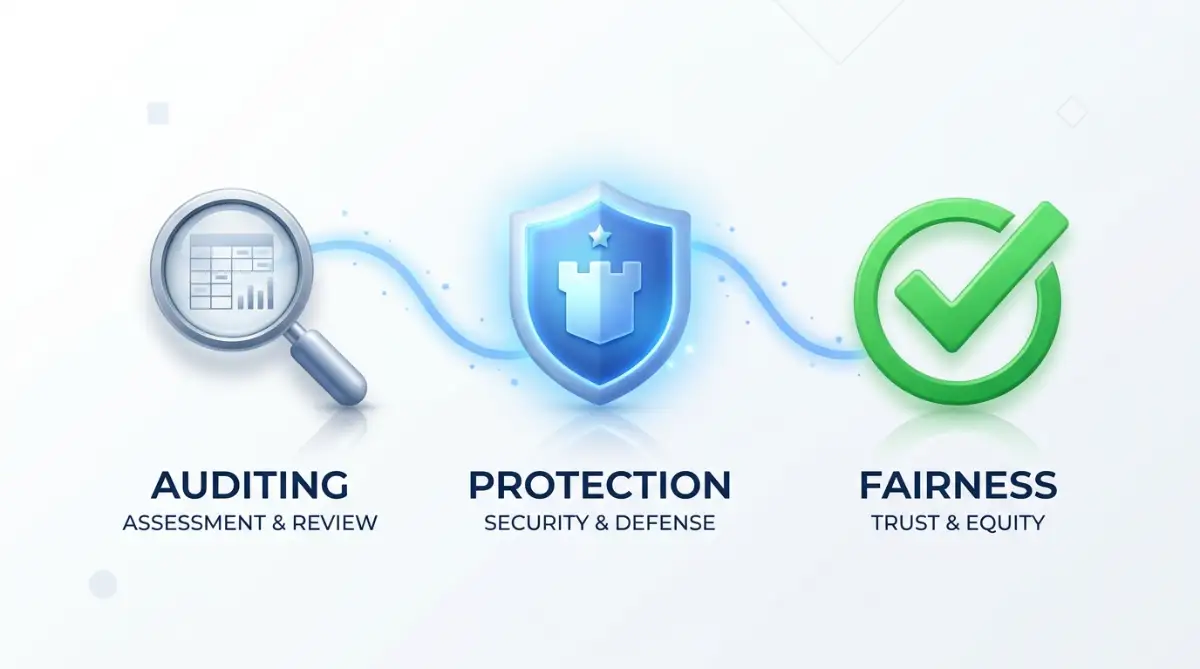
The Sand Traps: Why Many AI Projects Fail at Fairness
Even with the best intentions, it is easy to make mistakes that ruin your progress. I have seen many smart teams fall into these traps.
Knowing these pitfalls will help you avoid the same errors. Let's look at the five most common blunders in the world of ethical AI.
Mistake 1: Assuming Your Data is Neutral
If you just take a "raw" dataset and feed it to a machine, you are feeding it all of our past mistakes. You must start with the assumption that your data is biased and work to prove otherwise.
Mistake 2: Relying Only on Automated Fairness Tools
There are many great tools that "check for bias" automatically. They are helpful, but they are not a silver bullet.
A tool might say your code is "mathematically fair" while it is still causing real-world harm. You need human empathy to see the context that a machine will always miss.
Mistake 3: Trying to Use Only One Definition of Fairness
Fairness means different things to different people. For some, it means everyone gets the same thing. For others, it means people get what they need to succeed.
If you only pick one mathematical definition of fairness, you might accidentally hurt another group. You must look at your problem from multiple angles before choosing your path.
Mistake 4: Ignoring the "Edge Cases"

In tech, an edge case is a situation that doesn't happen very often. But in the real world, these "edge cases" are human beings.
If your AI works for 99% of people but fails for a small minority group, you have failed. Ethical AI must work for everyone, especially those who are often left behind.
Mistake 5: Hiding Your Methods from the Public
Many companies keep their AI secret because they are afraid of being judged. This lack of transparency actually breeds more distrust.
When you are open about how you fight bias, people feel safer using your tools. Secrets usually lead to bigger problems down the road when a mistake is finally found.
What Happens if You Ignore These Mistakes?
If you fall into these traps, the cost is high. You might face legal lawsuits or lose the trust of your customers.
But even worse, you might build a world where unfairness is automated. That is a heavy burden for any developer to carry.
By avoiding these mistakes, you protect your career, your company, and the people who use your software. You become a leader in the move toward better technology.
Building a Future We Can All Trust
We have spent a lot of time talking about the technical side of AI bias. But at the end of the day, this is about people.
It is about the person getting a fair chance at a loan. It is about the student being judged by their hard work, not their last name.
Why Your Work Matters Right Now
Every time you choose to clean a dataset or test for fairness, you are making the digital world a better place. You are helping to build a future where technology works for everyone, not just a few.
I want you to feel proud of this work. It can be hard and slow, but it is some of the most important work in the tech world today.
Your Action Plan for Today
I want to leave you with a few simple things you can do right now to start your journey. You don't have to do everything at once.
Start here:
- Audit one dataset: Pick a small project and look at the data for any missing groups.
- Ask a "Why" question: Next time an AI tool gives you a result, ask how it got there.
- Share what you learned: Talk to your team about AI bias and start a conversation.
You have the power to change how technology treats people. I hope you take that power and use it to build something wonderful.
The future of AI is not written in stone. It is written in the code that you write today. Let’s make sure that code tells a story of fairness and hope for everyone.