
The Pain, Struggle & Reality
Applying for your first student loan shouldn't feel like navigating a maze blindfolded. While the excitement of college is real, the financial paperwork can feel overwhelming, leaving you worried about hidden costs instead of your degree. Let’s cut through the noise and talk about how you can borrow smart, save money, and stay in total control of your financial future.
- Poorly written articles often leave out the most important details, leading to regret later on.
- Misleading information from unreliable sources can push you toward loan options that are not in your best interest.
- When you lack clear guidance, you are more likely to miss deadlines or sign agreements without fully understanding them.
- The uncertainty of debt makes it hard to sleep and creates a heavy weight on your shoulders every single day.
- Without a clear plan, your confidence drops because you feel like you are losing control of your own financial path.
- This mental burden distracts you from your main goal, which is to learn and grow during your college years.
- Taking the wrong step early on can haunt your bank account for many years after you finish your degree.

Step 1: Understand Your Total Cost of Attendance
Borrowing With Confidence
-
Borrow Only What You Need: Your loan is a tool, not a payday. Skip the "extra" cash to avoid long-term interest traps.
-
Subsidized is King: Prioritize loans where the government covers interest while you study.
-
Read the Fine Print: Never sign a document if you can't explain the "origination fees" to a friend.
-
Plan the Payback: Use a loan calculator before you sign to see your future monthly bills.
Always create a "buffer fund" of 5% for emergencies, but never include "lifestyle upgrades" in your loan calculation.
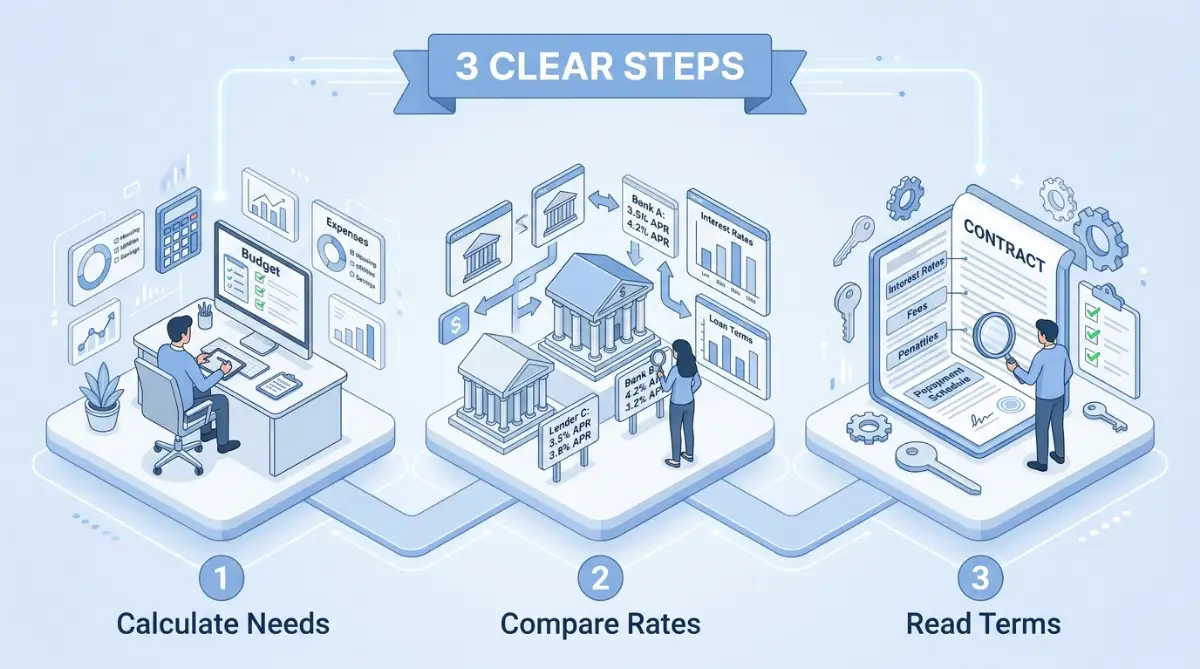
Before you even look at a loan application, you must know exactly how much money you need. Many students make the mistake of borrowing the maximum amount offered, thinking it is safer to have extra cash. This is a dangerous habit that leads to unnecessary debt. You should list every single expense, including tuition, books, housing, and food. Be honest with yourself about what is a "need" and what is just a "want." By calculating a realistic number, you keep your total debt as low as possible.
Step 2: Compare Interest Rates and Terms Carefully
Think of interest rates like a subscription fee. A 5% rate on a $20,000 loan seems small, but over 10 years, that "small" percentage adds nearly $6,000 in extra interest. Always check if your lender offers a rate discount for setting up automatic payments. It’s an easy win for your bank account.
Not all loans are created equal, even if the monthly payment looks the same on paper. You must pay close attention to the interest rate, which is the cost of borrowing the money. A difference of even one or two percent can grow into thousands of dollars over the life of the loan. Never sign a document until you have compared at least three different lending sources. Look for fixed interest rates, which stay the same and protect you from market changes. This simple step gives you the predictability you need to manage your money later.
Step 3: Read the Fine Print for Hidden Fees
Lenders often hide extra costs in the small text at the bottom of the page. These might include origination fees, early repayment penalties, or processing costs that sneak up on you. You have every right to ask your loan officer to explain every single fee before you sign. If they cannot explain a charge in simple terms, that is a major red flag to walk away. You are the customer here, and you should feel comfortable with every term of your contract. Always ask for a copy of the final document to keep for your own records.
Applying Logic to Your Financial Decisions
When you take these steps, you are not just signing a contract; you are making a smart business deal for your future self. Think of your loan like a tool. If you use it carefully and maintain it, it helps you build a house. If you use it recklessly, it can cause the structure to collapse. You do not need to be a math genius to succeed here. You just need to be observant, patient, and willing to ask tough questions.
Avoiding the "Max Borrowing" Trap
Many students fall into the habit of taking the full amount offered by lenders because the application is easy. It feels like getting a bonus paycheck at the start of the year. However, this money comes with a high price tag that you will pay back for a long time. Instead, aim to borrow only what is strictly necessary to cover your core expenses. If you find that you have a little extra money at the end of the year, put it right back into the loan principal. This small action saves you a huge amount of money on long-term interest.
The Power of Asking Questions
Some students feel shy or embarrassed to ask questions about their loans. They worry that they will look uneducated or difficult to work with. Remember, the loan officer is a professional who is paid to serve you. If you do not understand a term like "subsidized" or "unsubsidized," ask for a clear explanation. If the answer is still not clear, ask them to provide an example using your own numbers. Taking the lead in the conversation shows that you are a serious and responsible borrower.
Building Your Financial Foundation
Your relationship with money begins right now. By learning to navigate this process, you are building skills that will help you for the rest of your life. Every detail you notice today makes it easier to handle larger financial decisions in the future. Treat this as an important lesson in adult responsibility rather than just a chore. You have the power to control your financial story, starting with this first loan application. Keep your goals in sight and stay focused on the long-term benefit of a debt-free mindset.
Step 4: Understand the Difference Between Subsidized and Unsubsidized Loans
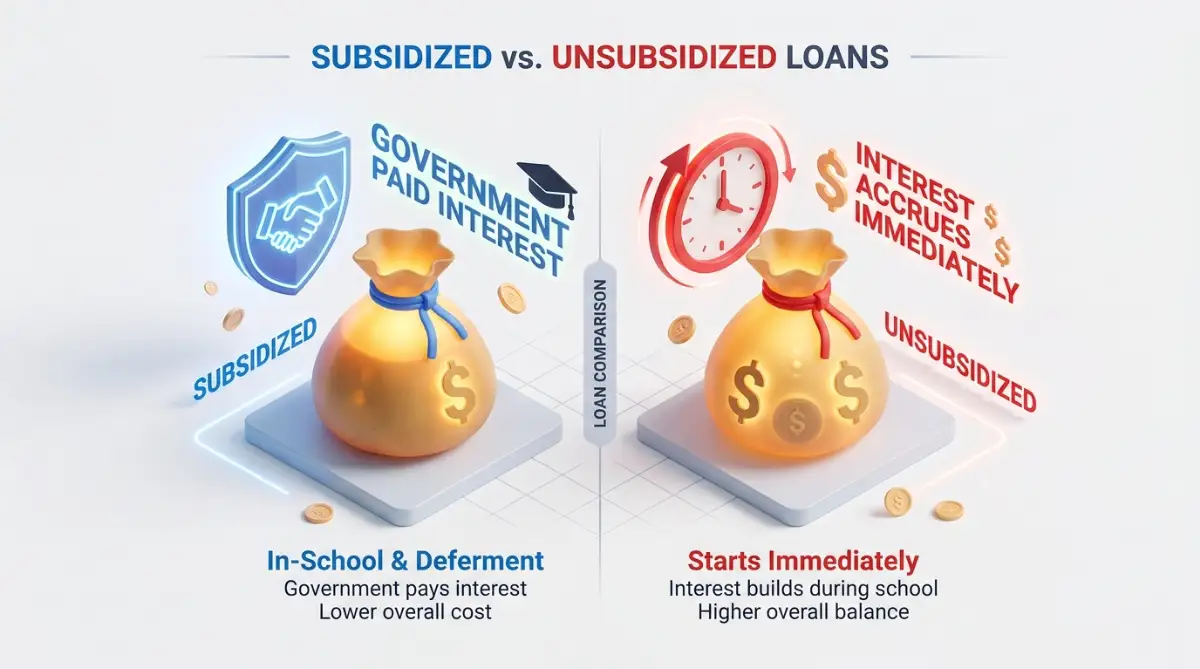
Many students sign their names without knowing what kind of loan they are accepting. This is a massive error that changes how much you pay later. A subsidized loan is like a helping hand because the government pays your interest while you are still in school. An unsubsidized loan is different because interest starts building up the moment you get the money. You should always prioritize getting a subsidized loan if it is available to you. Understanding this simple difference can save you thousands of dollars in interest charges.
Step 5: Create a Repayment Plan Before Graduation
Do not wait until your first payment is due to think about how you will pay it back. You should start looking at your potential career path and starting salary right now. Use an online loan calculator to see exactly what your monthly payments will look like in the future. If the numbers look too high, you might need to adjust your lifestyle or your borrowing habits today. Planning early makes the transition from student to professional much smoother. It also prevents the shock of a high bill arriving on your doorstep when you are not ready.
Long-Term Success Strategies
Staying out of financial trouble requires a few simple habits that you can start today. First, keep a clear record of every loan document in a digital folder. You should never lose track of who you owe money to or how much interest is being added. Second, try to pay even a small amount of interest while you are still in school if you have the funds. This keeps your total balance from growing too large over time. Consistency is the real secret to managing debt without losing your peace of mind.
Think of your loan as a mountain you need to climb. If you try to run to the top in one day, you will be exhausted and fail. If you take small, steady steps every single month, you will reach the summit with ease. Financial discipline is not about suffering; it is about making choices today that give you freedom tomorrow. You are the architect of your own future, and every dollar you save now adds up to more options later. Stay focused on your degree, but always keep one eye on your financial goals.
Section 4: Common Mistakes to Avoid (The Pitfalls)

Even with the best intentions, it is very easy to fall into these five traps. Avoiding them will put you miles ahead of the average borrower.
- Borrowing for lifestyle costs: Never use your student loan to pay for vacations, clothes, or fancy electronics. You are paying interest on these items, which makes them much more expensive than the price tag shows.
- Ignoring the grace period details: Every loan has a period of time after you graduate before you must start paying. If you miss this window, you might face penalties or late fees that damage your credit score.
- Assuming you cannot change your plan: Many students stick to a default repayment plan that does not fit their income. You have the right to ask for a plan that aligns with what you can afford to pay each month.
- Forgetting to update your contact info: If you move or change your email, tell your loan servicer immediately. If they cannot reach you, you might miss important warnings or deadlines that could hurt your financial standing.
- Co-signing without caution: If you ask a parent to co-sign, you are putting their finances at risk too. Only take out what you are truly prepared to pay back so you do not hurt the people who trusted you.
Section 5: Final Conclusion & Actionable Takeaways
You have the power to handle your student loan like a true professional. It all starts with being honest about your needs and doing the homework before you sign any forms. Remember that your goal is to get an education, not to collect debt. By borrowing less and planning more, you are choosing a path of freedom and independence. You are not alone in this journey, and you have all the tools you need to succeed.
Take a deep breath and start organizing your documents today. You do not need to be rich to be smart with your money. Small, intentional steps lead to big results over the course of your life. Keep your head high, focus on your studies, and take pride in managing your own financial future. You have got this!