
The Hidden Nightmare of Paying for College
I still remember sitting on my living room floor, staring at my college acceptance letter with tears in my eyes. My heart was racing, not from excitement, but from sheer terror as I looked at the massive tuition cost. We didn't have any savings, and my parents looked completely overwhelmed. I almost gave up on my dreams right then, thinking college simply wasn't meant for kids like me. How in the world are you supposed to pay for all of this? You sit down at the kitchen table late at night, staring at a massive pile of government forms. The official language looks like a highly complicated foreign puzzle.
This is the exact moment many brilliant students feel like giving up on their massive dreams. They feel completely locked out simply because they do not have rich parents. You are definitely not alone in feeling this intense pressure.
Why You Keep Hitting a Wall with Bad Information
Why is figuring out college money so incredibly hard for regular people? The main reason is the endless sea of bad, conflicting advice online. When you desperately search for a simple answer, you are instantly bombarded by noise.
- Many online blogs push expensive private loans before even mentioning the much safer government options.
- School counselors are often deeply overworked and cannot give you personalized, one-on-one funding advice.
- Complex government websites use confusing legal terms instead of plain, simple English that everyone understands.
- Families mistakenly believe they make way "too much money" to qualify for any government help at all.
- Predatory websites disguise themselves as official platforms just to steal your private personal data.
The Silent Toll on Your Mental Peace and Family
This constant lack of clear direction takes a massive toll on your overall mental health. The stress quietly bleeds into every single part of your daily life. It is not just about the math; it is about your basic peace of mind.
- You lose valuable sleep deeply worrying about graduating with an unpayable mountain of future debt.
- Hardworking parents feel deep guilt because they cannot simply write a massive check for tuition.
- Students heavily hesitate to pick their absolute dream major because they deeply fear the future loan payments.
- The constant, bitter family arguments over money completely destroy the joy of going away to school.
- You feel completely powerless in a broken system designed to highly confuse everyday people.

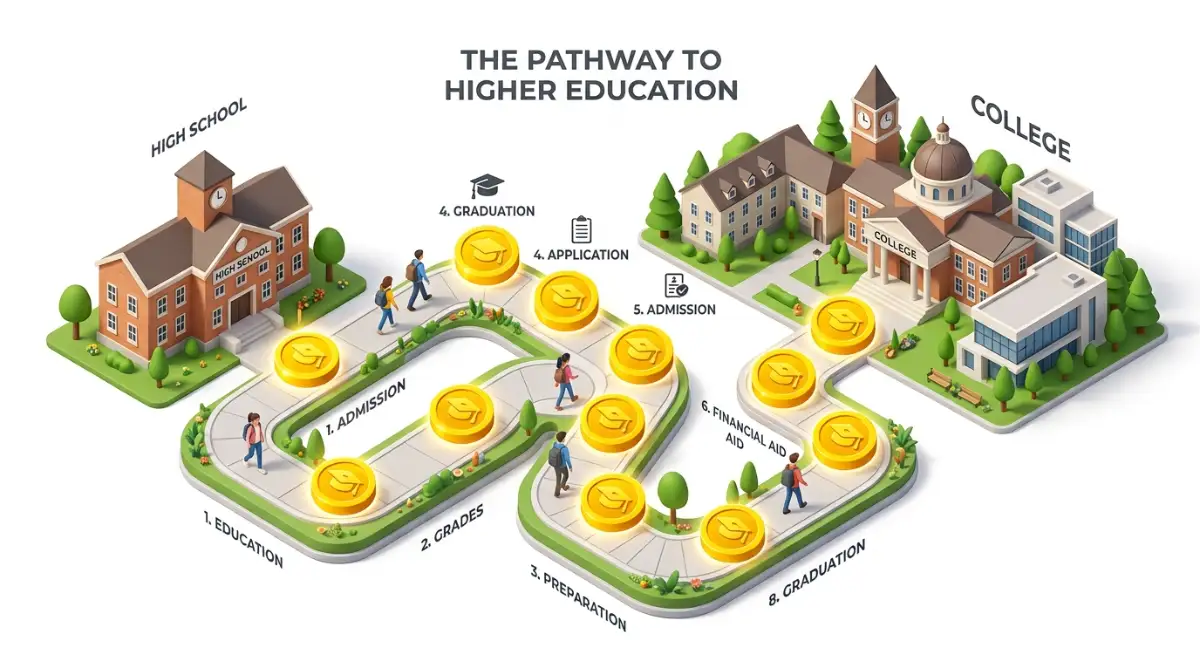
Your Clear Blueprint to Government College Funding
You absolutely do not need an advanced finance degree to beat this complex system. You just need a highly logical, step-by-step approach to follow. The government actually offers some excellent tools, provided you know exactly how to use them. Let us completely break down the exact path to securing your education without losing your mind. We will focus entirely on practical habits you can start working on today. Think of this guide as your personal, highly secure roadmap to college success.
Step 1: Unlocking the Ultimate Free Money Gateway
The very first action you must take is filling out the primary government application for student aid. Most people know this officially as the FAFSA form. However, I want you to think of it strictly as your ultimate "access key." If you do not submit this specific form, you completely lock yourself out of the entire government funding system. You will get zero grants, zero cheap loans, and zero work-study offers. It is the absolute gatekeeper to your college future.
The Psychology of Early Action
Human brains naturally procrastinate on tasks that feel large and boring. We tell ourselves we have plenty of time before the deadline arrives. But waiting is the biggest mathematical mistake you can make with college money. Government funding operates heavily on a simple "first-come, first-served" basis. If you wait until the last minute, the free grant money might actually run out. Applying early puts you at the absolute front of the line for the best financial packages.
Imagine you are trying to buy highly popular concert tickets. You would never wait until the day of the show to buy them, because they will be sold out. Applying for aid works exactly the same way.
A Real-Life Application Strategy
Let us look at a practical scenario. Suppose a middle-class family assumes they earn too much to get any free money. They decide to skip the form entirely. Because they skipped it, the student is forced to take out highly expensive private bank loans. Now, let us imagine they actually took one hour to fill it out. The government might have offered them a low-cost subsidized loan, saving them thousands in interest over time.
To conquer this step easily, gather your tax returns before you even sit at the computer. Use the official government data retrieval tool to automatically pull your tax numbers. This completely removes human error and makes the process surprisingly fast.
Step 2: Decoding Subsidized vs. Unsubsidized Borrowing
Once you successfully submit your application, the school will send you an official award letter. This letter will clearly list the exact loans you are allowed to take. This is where most students make a very expensive, permanent mistake.
The government basically offers two main types of funding: subsidized and unsubsidized. Understanding the deep difference between these two words will literally save you a fortune. It is the most important financial concept you will learn this year. Confused about how student loan interest actually adds up? Watch this quick, simple breakdown to see exactly how subsidized and unsubsidized loans work before you sign any paperwork.
Understanding the Subsidized Advantage
A "subsidized" loan is the absolute best deal you will ever get. With this option, the government actually pays the interest for you while you are actively sitting in college classes. The balance does not grow at all while you study. Think of it like borrowing a car from a good friend. While you are driving it around, your friend agrees to pay for all the gas. You only have to pay them back for the car itself when you are finally done using it.
If you borrow $5,000 for your freshman year, you will exactly owe $5,000 when you finally graduate. There are no hidden fees magically growing in the background. You must always accept this specific type of loan first.
The Unsubsidized Danger Zone
An "unsubsidized" loan operates under completely different mathematical rules. The very minute this money hits your school account, interest begins growing immediately. You are being charged a fee while you are sitting in the library studying. Let us picture a snowball rolling down a very steep hill. As it rolls, it picks up more and more snow, growing constantly larger. This is exactly how compound interest works against you on an unsubsidized balance.
If you borrow that same $5,000 unsubsidized, you might actually owe $6,000 or more by the time you receive your diploma. You are essentially paying money on top of money. You should only ever accept this option if you desperately need it to cover basic tuition.
Step 3: Mastering the Art of Borrowing Only What You Actually Need
When your college sends your financial aid package, they usually offer you the absolute maximum amount legally possible. The letter makes it look like you are required to accept every single dollar. This is a massive psychological trap. You have the complete legal right to reject a portion of the offered money. You can accept just enough to cover your classes and decline the rest. Sadly, very few students actually realize they hold this power.
The Danger of "Extra" Money
Your brain tricks you when you see a large refund check hit your personal bank account. It suddenly feels like you have free money to spend on fun things. You might use it for a spring break trip, expensive takeout food, or fancy dorm decorations. But this is not a random gift or a paycheck. This is money that you are renting from the government at a high cost. Every single pizza you buy with this money might end up costing you triple once the final interest is calculated.
Let us look at a real-life example of two college roommates. Roommate A accepts the full massive package and uses the extra cash to buy a brand-new laptop and expensive clothes. Roommate B only accepts exactly enough for tuition and works a part-time job on weekends. When they both walk across the graduation stage, Roommate A has a terrifying monthly payment that eats half their starting salary. Roommate B has a tiny, manageable payment and feels completely free. Discipline today equals intense freedom tomorrow.
Creating a Bare-Bones Survival Budget
To figure out exactly what you need, you must create a strict "bare-bones" budget. Look closely at the exact cost of your tuition and your required housing. Do not include things like a new car or expensive weekly entertainment. Calculate that specific baseline number. If your tuition is $10,000 and your basic housing is $5,000, your absolute need is $15,000. If the school offers you $20,000 in loans, you aggressively decline the extra $5,000.
When I was in college, I made the huge mistake of accepting the maximum loan amount just because it was offered to me. I used that "extra" money on useless things, and now I'm still paying for those expensive coffees and takeout meals years later. My biggest piece of advice is to only accept the bare minimum you need for tuition and books—your future self will thank you. By actively refusing that extra money, you are instantly giving your future self a massive financial gift. You are protecting your future paychecks from being stolen by a bank. This highly defensive strategy takes immense courage, but it absolutely guarantees your future financial peace.
Navigating the System Like a Financial Expert
Now that you have a solid foundation, we need to look at advanced strategies. Surviving college debt is not just about taking out the right loans. It is also about knowing exactly how to manage them once you graduate. Most students simply wait for a massive bill to arrive in the mail. This passive approach creates intense panic and leads to terrible financial decisions. You want to be proactive and control the system before it controls you.
Let us explore a few expert-level secrets that wealthy families use to protect their money. By applying these specific methods, you can build a massive safety net for your future self. These advanced steps are your ultimate defense against drowning in heavy debt.
Step 4: Unlocking the Power of Income-Driven Repayment
When you finally graduate, the government will automatically place you on a standard ten-year repayment plan. This standard plan completely ignores how much money you actually make at your new job. It simply divides your total debt by 120 months. For a recent graduate making a low starting salary, this standard bill can be completely terrifying. You might have to choose between buying groceries and paying your student loan. This exact situation is why so many young people default on their payments.
To fix this, you must apply for an Income-Driven Repayment plan immediately after graduation. This specific program legally forces the government to look at your actual paycheck. They will calculate a monthly bill that is a tiny, affordable percentage of your real income. Let us look at a practical, everyday scenario to make this clear. Imagine you graduate with a degree in social work and get a job making a modest salary. The standard plan might demand a painful $600 every single month.
If you apply for an income-driven plan, that monthly bill could magically drop to just $150. If you ever lose your job, your monthly payment can legally drop to zero dollars. This incredible safety net prevents you from ruining your credit score during hard times. Think of this program as a highly responsive shock absorber on a car. When the financial road gets extremely bumpy, this plan absorbs the heavy impact so you do not crash. You must aggressively protect your monthly cash flow right out of the gate.
Step 5: The Secret Art of Appealing Your Aid Package
Financial aid offices use old tax returns to determine how much money your family has right now. But real life changes incredibly fast, and old numbers rarely tell the whole truth. An unexpected medical emergency or a sudden job loss can destroy a family budget overnight. If your financial situation recently took a massive hit, your initial aid offer will look terribly unfair. Most families just accept this bad offer and take out huge loans to cover the gap. They completely forget that college aid packages are actually negotiable.
You have the absolute right to write a professional appeal letter to your school. This is officially called a "Professional Judgment Review." You are basically asking a real human being to look past the cold computer algorithm. Writing this letter is very similar to politely negotiating the price of a used car. You do not demand money or sound angry in your email. Instead, you provide crystal clear, documented proof of your new financial hardship.
For example, you can attach recent hospital bills or a parent's official unemployment letter. When a financial aid officer sees this clear evidence, they have the legal power to adjust your package. They can suddenly unlock thousands of dollars in free grants that you originally missed out on.
Step 6: Setting Up Long-Term Government Forgiveness
There is a very specific, hidden path to having your entire federal loan balance completely wiped out. It is called the Public Service Loan Forgiveness program. This program is designed specifically to reward people who choose to help their local communities. If you decide to work for a government agency or a registered non-profit organization, you are eligible. This includes public school teachers, city nurses, police officers, and charity workers. The government wants to encourage bright students to take these highly important jobs.
Here is the exact mathematical formula for how this incredible program works. You must make exactly 120 on-time monthly payments while working full-time for an approved employer. Once you hit that magic number, the government permanently deletes your remaining debt. Imagine you owe a massive $80,000 when you finally finish your nursing degree. You work at a non-profit city hospital for ten years and make your income-driven payments. After those ten years, the remaining $50,000 balance vanishes completely without any tax penalties.
The biggest secret here is tracking your progress from day one. Do not wait five years to submit your employment certification forms to the government. Submit this specific form every single year to ensure your payments are officially counted toward the final goal.
Dangerous Traps That Will Ruin Your Financial Future
Understanding what to do is definitely important, but knowing what to avoid is highly critical. The federal student loan system is full of invisible traps waiting for innocent mistakes. One simple misunderstanding can legally cost you thousands of dollars in extra interest. I have watched incredibly smart students make the exact same errors year after year. They usually make these mistakes simply because they are rushing through boring paperwork. We need to actively slow down and identify these massive hazards right now. If you completely avoid these five common pitfalls, you will stay lightyears ahead of your peers. Let us walk through exactly how people accidentally sabotage their college funding.
Mistake 1: Forgetting the Annual Renewal Rule
The absolute biggest mistake students make is thinking the financial aid application is a one-time event. They fill it out perfectly during their senior year of high school and celebrate. Then, sophomore year rolls around, and their college account shows a massive zero balance. You must submit a brand new application every single year you are in school. The government needs to know if your family income went up or down over the last twelve months. If you miss the state deadline, your free grant money will automatically go to someone else.
Set a loud, repeating calendar alarm on your phone for October 1st every single year. This is the exact day the new application legally opens. Treating this like a mandatory annual doctor appointment will absolutely save your college career.
Mistake 2: Ignoring Your Six-Month Grace Period
When you finally graduate or drop below half-time enrollment, you get a temporary break. The government gives you exactly six months before your first official loan payment is due. This is known as your federal grace period. Many graduates treat this specific period like a free vacation from their financial responsibilities. They ignore their massive debt entirely and spend their new paychecks on expensive apartments and clothes. Then, month seven hits, and they are completely paralyzed by the sudden huge bill.
You should use this exact six-month window to aggressively build an emergency savings fund. Pretend your loan payment is already due, and put that exact amount of cash into a separate bank account. When the real bill finally arrives, paying it will feel completely effortless.
Mistake 3: Carelessly Mixing Federal and Private Debt
Sometimes students get extremely overwhelmed by managing multiple different loan payments every month. They see a flashy online advertisement offering to combine all their debts into one single, easy payment. This process is known as private debt consolidation. If you move your federal government loans over to a private bank, you instantly lose all federal protections. You permanently destroy your access to income-driven repayment plans and public service forgiveness. A private bank does not care if you lose your job tomorrow.
Think of federal protections like a heavy waterproof coat during a massive storm. Refinancing with a private bank is exactly like throwing that warm coat away for a cheap umbrella. Always keep your government loans completely separate from your private credit cards or personal loans.
Mistake 4: Ignoring Official Emails from Your Loan Servicer
The federal government actually hires third-party private companies to collect your monthly payments. These specific companies are called loan servicers. They are the people who will send you your official billing statements and tax documents. Many young adults see emails from these unfamiliar companies and assume it is just random spam. They swipe to delete the message without ever reading the highly important contents. Because of this, they completely miss urgent warnings about missing payments or changing interest rates.
You must find out exactly which company is legally servicing your debt right now. Log into the official government student aid portal to find their exact name. Add their official email address directly to your safe sender list so you never miss an urgent update.
Mistake 5: Blindly Clicking Through Entrance Counseling
Before the government actually releases your loan money, they legally force you to complete an online tutorial. This specific requirement is called mandatory entrance counseling. It is designed to teach you the heavy consequences of borrowing money. Most impatient students just rapidly click the "Next" button until they reach the final screen. They treat it like the terms and conditions on a random phone app. They learn absolutely nothing about interest rates or default penalties.
This simple counseling session is a free masterclass in personal finance. Take just twenty extra minutes to actually read the math examples they show you. Understanding exactly how daily interest ruins a budget will make you a much smarter borrower.
Take Complete Control of Your College Journey Today
Paying for a college education is undoubtedly one of the largest financial mountains you will ever climb. It is completely normal to feel a little intimidated by the massive numbers and legal paperwork. But you are no longer walking in the dark without a map. You now possess a highly clear, professional blueprint to secure your future. You know exactly how to find the free money, block the expensive interest, and avoid the hidden traps. You have completely shifted from being a confused victim to an educated manager of your own wealth.
Remember, every single financial giant started by taking one tiny, highly organized step forward. You do not need to be a math genius to win this game. You just need patience, basic discipline, and a strong willingness to ask the right questions.
Your Action Plan for This Weekend
I highly encourage you to stop worrying and start taking direct action this very weekend. Grab a cup of coffee, sit down in a quiet room, and organize your tax documents into a neat folder. This simple ten-minute physical action will immediately lower your background anxiety. Next, sit down with your parents or a trusted mentor and have a completely honest conversation about boundaries. Discuss exactly how much debt is truly realistic for your future career path. Open communication instantly removes the heavy burden of keeping financial secrets.
You are building a beautiful, highly educated future for yourself and your entire family. Do not let confusing government paperwork stand in the way of your massive potential. Take a deep breath, trust this proven process, and start claiming the educational funding you rightfully deserve. Navigating this system is hard, but I promise you that taking it one step at a time makes all the difference. You don't have to let debt control your future, and taking action today will lift a huge weight off your shoulders. You've got this, so take that first small step this weekend and protect your future.