
The Hidden Struggle Behind Unexplained Fatigue and Weight Gain
I still remember the sheer frustration of dragging myself out of bed every morning, feeling like I hadn't slept a wink. For the longest time, I blamed myself, thinking I just lacked the discipline to fix my stubborn midsection weight and crushing 3 PM energy crashes. It wasn't until I stopped falling for restrictive diet trends and looked at what was happening inside my cells that everything finally started to make sense.
Have you ever wondered why you feel exhausted even after a full night of sleep? Do you struggle with stubborn weight around your midsection that refuses to budge despite your best efforts? Millions of people wake up every single day feeling drained, foggy, and frustrated with their bodies. They try every new diet trend on the internet, cut out entire food groups, and push through intense gym workouts. Yet, the scale stays stuck, and the afternoon energy crashes remain a daily reality. This ongoing physical struggle takes a heavy toll on your daily routine. Simple tasks feel like massive chores, and your productivity at work or home begins to slip away.
Why Standard Advice Keeps Failing You
Many people stay trapped in this exhausting cycle because they are handed outdated or incorrect advice. They chase quick fixes that only address surface-level symptoms rather than the root cause.
Here is why conventional approaches often let people down:
- Counting calories rigidly without looking at how specific foods trigger hormonal responses in the body.
- Following extreme restrictive diets that spike stress hormones and ruin long-term metabolic health.
- Relying on generic workout plans that cause burnout instead of supporting cellular repair.
- Ignoring internal warning signs until they turn into larger, more complicated health concerns.
The Emotional Toll of Chronic Fatigue
When your body fails to respond the way it used to, it quietly drains your confidence and peace of mind. You might start blaming yourself, thinking you simply lack discipline or willpower.
The mental strain of this journey often shows up in specific ways:
- Constant self-doubt about whether your body will ever feel healthy and energetic again.
- Social withdrawal because low energy levels make it hard to enjoy outings with friends and family.
- Frustration and anxiety from watching healthy lifestyle changes yield little to no visible progress.
- A feeling of helplessness after visiting multiple practitioners without finding clear, actionable answers.
Understanding the Root Cause
At the center of this frustrating puzzle is a very common yet widely misunderstood metabolic shift. It happens quietly over many years, long before any routine blood test flashes a warning sign. Your cells slowly stop listening to the natural chemical signals your body produces after every meal. When this communication breakdown happens, your internal energy management system gets entirely thrown out of balance. Instead of fueling your muscles and organs efficiently, your body stores excess energy as fat. Recognizing this shift is the first and most powerful step toward regaining control of your health.
Once you understand how this mechanism operates, everything changes. You stop fighting your body and start working with it to restore natural harmony.

What Is Insulin Resistance? A Simple Breakdown
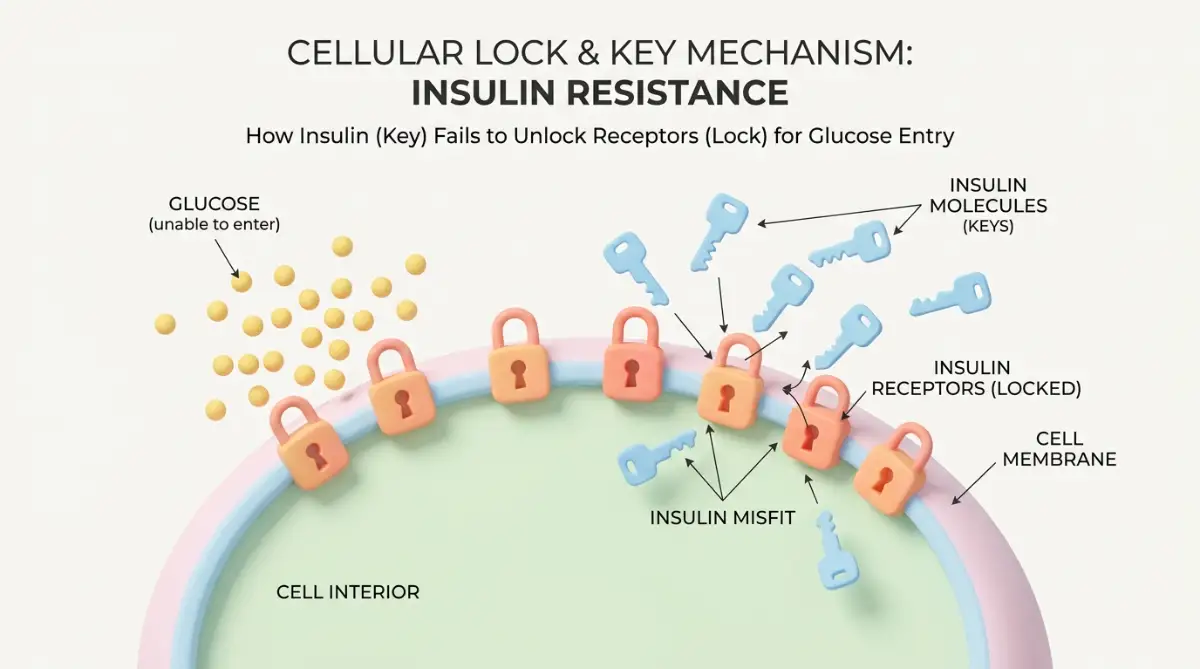
To understand this condition, you first need to look at how your body processes the food you eat. Every time you eat carbohydrates, your digestive system breaks them down into glucose. Glucose enters your bloodstream, serving as the primary fuel source for your daily activities. As glucose levels rise in your blood, your pancreas releases a hormone called insulin. Think of insulin as a key whose sole job is to unlock your body's cells. Once the cells are unlocked, glucose moves out of the blood and inside the cells to be burned for energy.
When the Cellular Locks Stop Working
Insulin resistance occurs when your muscle, fat, and liver cells stop responding properly to insulin. The cellular locks become rusty or jammed, meaning the insulin key no longer turns them easily. Because the glucose cannot enter the locked cells, it stays trapped in your bloodstream. Your pancreas senses this leftover sugar and panics, producing much more insulin to force the doors open. This creates a high-insulin state in your body, known medically as hyperinsulinemia. For a long time, your pancreas manages to keep your blood sugar levels within a normal range by pumping out extra insulin. However, this overworked system cannot keep up forever.
The Turning Point in Metabolic Health
Over years of constant overproduction, your pancreas gets tired, and cellular resistance deepens. Eventually, glucose begins to pile up in the bloodstream, leading to prediabetes and type 2 diabetes. The good news is that this process develops gradually. Because it builds up over time, you have the power to reverse the direction with the right daily habits.
Step-by-Step Guide to Understanding and Resetting Your Metabolism
Step 1: Prioritize Blood Sugar Stability
When I first tried fixing my metabolism, I made the classic mistake of cutting calories too low and starving myself, which only made my cravings worse. My biggest turning point came when I stopped fearing food and simply learned to pair my carbs with healthy fats and proteins to keep my energy steady. The most effective way to lower cellular resistance is to stop overwhelming your system with constant sugar spikes. Every time you eat refined carbohydrates or sugary snacks, your body requires a massive surge of insulin.
To give your cellular receptors a much-needed break, focus on balancing your meals with real, whole foods. Build your plate around healthy proteins, high-fiber vegetables, and quality fats.
- Pair your foods wisely: Always combine carbohydrates with healthy fats or proteins to slow down digestion.
- Cut out liquid sugar: Sodas, sweet teas, and packaged juices cause rapid and damaging insulin spikes.
- Eat in a logical sequence: Eating your vegetables and proteins before your carbohydrates helps blunt post-meal blood sugar surges.
Step 2: Incorporate Gentle, Consistent Movement
You do not need to spend hours pounding away on a treadmill to improve your metabolic health. In fact, intense, chronic stress workouts can sometimes increase cortisol, which worsens insulin sensitivity. Instead, focus on low-impact movement that helps your muscles pull glucose out of your blood without needing extra insulin.
- Take a post-meal walk: A simple ten-minute walk after lunch or dinner helps clear glucose from your bloodstream naturally.
- Build everyday activity: Stand up, stretch, and move around every hour if you have a desk job.
- Introduce light resistance training: Building even a small amount of muscle mass creates more "storage space" for glucose in your body.
Want to see how easy it is to wake up your metabolism without spending hours at the gym? Watch this quick video to discover simple movement hacks you can start using right after your very next meal."
Step 3: Optimize Your Rest and Sleep Patterns
Many people overlook the powerful connection between sleep deprivation and metabolic health. When you sleep poorly, your body's stress hormones spike the next day. High cortisol and adrenaline make your cells significantly more resistant to insulin, regardless of what you eat.
- Aim for consistency: Go to bed and wake up at the same time every day to regulate your internal clock.
- Limit evening screen time: Blue light from phones and laptops tricks your brain into staying awake, ruining deep sleep cycles.
- Manage daily stress: Find a simple relaxation practice, such as deep breathing or reading, to lower cortisol before bedtime.
Step 4: The Power of Strategic Meal Timing and Fasting Windows
Moving beyond basic food choices, the timing of when you eat plays a massive role in metabolic recovery. If you graze on snacks all day long, your pancreas never gets a break from producing insulin. Giving your digestive system extended quiet periods allows your body to finally clear out excess glucose and lower baseline hormone levels. This practice is often referred to as incorporating an overnight fasting window into your routine.
How Intermittent Rest Helps Your Cells
When you stop eating a few hours before bedtime and wait until mid-morning for your first meal, something remarkable happens inside your body. Your circulating insulin levels drop down to their lowest baseline. With insulin out of the way, your cells switch from a constant storage mode into a repair mode.
- The fifteen-hour window: Stopping food intake after dinner and waiting until breakfast the next morning gives you an easy, natural twelve-to-fourteen-hour break.
- Cellular cleanup: Lower insulin levels trigger a natural recycling process where cells clear out damaged components and repair their outer membranes.
- Enhanced fat burning: Without constant sugar coming in, your body comfortably taps into stored fat for baseline daily energy.
Listening to Your Natural Hunger Cues
Many people eat out of habit, boredom, or stress rather than true physical hunger. Learning to tune back into your body's signals helps protect your metabolic health from accidental overloads. Ask yourself if you are genuinely hungry before reaching for a mid-afternoon snack. Often, a large glass of water or a short walk outside is all your body actually needs to reset its focus.
Step 5: Harnessing the Benefits of Dietary Fiber and Healthy Fats
Another advanced layer of metabolic healing involves changing how your digestive tract absorbs nutrients. Eating carbohydrates by themselves causes a fast and steep rise in your blood sugar. However, wrapping those carbohydrates in a rich blanket of soluble fiber and healthy fats completely changes the chemical equation.
The Slow-Release Formula for Everyday Meals
Imagine pouring syrup directly onto an open sponge versus pouring it over a thick sponge wrapped in protective layers. The second option absorbs the liquid slowly and evenly, preventing any sudden messes. You can apply this exact concept to your daily plate by focusing on nutrient density.
- Load up on leafy greens: Spinach, kale, and broccoli provide a dense fiber mesh that traps sugars and slows down their entry into the bloodstream.
- Include quality oils: Cooking with olive oil or adding avocado to your meals keeps digestion steady and satisfying.
- Embrace healthy proteins: Eggs, fish, and poultry require more energy to break down, which prevents sharp hormonal fluctuations after eating.
Building Long-Term Daily Habits
Consistency always beats intensity when you want to repair your metabolic pathways. You do not need a radical overhaul that turns your kitchen upside down in a single weekend. Focus on making one small, sustainable adjustment each week until it feels completely automatic. Over several months, these micro-changes compound into massive improvements in your daily energy and physical well-being.
Common Mistakes to Avoid on Your Metabolic Journey
Mistake 1: Falling for the Low-Fat Trap
Many people still believe that cutting out all dietary fat is the key to losing weight and improving health. Unfortunately, commercial low-fat products are usually packed with hidden sugars and refined starches to make up for lost flavor. Eating these processed items causes severe insulin spikes that push you further away from your wellness goals. Always choose natural, whole-food fats over highly processed diet foods.
Mistake 2: Relying on Artificial Sweeteners
When cutting out regular sugar, it is very common to lean heavily on zero-calorie chemical sweeteners. While they do not contain carbohydrates, studies suggest that sweet tastes can still trigger mild cephalic phase insulin releases in some individuals. Relying on them heavily keeps your sweet cravings alive and prevents your taste buds from resetting. Try transitioning to natural, unsweetened drinks like herbal tea or plain water infused with lemon.
Mistake 3: Overtraining and Ignoring Recovery
Jumping straight into intense, daily high-intensity workouts can backfire if your body is already dealing with high stress. Constant physical exhaustion floods your system with cortisol, which counteracts your efforts to lower blood sugar. Balance your fitness routine with restorative movement, yoga, and adequate rest days to protect your hormonal balance.
Mistake 4: Choking Down Extreme Calorie Deficits
Drastically cutting your daily food intake below what your body needs sends a distress signal to your brain. Your metabolism slows down to conserve energy, making it even harder to overcome cellular resistance. Focus on the quality and nutrient density of what you eat rather than starving your body of essential fuel.
Mistake 5: Expecting Linear, Overnight Results
Cellular repair takes time because your body spent years developing these patterns before you decided to change them. If the scale fluctuates or your energy dips for a day, do not panic or give up on your routine. Trust the science, stay consistent with your daily habits, and measure your success by how you feel rather than a number.
Your Path Forward to Lasting Energy and Vitality
Taking control of your metabolic health is one of the most empowering choices you can make for your future. When you understand how your cells communicate, you stop viewing health as a mystery and start seeing it as a series of clear, actionable steps. You no longer have to feel trapped by afternoon fatigue, stubborn weight gain, or confusing dietary trends. Every wholesome meal you choose, every walk you take, and every good night of sleep brings your cells closer to harmony.
Start small today, be patient with your body, and watch how consistent, natural habits transform your daily life from the inside out. Looking back, transforming my health didn't happen overnight, but taking that very first small step changed everything for me. You don't have to stay trapped in that exhausting cycle anymore, so take a deep breath, trust your body, and start making those simple changes today.