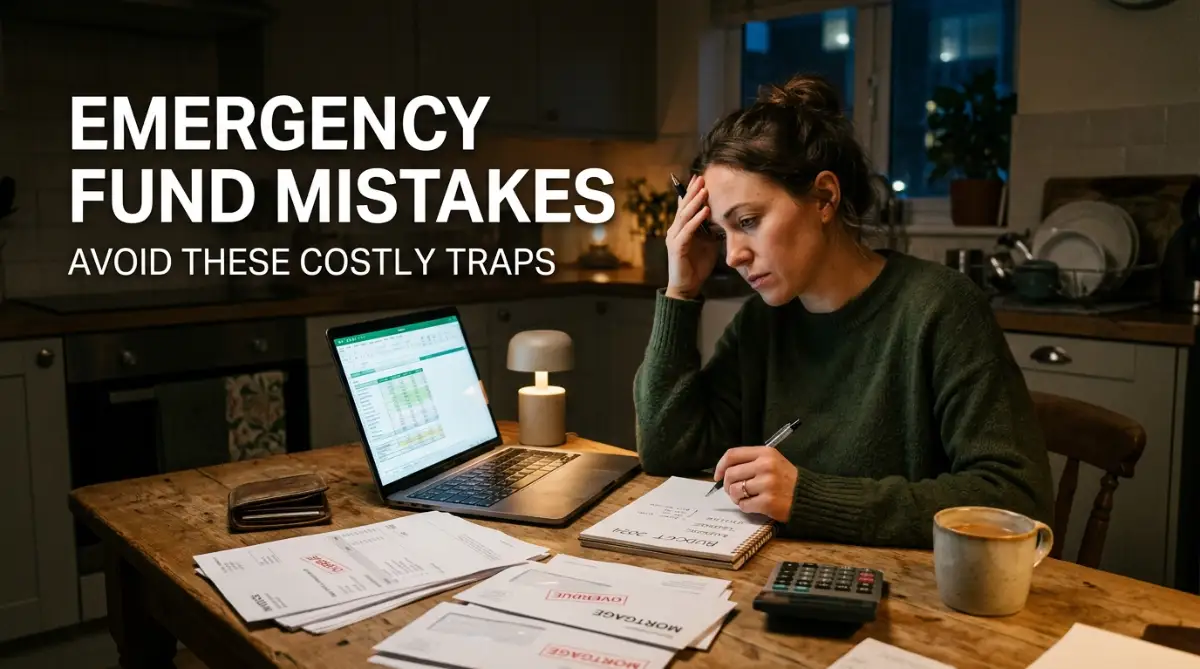
When your car breaks down or a medical bill hits, the panic is real. You need cash fast, but clicking 'Apply Now' on the first ad you see is exactly how most people end up in a debt trap. I want to show you how to spot the hidden dangers in emergency loan apps before you sign your paycheck away. Let’s get you the money you need without the long-term nightmare of sneaky fees and triple-digit interest rates
When a sudden financial disaster strikes, your brain naturally goes into survival mode. You stop thinking about long-term consequences because the immediate fire in front of you feels completely overwhelming. Everyday people are silently carrying the heavy burden of these sudden expenses, whether it is a massive medical bill, an urgent home repair, or an unexpected job loss.
Unfortunately, predatory lenders know exactly how to target this specific desperation. They design their systems to look like a friendly lifeline for struggling families. In reality, these quick-fix offers often trigger a devastating cycle of debt that can last for months or even decades.
The mental toll of this trap is absolutely exhausting. People lose sleep, their relationships suffer, and the constant anxiety of missing high-interest payments drains their daily energy. What starts as a simple attempt to solve a temporary problem quickly transforms into an endless nightmare of hidden fees and aggressive collection calls.

The Danger of Rushing the Application Process
The 30-Second Emergency Survival Guide
- Stop the Spam: Only apply to one or two trusted lenders; hitting 'Apply' everywhere will tank your credit score instantly.
- Verify the APR: If the APR is not clearly listed or is over 36%, walk away. It's a debt trap, not a loan.
- Check for 'Soft Pulls': Look for lenders that give you a quote without doing a 'hard' credit check first.
- No Upfront Cash: Legitimate lenders never ask you to pay a 'processing fee' through gift cards or wire transfers before giving you the money."
When you need money instantly, reading a ten-page legal document feels like an absolute waste of time. However, skipping the fine print is one of the most dangerous things you can do when your bank account is empty. Borrowers routinely agree to terms they simply do not understand because the process is intentionally designed to be rushed.
Many lenders use confusing language to mask the true cost of borrowing money. They might highlight a small monthly payment while completely hiding an astronomically high Annual Percentage Rate (APR). You might think you are getting a great deal, but the math behind the scenes tells a completely different story.
The True Cost: $500 Emergency Loan Comparison
Before you sign, look at how much you'll actually pay back over time:
As you can see, waiting just 24 hours to find a better rate can save you over $600.
Before you sign any fast-cash agreement, watch this quick breakdown of how hidden fees silently drain your wallet and ruin your financial peace.
The Multiple Application Trap
Another massive mistake happens when people panic and apply to five or six different places at the exact same time. It feels totally logical in the moment. You assume that casting a wide net increases your chances of getting a single approval.
Sadly, the financial system heavily punishes this exact behavior. Every single time a formal lender checks your background, it triggers what is known as a "hard pull" on your official credit file. A hard pull instantly lowers your overall score by a few points.
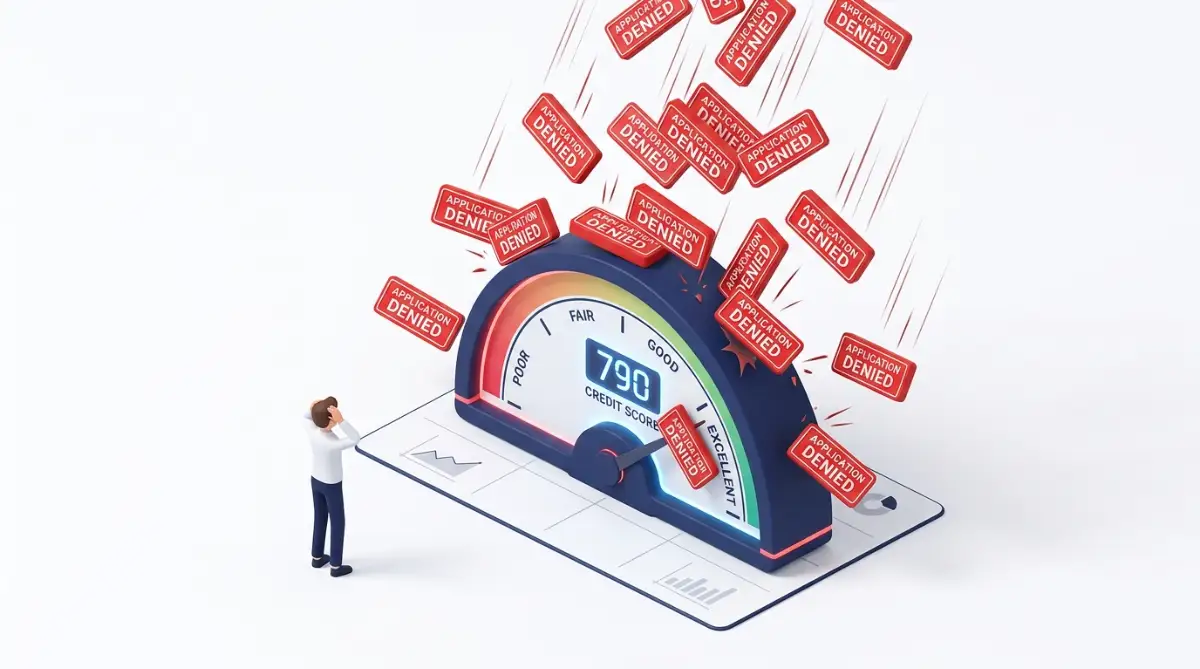
When you rack up several of these hard inquiries within a few days, algorithms flag your profile as highly desperate. Traditional banks and reputable credit unions will immediately deny your request. This leaves you with no choice but to accept offers from shady companies that charge outrageous interest rates.
Myth vs. Reality: Applying for Loans
- The Myth: Applying at multiple banks shows you are a proactive borrower looking for the best rate.
- The Reality: Multiple fast applications make you look incredibly risky, actively lowering your chances of getting a fair deal.
Failing to Verify the Lender's Reputation
Desperation makes us trust people we normally would never even speak to. When a website promises guaranteed approval within five minutes, it is highly tempting to just hand over your personal data. Unfortunately, the internet is absolutely crawling with fake companies waiting to steal your identity.
Some of these scammers do not even want to lend you money. They just want to collect your social security numbers, banking details, and personal addresses to sell on the dark web. Always verify that a company is officially registered and has genuine, independent customer reviews.
If an online offer requires you to pay an "upfront processing fee" before they release your funds, run away immediately. Legitimate financial institutions will simply deduct any small fees directly from the total amount they issue to you. Asking for cash directly out of your pocket first is a classic scam.
Ignoring Local Alternative Solutions
When we panic, we often forget the resources standing right in our own neighborhoods. We immediately turn to a glowing smartphone screen instead of having a real conversation with local organizations. Community resources are almost always safer and vastly cheaper than an internet payday company.

I used to think my only option was a high-interest payday lender when things got tough. My biggest mistake was ignoring local credit unions, which actually offer small, short-term options for members without destroying your financial future.
Many local community banks actually have specialized programs specifically designed for unexpected life events. These programs often come with incredibly low interest rates and highly flexible repayment terms. They actually want to help you succeed, rather than profit off your immediate misery.
Borrowing More Than You Actually Need
When someone finally says "yes" to your application, the relief is totally overwhelming. If you asked for a specific amount, but the agent says you qualify for double that, the temptation to take it is huge. You might think having an extra buffer of cash is a smart safety net.
Taking extra money is a terrible mathematical decision. Every single extra dollar you accept comes attached to interest, fees, and longer repayment periods. That "safety net" actually becomes an anchor pulling you deeper into long-term debt.
How to Calculate Your True Need:
- Write down the exact cost of the emergency. Get an official quote or bill.
- Subtract any available cash. Look at what you can comfortably spare from your current checking account.
- Borrow only the exact difference. Do not round up just to have extra spending money in your pocket.
Misunderstanding Payback Schedules
Fast cash often comes with extremely aggressive payback schedules. Traditional personal financing usually gives you a month before your first bill is due. Urgent short-term agreements often demand their money back by your very next payday.
If your car repair took all your money this week, how will you magically have enough to pay back the full amount plus interest in just fourteen days? This is exactly how the rollover trap begins. You pay a fee just to extend the deadline, making absolutely no progress on the original balance.
You must sit down with a calendar before you accept any funds. Look at exactly when your next paychecks arrive and map out exactly how much will go toward food, rent, and utilities. If the math does not leave enough room for the new payment, you are setting yourself up for failure.
Overlooking Prepayment Penalties
Imagine you get a surprise bonus at work and want to clear your debt early. You naturally assume the company will be thrilled to get their money back ahead of schedule. Shockingly, many predatory contracts actively punish you for trying to be responsible.
These are known as prepayment penalties. Lenders count on your monthly interest payments to make a massive profit. If you pay early, they lose out on that expected revenue, so they hit you with a massive fee to make up the difference.
Always ask specifically if you are allowed to clear the balance early without any extra charges. A fair, reputable organization will never penalize you for taking charge of your financial health. If they dodge the question, take your business somewhere else immediately.
Myth-Busting Your Emergency Options
- Myth: My bank is too slow for an emergency.
- Fact: Many credit unions now offer 'Payday Alternative Loans' (PALs) that fund within 24 hours.
- Myth: I have to accept the full amount they offer.
- Fact: You can (and should) only take exactly what the repair or bill costs. Taking the 'extra buffer' they offer just adds more interest you don't need to pay.
Relying Solely on Co-Signers
Sometimes, you cannot get approval on your own, so you ask a family member or close friend to co-sign. While this feels like a great team effort to solve your problem, it places an unbelievable amount of risk on someone you love. Their good name is now legally tied to your crisis.
If you miss a single payment because things remain tight, the company will immediately attack your friend's credit file. This has destroyed countless marriages, friendships, and family bonds over the years. You are essentially gambling with someone else's financial security.
If you absolutely must use a co-signer, you need a strict, written backup plan. What will you sell or sacrifice if you lose your job next week? You must treat their signature with more respect than you treat your own.
The True Cost of "Desperation Tax"
Every bad decision made in a rush creates what experts call a "desperation tax." This is the extra money you lose because you did not have the time or energy to shop around. It shows up in high origination fees, massive interest spikes, and ridiculous late payment terms.
To avoid this tax, you have to force yourself to pause for just twenty-four hours. Even in a massive crisis, taking one single day to breathe, research, and evaluate will save you thousands of dollars. An emergency requires speed, but it never requires blind panic.
Taking control of your breathing and stepping away from the computer screen can physically change your brain chemistry. Once you calm down, you will start seeing creative alternative solutions that you completely missed while you were panicking.
Final Thoughts on Safe Borrowing
No one ever plans to be completely broke when a crisis happens. Life is highly unpredictable, and sometimes you just need a temporary financial bridge to get to the other side. The goal is to make sure that bridge is heavily reinforced, not made of rotten wood that will collapse under your weight.
Read every single line of the contract. Keep your applications limited to highly trusted sources, and strictly borrow the exact penny you need. Protecting your future self is just as important as solving today's immediate problem.
Master Strategies for Navigating Urgent Financial Crises
Once you understand the basic traps, you need a highly effective action plan to protect your money. Surviving a sudden cash shortage requires a calm mind and a clear strategy. You cannot simply guess your way through confusing contracts and expect a good outcome.
One of the smartest things you can do is learn how to negotiate directly with your current creditors. Most people do not realize that hospital billing departments and utility companies often have secret hardship programs. If you simply call them and explain your situation, they might pause your bill or offer a zero-interest payment plan.
This simple phone call can completely eliminate your need to borrow fast cash. When you speak to a representative, always get their name and a reference number for the conversation. Relying solely on verbal promises from agents without written proof can backfire if they suddenly "forget" your agreement next month.
If you absolutely must borrow from an outside source, you need to understand the concept of a soft credit check. Many modern online platforms now offer a pre-qualification process that only requires a soft pull on your background. This allows you to see your estimated interest rate without damaging your official credit score.
You should actively seek out these platforms before you ever apply for a traditional hardship option. By doing this, you are safely navigating unsecured personal financing options without looking desperate to the major reporting bureaus. It gives you the power to compare prices safely, just like window shopping.
Another major secret is understanding exactly how the Truth in Lending Act protects you. The Consumer Financial Protection Bureau officially mandates that lenders must provide a simple, easy-to-read document explaining all costs before you sign. If a representative tries to rush you past this specific disclosure, consider it a massive red flag and walk away.
You also need to look for specific clauses regarding payment timelines. Many reputable companies offer a short window of time where you will not be penalized if you are a few days late. Understanding these grace period clauses can save you from a massive late fee if your next paycheck gets delayed unexpectedly.
Real-Life Scenario:
Imagine you borrow $1,000 for an emergency roof repair. A standard credit union might give you a clear 12-month plan with a fixed 10% rate. A predatory online company might offer the same $1,000 but hide a daily compounding interest rate deep in the contract.
With the credit union, your path to zero balance is clear and predictable. With the predatory lender, missing one single payment could instantly double your total debt overnight. This is why reading the exact legal terms is your greatest defense.
Finally, you must build the habit of aggressively saving a micro-fund as soon as this current crisis passes. Even putting away ten dollars a week builds a highly effective shield against future disasters. Creating this solid financial foundation guarantees you will never have to beg a stranger for money ever again.

The Most Dangerous Debt Traps That Keep You Broke
Even smart, highly educated people make terrible decisions when they are terrified about money. One of the absolute worst things you can do is take out a new obligation to pay off an old one. This creates a toxic cycle known as the debt treadmill, and it is almost impossible to escape.
When you use a high-interest payday advance to cover a late credit card bill, you are not actually solving the problem. You are just moving the fire from your kitchen into your living room. Eventually, the interest on both accounts will grow so large that your entire monthly income will barely cover the minimums.
According to a detailed report on payday lending by the Federal Trade Commission, the vast majority of borrower profits come from people who are forced to roll over their balances. A rollover happens when you pay a fee just to extend your due date by another two weeks. You make zero progress on the actual principal amount you owe.
People get stuck doing this for months, paying thousands of dollars in fees for a small $300 advance. They become so focused on surviving the current week that they completely ignore the hidden financial costs stacking up against them. You must refuse to accept rollover terms at all costs.
Another massive mistake is ignoring the emotional and physical toll of financial secrecy. Many people feel deeply ashamed of their money struggles, so they hide the new debt from their spouse or family members. They try to carry the entire heavy burden entirely on their own shoulders.
This level of intense isolation leads to severe anxiety, depression, and poor physical health. A study published by the American Psychological Association confirmed that constant worrying about bills is a leading cause of severe health issues. Learning how to properly manage financial stress by communicating with your loved ones is just as important as fixing your budget.
When you hide your struggles, you also block yourself from receiving help. Sometimes a family member can offer a small, interest-free loan that completely saves the day. Pride is a very expensive emotion when your bank account is negative.
People also fail by trusting companies that suddenly demand "insurance fees" to secure the funds. Scam artists will often approve you for a large amount but claim you need to wire them $200 for a security deposit first. A real financial institution will never ask you to send them money in order to get money.
If you fall for this trick, the scammer will take your deposit and completely vanish. Not only do you still have your original emergency, but now you are missing even more cash. Always trust your gut; if the process feels weird or overly complicated, it is probably a scam.
Finally, the biggest trap is believing that things will just magically get better next month without changing your habits. Taking out urgent cash is a giant warning sign that your current lifestyle is not sustainable. If you do not actively cut your daily expenses or increase your income, you will end up right back in the exact same desperate situation.
Your Roadmap to Financial Peace of Mind
Getting through a sudden cash crisis is incredibly difficult, but you absolutely have the power to survive it. The most important step you can take today is to simply slow down your racing thoughts. Do not let aggressive marketing tactics push you into signing a terrible legal agreement.
Take out a piece of paper right now and write down exactly who you owe and how much you need. Look at your local community programs, call your current creditors, and explore every single free option first. Only use short-term funding as the absolute final, unavoidable option on your list.
Remember, true wealth is not about how much money you make, but how well you protect what you have. Every time you successfully avoid a high-interest trap, you are keeping money in your own family's pocket. Stay educated, ask hard questions, and never let fear dictate your financial future.
I know exactly how terrifying an empty bank account feels when the world seems to be crashing down around you. My biggest turning point was realizing that a temporary panic does not have to result in a permanent financial disaster. You are strong enough to face this problem head-on, so take a deep breath, read the fine print, and start taking smart action today.
Common Questions About Urgent Cash Options
Do these short-term applications hurt my credit score?
It depends heavily on the type of company you choose. Traditional banks will do a hard inquiry that drops your score, while many online platforms only do a soft pull. Always ask the representative directly before you click submit.
Can I get approved if my credit history is terrible?
Yes, there are companies that specialize in bad credit, but they usually charge incredibly high fees to make up for the risk. You should explore local credit unions first, as they often look at your character and community standing rather than just a computer number.
What actually happens if I miss a scheduled payment?
Missing a due date usually triggers a heavy late fee and an immediate drop in your official credit rating. If you ignore the problem, the company will eventually send your file to an aggressive collections agency.
Are tribal lenders safer than regular online payday companies?
Not necessarily. Tribal lenders operate under different sovereign laws, which means they can often legally bypass state-mandated interest rate caps. This can result in astronomical fees that are completely legal, making them highly dangerous for desperate borrowers.
How do I quickly spot a fake lending website?
Fake sites often have spelling errors, lack a physical contact address, and promise 100% guaranteed approval for everyone. If they ask you to pay an upfront fee using gift cards or cryptocurrency, it is absolutely a scam.
Disclaimer: The information provided in this article is for educational and informational purposes only and does not constitute professional financial, legal, or tax advice. We are not a licensed financial institution. Always consult with a certified financial advisor or legal professional before making any major financial decisions, signing legal contracts, or taking out a personal loan. Your financial situation is unique, and you are fully responsible for the outcomes of your borrowing choices.