Drowning in Unexpected Bills: My Wake-Up Call with Borrowed Money
You need cash to cover a sudden bill, but you don't want to risk losing your car or house just to get it. That is exactly where 'unsecured' loans come in. I’m going to show you how to navigate these options without getting trapped by sneaky fees or crazy interest rates. Let's skip the complicated bank talk and get you the clear, honest steps you need to fix your financial emergency today
I knew I needed money fast, but the thought of putting my old, reliable car up as collateral terrified me to my core. If something went wrong and I could not pay, I would lose my only way to get to work. That single, terrifying thought kept me wide awake for nights on end.
That long night, I started frantically searching the internet for safe financing options that did not require me to risk my personal assets. I just wanted a simple solution to get back on my feet. Instead, I quickly realized how incredibly confusing and overwhelming the banking industry can be for a complete beginner.
Every website I visited was filled with complicated financial jargon that made my head spin. Words like amortization, fixed rates, and credit utilization were thrown around like everyday vocabulary. I felt completely paralyzed by the fear of making a costly financial mistake that could ruin my future.
How to Borrow Safely Without Collateral
- Check the APR, Not the Rate: The APR shows the real cost including all hidden fees.
- Use 'Soft Pulls': Always check your approval odds with lenders that won't hurt your credit score first.
- Skip the Junk Fees: Watch out for 'Origination Fees' that take money out of your loan before you even get it.
- Have an Exit Plan: Never borrow more than your monthly budget can comfortably pay back."
Demystifying the World of Collateral-Free Borrowing
When you are trying to find money to cover an emergency, you basically have two main paths to choose from. You can either offer up something you own to secure the money, or you can borrow money based entirely on your good promise to pay it back. The second option is what banks and credit unions call unsecured personal financing.
Think of it like borrowing fifty dollars from your best friend to pay for dinner. Your friend does not ask you to hand over your watch to guarantee you will pay them back. They hand you the cash simply because they trust your character and your history of keeping promises.
The Lender’s Secret Scorecard: What They Really Want to See
Since you aren't handing over a car title, the bank looks at these three things to decide if you are a 'safe' bet:
- Payment History (35% Weight): Have you missed any bills in the last 24 months?
- Credit Utilization (30% Weight): Are your credit cards maxed out? They prefer you use less than 30% of your limit.
- Income Stability: Do you have a steady paycheck coming in? They want to know you can actually afford the new monthly bill.
An unsecured financing option works exactly the same way, just on a much more formal and larger scale. The lender gives you a lump sum of money, and you agree to pay it back over time with a little extra money added on top, known as interest. You do not have to put your house, your car, or your savings account on the line to get approved.
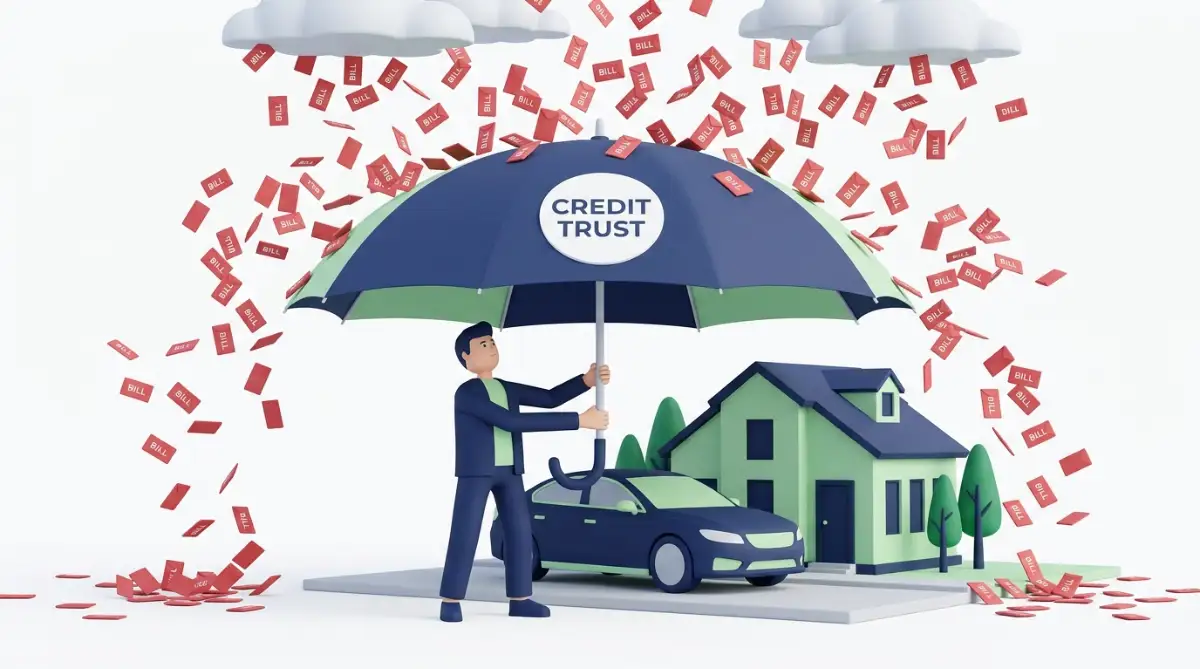
Because the lender is taking on a much higher risk by not holding onto any of your physical assets, they rely heavily on your financial reputation. They want to see a solid history of you borrowing money and paying it back right on schedule. This is why having a decent credit history becomes your strongest tool when applying for these types of funds.
The Hidden Rules of Lenders and Trust
When you apply for funds without collateral, banks use a very specific formula to decide if they can trust you. They do not just look at your name and guess; they use hard math to predict your future behavior. Your credit profile acts like your financial report card, showing them exactly how responsible you have been in the past.
If your financial report card shows a lot of missed payments or maxed-out credit cards, lenders get extremely nervous. They might still offer you the money, but they will charge you a significantly higher interest rate to cover their perceived risk. It is their way of protecting their business just in case you suddenly stop making your monthly payments.
On the other hand, if you always pay your bills on time and keep your balances low, lenders will practically roll out the red carpet for you. They will offer you their very best rates because they feel confident you are a safe bet. Understanding this basic rule of trust completely changes how you approach borrowing money.
Real-Life Scenario: Ordering from the Financial Menu
Let us break this down with a simple, everyday analogy that makes complete sense. Imagine walking into a fancy restaurant where the menu has absolutely no prices listed on it. You order a big meal, eat it, and then get hit with a massive bill that completely empties your wallet.
Many beginners treat personal financing exactly like that dangerous restaurant. They apply for the very first offer they see online without understanding the total cost of borrowing that money. By the time they realize the interest rates and hidden fees are too high, they are already legally locked into a binding contract.
Smart borrowing means you always demand to see the prices before you order anything. You have the absolute right to know exactly how much extra money you will pay over the life of your agreement. Never sign any financial document unless you fully understand every single number written on that page.
Navigating the Sea of Pre-Approvals
One of the greatest tools available to beginners today is the ability to check your approval odds without damaging your financial reputation. In the past, every time you asked a bank for money, it left a tiny negative mark on your credit report. If you shopped around too much, you actually made yourself look desperate to lenders.
Today, most reputable online lenders and local banks offer something called a "soft pull" or pre-qualification. This technology allows them to peek at your financial history to give you an estimated interest rate without leaving any permanent marks behind. You get to see exactly what you qualify for in complete safety.
This means you can easily compare offers from three or four different places in a single afternoon. You can sit comfortably on your couch, compare the monthly payments side-by-side, and choose the one that perfectly fits your monthly budget.
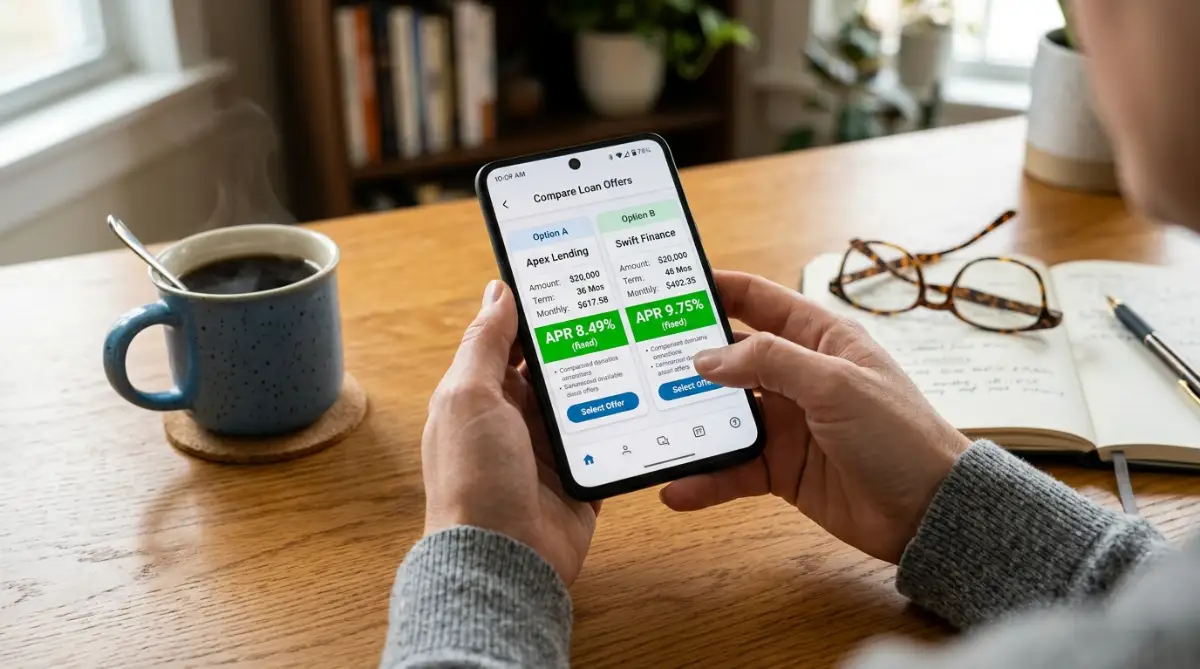
Taking the time to shop around is the easiest way to save hundreds of dollars in interest.Here is a highly effective introductory video that perfectly explains how to compare different lending options without hurting your credit score. Watch this brief guide before you ever fill out a single application, as it could save you from making a massive beginner mistake!
My Personal Wake-Up Call (Pro Tip)
I learned about the power of shopping around the hard way when I needed money for my car repairs. I was in such a massive rush that I accepted the very first offer my primary bank gave me, thinking they would automatically give me the best deal because I was a loyal customer. Two weeks later, I found out an online lender would have given me a rate that was almost four percent lower, which would have saved me nearly forty dollars every single month. My biggest piece of advice is to never let loyalty stop you from finding a better deal somewhere else; banks are businesses, not your friends.
The Myth of Instant Free Money
You have probably seen those flashy advertisements promising instant approvals and guaranteed cash within five minutes, regardless of your past history. Let me be completely honest with you: these offers are usually carefully crafted traps designed to take advantage of desperate people. If something sounds too good to be true in the banking world, it almost always is.
These so-called instant options often come with interest rates that reach into the triple digits. You might borrow a thousand dollars today, but you could easily end up paying back three or four thousand dollars over the next few years. They trap you in a never-ending cycle of debt that is incredibly difficult to escape from.
Reputable institutions might take an extra day or two to fully process your application and verify your identity. That short wait is actually a good sign that they are following proper legal procedures to protect both you and themselves. Patience is highly rewarding when it comes to securing safe and affordable funding.
Comparing Your Options Side-by-Side
To make things easier to understand, let us look at a simple breakdown of how different types of borrowing compare to each other. When you see the facts laid out clearly, it becomes much easier to make a confident choice.
As you can see from this simple table, choosing an option without collateral gives you incredible peace of mind regarding your personal property. You never have to worry about a tow truck taking your car away in the middle of the night if you hit a rough patch.
However, you essentially pay a small premium for that peace of mind through slightly higher interest charges. The bank takes on all the physical risk, so they charge a bit more to balance out their books. For most beginners managing sudden emergencies, protecting their physical assets is well worth that small extra cost.
Understanding the True Cost of Borrowing
When you finally get an offer in your hands, the most important number to look at is not the monthly payment. Beginners usually just ask, "Can I afford this much a month?" While that is important for your daily budget, it hides the true cost of the money you are getting.
You need to pay close attention to the Annual Percentage Rate, commonly known as the APR. The APR includes both your basic interest rate and any extra fees the lender charges just for setting up your account. It gives you the absolute most accurate picture of exactly how expensive this money truly is.
For example, a lender might offer you a seemingly amazing low interest rate, but then they quietly attach a massive origination fee taken straight out of your funds. By looking strictly at the overall APR, you can easily spot these hidden tricks. The lowest APR always represents the cheapest overall deal, regardless of how the bank tries to package it.
Myth vs. Reality: The Truth About Collateral-Free Loans
- Myth: You need a perfect 800 credit score to get an unsecured loan.
- Reality: Many lenders work with 'fair' credit (600+), but you will just pay a slightly higher interest rate.
- Myth: These loans take weeks to get approved.
- Reality: Most modern online lenders can approve you and send the cash in as little as 24 to 48 hours.
Building a Strong Safety Net Before You Apply
If your emergency is not a matter of life and death today, taking just a few weeks to polish your financial profile can work wonders. Lenders love predictability and stability above almost everything else. They want to see that your everyday life is calm and managed properly before they hand over thousands of dollars.
One extremely effective trick is to pay down your current credit card balances just a tiny bit before submitting a new application. When lenders see that you are actively reducing your everyday debt, your trustworthiness score shoots up instantly. Even a fifty-dollar payment toward an old bill can make you look like a much safer bet in their computer systems.
Another smart move is to avoid moving homes or changing jobs right before you ask for new funds. Lenders get nervous when they see sudden, massive changes in your living situation because it suggests instability. Staying put and maintaining your regular routine proves to them that you are a reliable, consistent adult who can handle a new monthly responsibility.
The Debt-to-Income Reality Check
There is one specific calculation that every single financial institution uses behind closed doors, and you need to understand it right now. It is called your Debt-to-Income ratio, and it is honestly more important than how much money you make overall. You could earn a hundred thousand dollars a year and still get rejected if this simple ratio is out of balance.
To find this number, banks look at every single debt payment you make each month and compare it to your total monthly income before taxes. If you make four thousand dollars a month, but two thousand of that automatically goes to student loans and car payments, lenders see a major red flag. They assume you barely have enough money left over to buy groceries, let alone take on a brand-new monthly bill.
Most traditional banks want to see this ratio sit comfortably below thirty-six percent. If you are currently sitting above that invisible line, you might struggle to get approved for standard rates. This is exactly why managing your current obligations is the foundation of getting access to better future opportunities.
Planning Your Exit Strategy First
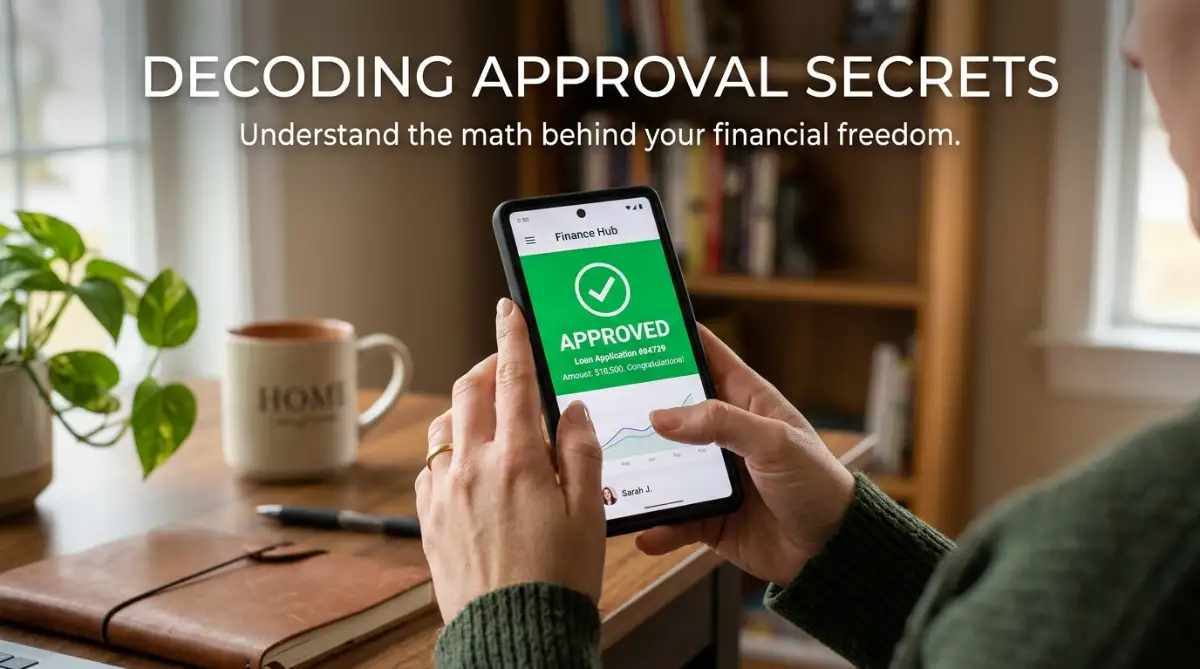
The biggest mistake I see beginners make is focusing entirely on getting the money today, without having a concrete plan for paying it back tomorrow. Getting an approval message on your phone feels amazing, but that money is not a gift or a bonus check. You are borrowing from your future self, and your future self deserves a solid plan.
Before you ever click that final submit button, you need to write out exactly how this new payment fits into your current lifestyle. Sit down with a piece of paper and write out your rent, your groceries, your gas, and your fun money. If adding this new payment means you can no longer afford to buy fresh groceries, you need to reconsider the amount you are asking for.
Sometimes, borrowing slightly less than you actually want is the smartest move you can possibly make. If you need five thousand dollars for a project, but can only comfortably afford the monthly payments on three thousand, you have to get creative. Protecting your daily cash flow is the only way to ensure you do not end up in an even worse financial disaster six months from now.
Mastering Your Financial Strategy Like a Professional
Getting approved for funding without putting your assets on the line is a massive relief, but it is honestly just the beginning of your journey. You now have the money in your bank account, and the immediate emergency is finally solved. The real secret to financial peace of mind is how you manage this new responsibility over the long term.
Many people make the mistake of putting their monthly payments on autopilot and completely forgetting about the overall balance. They assume that as long as they pay the minimum amount each month, they are doing everything perfectly. However, treating your debt passively is the easiest way to end up paying hundreds of extra dollars in unnecessary interest.
If you truly want to protect your wallet, you need to treat your new financial agreement like a living, breathing contract. You should always be looking for creative ways to minimize the extra money you are paying to the bank. Let us walk through some highly effective strategies that everyday people use to beat the banking system at its own game.
The Power of the Accelerated Payment Strategy
Most banking institutions set up your monthly payment schedule so that they make the maximum amount of profit over several years. They stretch your payments out as far as possible, making the monthly amount look very small and manageable. What they do not openly advertise is that you have the complete freedom to break this schedule.
By simply adding an extra twenty or thirty dollars to your payment each month, you attack the main balance directly. This tiny daily sacrifice might mean skipping one restaurant meal a month, but it magically shaves entire months off your agreement. You are effectively stopping the bank from charging you future interest on that specific amount of money.
Before you start doing this, you must always call your provider and ask them how they apply extra payments. You want to ensure the extra cash goes straight to the principal balance, rather than just prepaying next month's interest. This is a very common trick banks use, but knowing how to properly ask the question puts you entirely in control.
Building an Unbreakable Monthly Buffer
Life is incredibly unpredictable, and having a new monthly bill makes your personal budget a little bit tighter than usual. If your car breaks down or you get sick, you might suddenly struggle to make your scheduled payment. This is why creating a dedicated safety buffer is the smartest move you can possibly make right now.
Instead of keeping all your money in one main checking account, open a separate, free account just for your obligations. Transfer one and a half times your required monthly payment into this new account as quickly as you can. This way, if a bad month happens, you already have the money sitting there waiting to be automatically drafted.
This simple separation completely removes the daily panic of checking your bank balance the day before a payment is due. It protects your good standing with the lender and ensures you never accidentally spend the money you need for your bills. When you master the art of analyzing your financial statements, setting up these small buffers becomes incredibly easy.
Renegotiating from a Position of Strength
Most beginners believe that once they sign a contract, they are trapped with those exact terms forever. This is a massive myth that keeps people locked into terrible agreements long after their financial situation has improved. The truth is that your credit profile changes every single month, and you can absolutely use that to your advantage.
If you make all your payments perfectly on time for a year, your overall trustworthiness score will likely go up. When that happens, you basically become a premium customer in the eyes of the financial world. You can then look for a brand new provider to completely pay off your old balance, giving you a much lower interest rate.
This strategy is especially powerful if you originally accepted a slightly higher rate due to a past emergency. It is highly recommended to study how lenders view your steady income so you can present yourself as the safest possible investment. You should never feel bad about leaving a lender if another company is offering you a significantly better deal.
The Art of Avoiding Hidden Banking Traps
Even the most reputable institutions have tiny clauses in their agreements that can catch beginners completely off guard. You might think you are doing everything right, only to check your statement and see strange charges you never agreed to. These surprise costs eat away at your hard-earned money and cause unnecessary frustration.
One common trap is the penalty for paying off your balance too early, which sounds completely backwards. Some banks actually punish you for being responsible because it ruins their long-term profit projections. Always verify that your specific agreement does not include these sneaky administration fees before you hand over any extra cash.
You can also protect yourself by staying updated on understanding consumer lending standards through trusted government resources. The more you know about your legal rights as a borrower, the harder it becomes for anyone to take advantage of you. Knowledge truly is your strongest shield in the modern banking industry.

The Financial Traps That Keep Beginners Awake at Night
Even with the best intentions, the pressure of needing money quickly can push anyone into making hasty, regrettable choices. I have seen incredibly smart people fall into deep financial holes simply because they panicked and skipped doing their basic homework. Recognizing these dangerous traps before you step into them will save you from years of extreme emotional stress.
When you mess up a collateral-free agreement, you do not just lose a physical item like a television or a car. You slowly destroy your financial reputation, which affects your ability to rent apartments, get cell phone plans, or even land certain jobs. The emotional weight of receiving angry phone calls from debt collectors can completely ruin your mental health and family relationships.
Falling for the "Easy Money" Illusion
The single biggest danger of unsecured funds is how incredibly easy they are to obtain in the modern digital age. You can literally click three buttons on a smartphone app and have thousands of dollars deposited into your account by tomorrow morning. This magical convenience tricks your brain into treating the money like a lucky lottery win instead of a serious obligation.
People often start out borrowing money for a genuine medical emergency, which is perfectly reasonable and responsible. However, they suddenly realize they have an extra thousand dollars left over in their approval limit. The temptation to buy a new gaming console or book a weekend vacation becomes incredibly hard to resist.
This mindset leads directly to the dangerous trap of instant cash advances, where borrowing becomes a casual monthly habit. Before you know it, you are juggling four different payments and all your normal income is going directly toward interest charges. You must aggressively train yourself to only borrow the exact penny you need for a genuine emergency.
Ignoring the Fine Print Out of Desperation
When you are terrified about how you will pay a sudden bill, reading a ten-page legal document feels like a complete waste of time. You just scroll rapidly to the bottom of the screen, check the little agreement box, and pray the money arrives quickly. This exact moment of desperation is exactly when bad lenders lock you into terrible terms.
You might completely miss a clause stating that your interest rate will magically double if you are just one day late on a payment. You might overlook a monthly maintenance fee that silently drains twenty dollars from your checking account every thirty days. These tiny details are intentionally buried in boring legal text because they know most normal people will never read them.
Taking thirty minutes to sit in a quiet room and highlight things you do not understand is an absolute necessity. You can even use reliable resources on banking consumer protection laws to cross-check anything that looks slightly suspicious. If a lender aggressively pressures you to sign paperwork before you can read it, you should instantly walk away.
The Danger of Borrowing to Pay Borrowed Money
There is a very specific cycle of despair that catches beginners when they finally hit a rough patch and cannot make a payment. Instead of calling their provider to explain the situation, they panic and look for another source of quick money. They take out a new, more expensive batch of funds just to pay the monthly bill on their older account.
This is the equivalent of trying to put out a kitchen fire by throwing gasoline on it. You are temporarily hiding the problem, but you are massively multiplying your total debt and increasing your future stress levels. The math simply does not work, and the entire house of cards will eventually collapse, destroying your credit entirely.
The absolute smartest thing you can do if you are struggling is to pick up the phone and talk to a human being at your bank. Many institutions have specific hardship programs designed to temporarily lower your payments without permanently destroying your reputation. Being honest and proactive is always rewarded much better than hiding in fear.
Your Blueprint for a Stress-Free Financial Future
Navigating the world of borrowing money without using your personal property as a shield does not have to be a terrifying experience. You are entirely capable of making highly intelligent choices that protect your family and solve your immediate problems. It all comes down to slowing your breathing, rejecting pushy sales tactics, and trusting the simple math.
Every time you take a moment to compare rates, read the fine print, or set up an extra monthly payment, you are actively building a stronger version of yourself. You are stepping away from the anxiety of living paycheck to paycheck and moving toward true stability. Remember that you are the boss of your own personal finance journey, and these banks are just tools you use to build your life.
If you ever feel overwhelmed, just take a step back and focus on effectively managing personal debt one small day at a time. The rules of money are actually quite simple once you strip away all the confusing industry jargon. Stay patient, demand clear answers from your providers, and always prioritize your daily peace of mind above everything else.
My Personal Closing Thought:
I remember exactly how terrifying it felt to sign my very first set of financial papers, wondering if I was making a massive mistake. Today, I can confidently tell you that taking the time to educate myself completely changed the trajectory of my entire life. I believe in you, and I know you have the strength to make the absolute best choices for your future starting right this minute!
Commonly Asked Questions About Borrowing Without Assets
Will simply checking my approval odds ruin my credit score?
No, it will not hurt your score if the company uses a pre-qualification process, often called a soft pull. This safe method lets them estimate your terms without leaving a permanent mark on your financial record. However, when you finally accept an offer and officially sign the papers, a hard inquiry will be recorded.
Can I actually save money if I pay off my balance early?
In most standard agreements, paying off your balance early stops the bank from charging you future interest, saving you a lot of cash. You just need to carefully verify that your specific contract does not include sneaky early payoff penalties. A quick five-minute phone call to your provider can easily confirm exactly how extra payments are handled.
What actually happens if I accidentally miss a single payment?
If you miss a due date, most institutions will charge you an immediate late fee and send a warning notification. If you stay behind for more than thirty days, they will officially report it to the credit bureaus, which severely damages your trustworthiness score. It is always better to call them before the due date to explain your situation and ask for a temporary extension.
Is it a good idea to borrow a little extra cash just in case?
You should absolutely never borrow more money than you precisely need for your specific emergency. Every single extra dollar you take comes with heavy interest charges that you will be forced to pay back for years. Keep your borrowed amount as small as mathematically possible to protect your future monthly budget.
Disclaimer: The information provided in this article is strictly for educational and informational purposes and does not constitute professional financial or legal advice. Every individual's financial situation is entirely unique, and rules regarding lending can vary heavily by location. We strongly encourage you to consult with a certified financial advisor or legal professional before signing any legally binding contracts or making major financial decisions.