
The Hidden Financial Shock of Buying a Home
Picture this: you just won the bidding war for your dream house. You are thrilled! But then you sit down to sign the final papers, and the banker slides a document across the desk demanding an extra $10,000 you never planned for. I have seen this "closing cost surprise" completely wipe out a buyer's savings. Let me walk you through exactly how to spot these sneaky fees and keep your money in your pocket where it belongs.
still remember sitting at the closing table for my first house, staring blankly at a bill that was thousands of dollars higher than I expected. I had saved for years just to hit my down payment goal, totally blind to the mountain of extra fees waiting for me. That sheer panic of nearly losing the house at the last second because my bank account was almost empty is something I never want you to experience.
Before You Sign: Your Closing Checklist
- Shop the Services: You don't have to use the lender's recommended title company; comparing quotes can save you hundreds.
- The 3-Day Rule: Always compare your Loan Estimate with your Closing Disclosure at least three days before closing to catch "hidden" fee hikes.
- Negotiate, Don't Assume: If your cash-to-close is too high, ask about lender credits—but calculate if the long-term interest trade-off is actually worth it.
- Keep Your Credit Frozen: Do not buy furniture or new appliances on credit until the keys are officially in your hand.
Why Traditional Budgeting Fails Most Homebuyers
- Most people focus entirely on the purchase price and down payment while ignoring ancillary expenses.
- Real estate paperwork uses complex financial jargon that hides unexpected service charges until the very last minute.
- Online calculators often generalize estimates, leaving massive gaps between predicted expenses and reality.
- Buyers rely on verbal estimates from agents instead of demanding itemized written disclosures early in the journey.
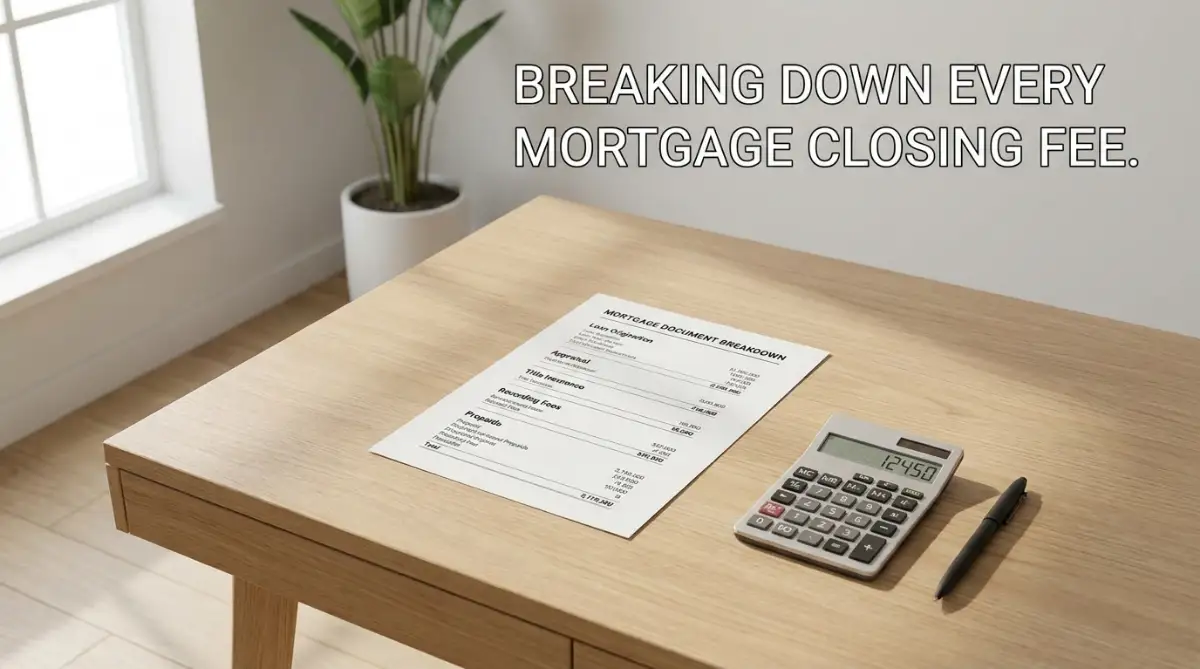
Step-by-Step Educational Guide to Managing Closing Expenses
Your 60-Second Survival Guide (Key Takeaways)
-
Closing costs usually add up to an extra 2% to 5% of your total home price. Do the math before you apply!
-
Always compare your initial "Loan Estimate" with your final "Closing Disclosure" at least three days before signing.
-
You have the legal right to shop around for third-party services like title insurance and pest inspections. Do not just blindly use the bank's guys.
-
Never try to pay your closing costs with a personal check—banks only accept wired money or certified cashier's checks.
Step 1: Request the Loan Estimate Early and Review Every Line Item
Quick Cheat Sheet: The "Big Three" Fee Categories
| Fee Type | Status | Action Needed |
| :--- | :--- | :--- |
| Origination Fees | Negotiable | Compare with 3+ lenders |
| Title Services | Highly Negotiable | Shop independent providers |
| Govt. Taxes | Non-Negotiable | Budget for them exactly |
If staring at that three-page Loan Estimate makes your head spin, you are definitely not alone! Watch this quick video breakdown below to see exactly how to read your paperwork, and then keep reading the article to learn how you can negotiate those fees down to save serious cash.
Your journey begins the moment you formally apply for a mortgage and receive a standardized Loan Estimate document from your lender. This three-page form lists every projected fee associated with your transaction, from origination charges to title insurance.
You must take time to examine every single dollar amount listed on this paper rather than just glancing at the total sum. Compare these numbers against competing lenders to ensure you are not paying inflated administrative fees.
- Loan origination fees cover the lender's cost for processing your application and underwriting the file.
- Appraisal fees pay a licensed professional to inspect the property and verify its actual market value.
- Credit report fees cover the cost of pulling your financial history from major reporting bureaus.
Can I actually negotiate these fees?
Question: Do I just have to accept whatever the bank charges me for origination fees?
Answer: Absolutely not! You can (and should) negotiate the bank's origination fee. I always tell my friends to get quotes from at least three different lenders. If Bank A charges $1,500 and Bank B charges $800, show Bank B's paperwork to Bank A and ask them to match it. Most of the time, they will drop the price just to keep your business!
Step 2: Understand Third-Party Services and Compare Provider Costs
Not all fees on your settlement statement are set in stone by your primary mortgage lender. Many charges stem from third-party service providers who handle legal work, property assessments, and insurance policies.
You have the legal right to shop around for certain services, such as title search companies and pest inspection agencies. Choosing independent providers can trim hundreds of dollars off your total cash-to-close requirement.
- Ask your real estate agent for a list of trusted local vendors who offer competitive rates.
- Read consumer reviews and compare quotes before locking in any specific settlement service provider.
- Ensure your chosen providers meet all lender requirements without sacrificing quality or speed.
Step 3: Audit the Closing Disclosure Against Your Initial Estimate
The 10% Rule for Your Sanity:
If any fee in the "Services You Can Shop For" category increases by more than 10% from your Loan Estimate to your Closing Disclosure without a valid change in circumstances, push back. Ask your lender to explain the variance in writing. If they can’t justify it, they may be required to cover the difference.
Three days before your scheduled signing date, your lender must provide a finalized document called the Closing Disclosure. This form matches your earlier Loan Estimate but replaces estimated figures with exact, final costs.
You need to place both documents side by side and look for any unauthorized price increases or mysterious new fees. Federal regulations strictly limit how much certain fees can increase between application and settlement day.
- Check whether lender charges went up without a valid legal reason or official change in loan terms.
- Verify that seller concessions or lender credits match what was promised in your purchase contract.
- Contact your loan officer immediately if you spot discrepancies to resolve them before signing day.
The "Ask Your Seller" Strategy
Did you know you can literally ask the seller to pay your closing fees? This is called "Seller Concessions." If the house needs a little work (like an old carpet or a weird paint color), you can offer their full asking price but ask for $5,000 back in closing cost credits. It is a win-win: they get their asking price on paper, and you keep your hard-earned cash in the bank.
My biggest mistake was blindly trusting my lender's recommended title company without checking other options. I later realized I could have saved over six hundred dollars just by making a few phone calls to local independent providers. Always take an afternoon to shop around for those third-party services, because it is the easiest money you will ever keep in your pocket.
Step 4: Negotiating Lender Credits to Lower Out-of-Pocket Expenses
How Higher Interest Rates Can Balance Your Cash Flow
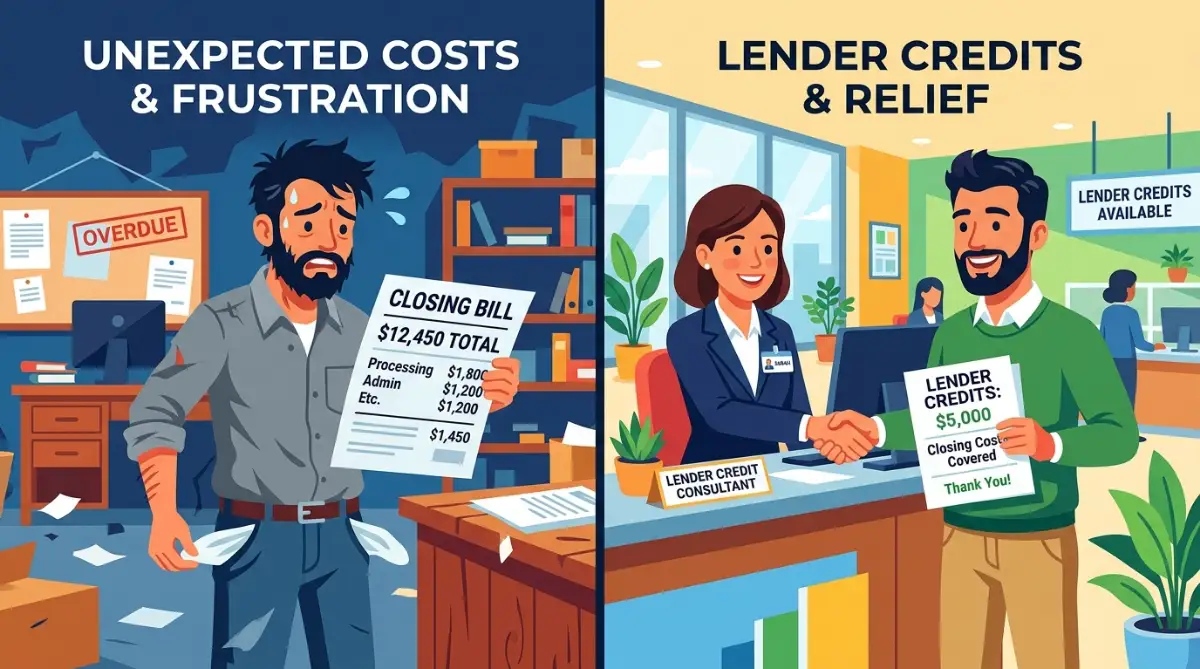
Many homebuyers do not realize that they can trade a slightly higher interest rate for a reduction in upfront settlement charges. Lenders often offer programs known as lender credits to cover a portion of your closing expenses.
When you select a credit, the bank gives you a lump sum of money to pay your settlement fees. In exchange, your monthly mortgage payment increases by a modest amount over the life of the loan.
- This strategy preserves your cash reserves for emergency repairs or moving truck rentals.
- You avoid liquidating retirement accounts or selling other investments just to cover paperwork fees.
- It works best if you plan to refinance or move within a few years rather than staying decades.
Weighing Short-Term Savings Against Long-Term Costs
You must run the numbers carefully before accepting any lender credit offer from your mortgage broker. Calculate how much extra interest you will pay over five or ten years compared to the immediate cash savings today.
If the long-term interest cost exceeds the upfront savings by thousands of dollars, paying cash might be wiser. A careful mathematical balance ensures you make the right choice for your household budget.
- Use a digital loan amortization calculator to see total interest projections over time.
- Ask your loan officer to provide two distinct side-by-side scenarios for comparison.
- Look closely at your personal timeline for living in the property before making a final commitment.
Step 5: Master Post-Purchase Financial Tracking for Long-Term Security
Building a Buffer Fund for Homeownership Realities

e fund to handle unexpected repairs like broken plumbing or roof leaks.
Treat this fund like an essential monthly bill rather than an optional savings account. Consistent contributions protect you from falling into high-interest debt when household emergencies occur unexpectedly.
- Set aside one percent of your home's total value each year for routine maintenance tasks.
- Automate transfers into your property savings account right after every payday.
- Keep these funds liquid and separate from your primary checking account for easy access.
Reviewing Annual Escrow Adjustments Without Stress
Your monthly mortgage payment often includes an escrow portion that covers property taxes and homeowner insurance premiums. Lenders review these escrow accounts annually to account for local tax rate increases or insurance hikes.
When costs go up, your monthly payment adjusts accordingly, which can catch unprepared homeowners off guard. Monitoring local tax trends helps you anticipate these changes before they appear in your mailbox.
- Check local municipal announcements regarding property tax assessments in your neighborhood.
- Review your insurance policy renewal notices every year to spot premium spikes early.
- Maintain a small cushion in your escrow account to prevent sudden shortfalls or deficits.

Five Dangerous Mistakes to Avoid When Finalizing Your Mortgage
Ignoring the Fine Print on Your Settlement Statement
Many buyers skim through their final paperwork because the document is long and overwhelming. Skipping a detailed read lets hidden administrative fees slip right past your notice.
- Always read every line item on your statement to spot unauthorized service charges.
- Ask your closing agent to explain any unfamiliar fee or acronym on the spot.
- Never sign papers under pressure without getting clear answers to your questions.
Opening New Lines of Credit Before Settlement Day
Some people make the mistake of buying furniture or a new car on credit while their mortgage is processing. This sudden shift in debt-to-income ratios can derail your loan approval entirely.
- Keep your credit profile completely frozen and stable until the keys are in your hand.
- Avoid changing jobs or opening new credit cards during the underwriting window.
- Consult your loan officer before making any major financial moves.
Failing to Shop Around for Third-Party Vendors
Accepting every vendor recommended by your lender without comparison shopping can cost you dearly. Lenders sometimes partner with affiliated businesses that charge higher rates for title work or inspections.
- Request quotes from at least three different title and escrow companies in your area.
- Compare local financial statements or fee schedules to ensure fair pricing.
- Remember that you have the legal right to choose your own service providers.
Bringing Personal Checks Instead of Certified Funds
Showing up to the closing table with a personal check will halt your transaction immediately. Settlement agents require secure, verified funds to disburse money to all parties correctly.
- Confirm the exact payment method required by your closing agent days in advance.
- Arrange a wire transfer or obtain a cashier's check for the precise final amount.
- Double-check routing numbers carefully to avoid costly transfer delays or wire fraud traps.
Overlooking Seller Concessions During Initial Negotiations
Buyers often forget that closing costs can sometimes be negotiated directly into the purchase contract. Failing to ask the seller for financial assistance leaves free money on the table.
- Work with your real estate agent to request seller-paid closing assistance during negotiations.
- Understand local market conditions to see how much concession sellers are willing to offer.
- Factor these potential credits into your initial personal budget planning phase.
Taking Control of Your Homeownership Journey Today
Navigating home loan expenses no longer needs to feel like walking through a maze blindfolded. You now possess the knowledge required to question fees, compare vendors, and protect your hard-earned savings.
Every proactive step you take today builds a stronger financial foundation for your future in your new home. Keep your paperwork organized, stay curious about every line item, and never hesitate to ask questions.
You have the power to step up to the closing table with total confidence and peace of mind. Start reviewing your estimates today and take complete charge of your financial destiny.
Looking back, taking the time to learn how closing costs work completely changed my confidence as a homeowner. Do not let those massive stacks of paperwork scare you away from getting the keys to your dream house. Take a deep breath, grab a highlighter, and use this knowledge to protect your hard-earned money today!