The Emotional Weight of the Bankruptcy Courtroom
I still remember the crushing weight of the courtroom doors as I walked in to finalize my bankruptcy. My hands were shaking, and my stomach was in absolute knots as the judge went through my financial ruins line by line. I felt like a complete failure, carrying a heavy burden of debt that I could simply never escape on my own. When the discharge was finally signed, my mind immediately raced toward the highly uncertain future. I sat in my car for nearly an hour afterward, staring at the steering wheel and wondering how I would ever survive this. This painful, real-life moment was the starting line of my long journey back to financial stability.
For millions of Americans, the day after bankruptcy brings a difficult set of challenges that can feel entirely overwhelming. Finding a decent apartment becomes a source of extreme anxiety because corporate landlords routinely reject anyone with a low credit rating. You often have to deal with humiliating questions about your past mistakes just to secure a basic place to live.
If you need a car to get to work, you are immediately forced into the predatory world of subprime auto lenders. These dealerships charge astronomical interest rates that can easily lock you into a brand new cycle of unmanageable debt. This makes getting a simple, safe vehicle feel like an incredibly expensive luxury.
The mental and emotional toll of a ruined credit score can quietly damage your daily peace of mind and family relationships. You might feel a constant sense of shame when using your debit card or checking your bank account balances. It is a slow, exhausting experience that leaves you feeling completely trapped by your own history.
To make matters more complicated, many borrowers believe their student loans are automatically wiped out during this process. In reality, student debt requires a separate, highly complex legal proceeding to achieve a full discharge. This means you are often left trying to recover while still carrying a massive financial burden.
However, you must realize that a bankruptcy discharge is actually an opportunity to start over with a clean slate. You possess the legal rights and tools necessary to clean up your credit history and build a stable future. Let us look at how you can navigate this complex system and take control of your financial profile once again.
The Legal Reality of Student Loan Bankruptcy Discharge
Discharging educational debt in a bankruptcy court has historically been one of the toughest financial challenges in the United States legal system. To get these debts cleared, you must successfully prove that paying them causes you an undue hardship. This standard requires a separate legal filing known as an adversary proceeding within your bankruptcy case.
Demystifying the Famous Brunner Test
Most bankruptcy courts across the United States rely on a three-pronged legal standard called the Brunner Test to evaluate your hardship claim. First, you must prove that you cannot maintain a minimal standard of living if you are forced to repay the loans. This requires showing a detailed budget of your basic living expenses compared directly to your household income.
Second, you must show that your current financial state is highly likely to persist for a significant portion of the repayment period. This means your financial hardship cannot be a temporary setback, but rather a long-term obstacle like a chronic medical condition. Finally, you must prove that you have made good faith efforts to repay your loans before filing.
The Standardized Department of Justice Guidelines
The United States Department of Justice recently introduced a more standardized process for federal student loan discharge requests. This newer framework allows government attorneys to recommend a discharge if you meet specific, objective financial criteria. This change makes the process much more accessible and predictable for struggling borrowers who are already in court.
Under these guidelines, if you are receiving disability benefits or have been in repayment for a decade, the government may easily concede your hardship. This shift has opened a realistic path for many Americans who previously felt completely hopeless. It is a major step forward in making educational debt relief a realistic possibility.
How to Rebuild Financial Profile After Bankruptcy Step-by-Step
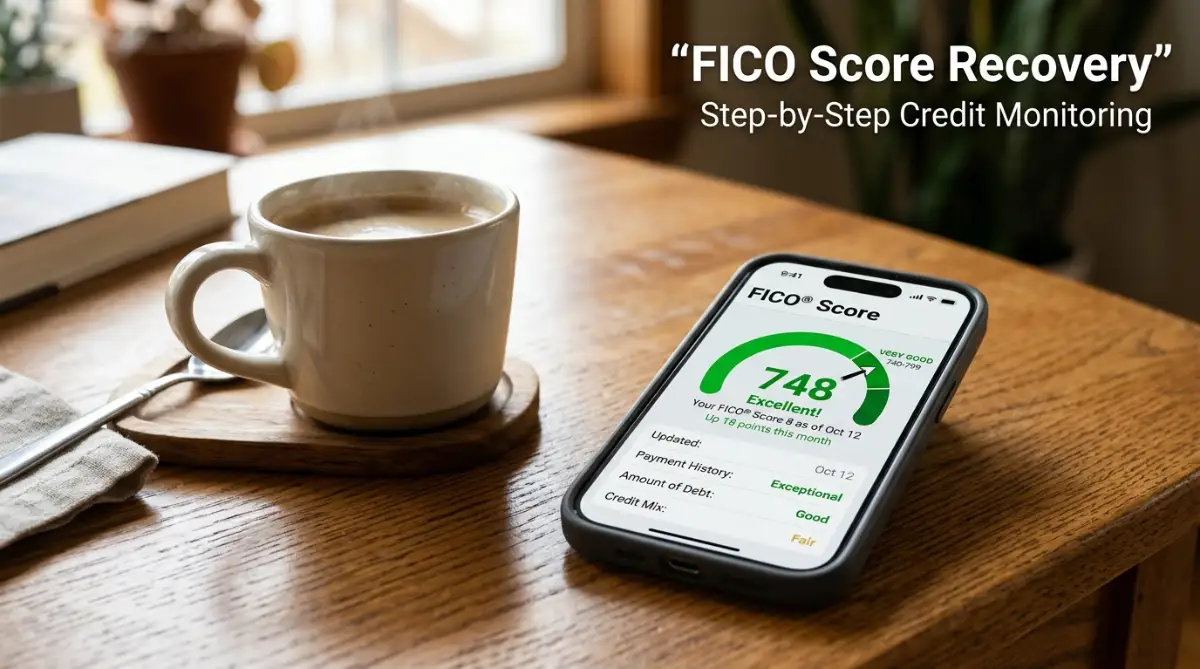
Once your bankruptcy is finalized, your primary focus must shift immediately to strategic FICO score recovery. You can successfully rebuild your financial standing by following a series of highly practical and legally sound steps. This structured approach ensures that you avoid predatory traps and make steady, measurable progress.
Your Quick Action Checklist for Financial Recovery:
- Order your free annual credit reports from Experian, Equifax, and TransUnion to search for hidden errors.
- Verify that every single debt discharged in your bankruptcy shows a balance of zero on your reports.
- Establish a secure, on-time payment history using a low-limit secured credit card immediately.
- Keep your overall revolving credit utilization ratio below ten percent at all times.
Step 1 – Auditing Your Credit Reports for Post-Bankruptcy Errors
You must closely audit your credit files with Experian, Equifax, and TransUnion immediately after receiving your discharge papers. Creditors frequently make reporting mistakes, such as leaving discharged accounts marked as active or past due. These errors will continue to actively damage your score if they are left uncorrected.
Every debt that was officially discharged in your bankruptcy must be updated to show a balance of zero. It should also carry a specific notation stating that the account was included in bankruptcy. If a creditor continues to report an active balance, they are actively violating your consumer rights.
Protecting Your Rights Under the Fair Credit Reporting Act
The Fair Credit Reporting Act gives you the legal authority to dispute any inaccurate or outdated information on your reports. You can submit a formal dispute letter directly to the credit bureaus explaining the errors and attaching your official discharge papers. The bureaus are required by federal law to investigate and correct these mistakes within thirty days.
Having these errors corrected can provide an immediate and substantial boost to your FICO score recovery. It removes the active negative reporting that would otherwise continue to drag your score down every single month. This clean foundation is absolutely necessary before you attempt to open any new lines of credit.
Step 2 – Rebuilding Credit After Chapter 7 with Secured Methods
Once your credit reports are accurate, you can begin the process of rebuilding credit after Chapter 7. The safest and most effective way to start this phase is by applying for a secured credit card. This type of card requires you to make a refundable cash deposit, which serves as your credit limit.
Because the lender faces zero risk, they are highly likely to approve your application even with a bankruptcy on your record. You should only use this card for very small, regular purchases like gasoline or groceries each month. This practice allows you to slowly demonstrate a consistent history of responsible credit management.
I personally realized that leaving my secured card completely unused did not help my credit score grow at all. I learned that making a small, five-dollar purchase and paying it off immediately is what actually triggered the positive monthly reporting I needed. This simple routine made a dramatic difference in my overall recovery timeline.
Utilizing Credit Builder Loans for FICO Score Recovery
Another highly effective tool for FICO score recovery is a credit builder loan from a local credit union. With these specialized accounts, the money you borrow is held in a secured savings account while you make monthly payments. Once you complete the payment term, the funds are released to you, and your on-time payments are reported.
This double benefit helps you build a savings cushion while establishing a flawless payment history. Payment history is the single largest component of your FICO score, making this step incredibly impactful. It proves to future lenders that you are committed to managing installment loans responsibly.
Step 3 – Mastering the Credit Utilization Ratio
Your revolving credit utilization ratio represents the percentage of your total available credit that you are actively using. This ratio is highly influential, accounting for thirty percent of your overall credit score calculation. Keeping this number as low as possible is a major secret to rapid score improvement.
For example, if your secured credit card has a three-hundred-dollar limit, you should never let your balance exceed thirty dollars. Paying your entire statement balance in full before the closing date is a great way to ensure a low utilization rate. This habit demonstrates high financial discipline and reassures potential lenders.
The Importance of a Balanced Credit Mix
A healthy financial profile requires a diverse credit mix, which accounts for ten percent of your score. Having a combination of revolving credit, like cards, and installment loans, like car payments, is highly beneficial. However, you must only take on new accounts that you can comfortably manage within your household budget.
Why You Must Avoid Subprime Store Cards
You will likely receive numerous offers for high-interest retail store cards shortly after your bankruptcy discharge. These cards often carry predatory interest rates and complex fee structures that can easily lead to new debt. It is far better to focus on building a strong relationship with traditional banks and local credit unions.
Stick to your structured plan and avoid the temptation of opening too many retail accounts at once. Multiple hard inquiries in a short period will actively damage your recovery progress and raise red flags for lenders. A slow, steady approach is always the most secure path to achieving a prime credit rating.
Step 4 – Navigating Post-Bankruptcy Student Loan Management
If your student loans did not qualify for a bankruptcy discharge, you must manage them with extreme care. Making on-time payments on these remaining loans is actually an excellent way to rebuild your payment history. You should contact your loan servicer immediately to discuss your repayment options post-discharge.
Enrolling in an income-driven repayment plan can lower your required monthly payments to a highly manageable level. In many cases, these plans can reduce your payment to zero dollars while keeping your account in good standing. This protects your credit report from late payments while you focus on rebuilding other areas.
To help you visually understand how the student loan bankruptcy discharge process works under the new guidelines, watch this helpful video.
Navigating Chapter 13 Student Loan Management
Managing student debt during a Chapter 13 bankruptcy requires close communication with your court-appointed trustee. Under Chapter 13, your student loan payments are often integrated directly into your court-approved monthly repayment plan. It is highly important to ensure these payments are recorded correctly to avoid any default notices during the process.
Once you complete your repayment plan, you can begin the process of recovering your score and cleaning your reports. The discipline you developed during the multi-year repayment period will serve as a strong foundation for your future financial life. You can immediately apply those budgeting skills to maintain an excellent FICO score.
The Long-Term Value of Financial Patience
Rebuilding your entire financial profile after a bankruptcy is a marathon rather than a quick sprint. The bankruptcy filing will remain on your credit report for up to ten years, but its negative impact will decline steadily over time. Your recent positive financial actions will carry far more weight with modern scoring models.
Focus on making consistent daily choices that support your long-term wealth goals, such as saving a small emergency fund. Having a cash cushion prevents you from needing high-interest credit when unexpected life events happen. This steady commitment is what ultimately separates successful credit builders from those who slip back into debt.
Advanced Strategies for Navigating the Attestation Process
For federal student loans held directly by the government, the road to bankruptcy relief has become significantly clearer. You should begin by requesting the official federal attestation form through your legal representative. This standard document allows you to detail your income and expenses without entering a lengthy, combative court battle.
Completing this form accurately requires a clear understanding of the rules of federal educational financing to ensure all numbers align with your tax records. The Department of Justice will compare your expenses against local standards to determine if you meet the hardship criteria. If they agree with your assessment, they will recommend a full or partial discharge to the judge.
Consolidating and Restructuring Commercial Student Loans
If your student loans are older commercial loans, they do not automatically qualify for this streamlined federal review. You can solve this problem by consolidating multiple educational advances into a modern Direct Consolidation Loan. This process transforms your private or commercial debt into a direct federal obligation eligible for government hardship programs.
However, you must tread carefully if you already filed your bankruptcy petition before consolidating. It is highly beneficial to seek professional guidance to determine the perfect timing for this consolidation. Restructuring your debt correctly ensures you do not accidentally lose your legal right to dispute or discharge these balances.
Combating Rising Interest Through Strategic Payments
Many borrowers find that their student loan balances keep climbing even when they make regular payments. To understand this issue, you must evaluate the difference between simple vs pre-computed interest models used by your lenders. Most student loans accrue interest daily, meaning a delay of even a few days can increase your total cost.
You can outsmart this system by making bi-weekly payments instead of one single monthly payment. Dividing your monthly payment into two equal parts and paying every two weeks reduces the average principal balance. This minor adjustment prevents daily interest from compounding as rapidly, helping you pay down the principal faster.
Additionally, you should explore how income-driven repayment plans handle unpaid interest on federal loans. Under specific federal repayment programs, the government will waive any unpaid interest if your calculated monthly payment is too low. This benefit is incredibly helpful for keeping your balance stable while you rebuild your credit.
Maintaining Your New Financial Profile in the Long Term
Earning a high credit score after a bankruptcy discharge is a major victory, but keeping it requires permanent discipline. You must transition from a mindset of survival to one of active financial protection. Creating a physical or digital tracking calendar is an excellent way to ensure you never miss a billing cycle.
We highly recommend setting up automated payments for the minimum amount due on all active bills. This simple backup system guarantees that your payment history remains completely flawless, even during busy weeks. It provides an extra layer of safety while you manually pay off your balances in full.
You should also organize all your legal discharge papers, loan agreements, and dispute letters in one safe place. Learning how to build a secure digital vault for your financial agreements can protect you from future debt collection errors. Keeping these records accessible ensures you can quickly shut down any illegal attempts to collect on discharged debts.
Building an Emergency Cushion to Avoid New Debt
Establishing a cash emergency fund is the ultimate shield for your newly rebuilt credit profile. Without emergency savings, a single car breakdown or medical bill can force you to use high-interest credit lines. This unexpected spending can quickly undo all the hard work you put into FICO score recovery.
Aim to save at least one thousand dollars in a separate, easily accessible savings account as your starter fund. Once that goal is met, slowly build your cushion until it can cover three to six months of expenses. Having this cash safety net gives you incredible peace of mind during your financial recovery.
Partnering with Local Credit Unions for Better Terms
Many large national banks have rigid post-bankruptcy guidelines that make it difficult to get fair loan terms. Local credit unions are often much more forgiving and willing to look at your entire financial story. They are member-owned institutions, which means they focus on helping their community rather than maximizing corporate profits.
Opening a basic checking and savings account with a credit union allows you to build a personal relationship with their team. Over time, this positive history can help you secure low-interest auto loans or unsecured credit cards. It is an excellent way to bypass predatory subprime lenders and rebuild your financial profile safely.

Dangerous Mistakes That Can Destroy Your Credit Recovery Progress
Avoiding common financial traps is just as important as building new positive credit lines. Many post-bankruptcy borrowers make small, avoidable errors that completely stall their score recovery. Recognizing these dangers early allows you to protect your hard-earned progress and move forward safely.
Mistake 1 – Rushing to Sign Predatory Loan Contracts
Shortly after your bankruptcy discharge, you will likely receive high-interest loan offers in the mail. Many subprime lenders target recovering individuals because they know you are desperate to rebuild your credit. You must use a comprehensive check before signing any binding financial contract to avoid predatory terms.
Taking on these expensive loans can quickly trap you in another cycle of unmanageable payments. These contracts often contain hidden fees and aggressive interest rates that make your debt incredibly hard to pay off. It is far better to rely on secured cards than to trust a predatory lender.
Mistake 2 – Failing to Understand Why Borrowing Feels Expensive
Many consumers jump back into borrowing without analyzing how interest and inflation eat away at their money. You might wonder why borrowing money feels expensive when you look at the total amount you repay over time. This lack of financial awareness often leads to taking on debt that is far costlier than it initially appears.
When you borrow money, compounding interest works against your wealth-building goals every single day. Understanding the true time value of money is essential for making smart borrowing decisions in the future. Educating yourself on these math principles prevents you from accepting unfair terms from modern lenders.
Mistake 3 – Carrying a Large Balance on Your Rebuilt Accounts
A persistent myth suggests that carrying a monthly balance on your credit cards helps build your FICO score. In reality, carrying a balance only benefits the credit card companies by generating expensive interest fees for them. This practice also raises your credit utilization ratio, which actively drags your credit score down.
You should always pay your statement balance down to zero before the monthly due date arrives. This shows the credit bureaus that you can handle open lines of credit without relying on debt to survive. Keeping your balance low is one of the fastest ways to maintain a healthy financial profile.
Mistake 4 – Ignoring the Status of Discharged Accounts
Many people assume that once the judge signs the bankruptcy paperwork, their credit reports will automatically update. However, creditors and credit bureaus make administrative mistakes on a regular basis. Leaving a discharged account marked as "active" or "past due" will continue to damage your score.
You must proactively check your credit files and file disputes under the Fair Credit Reporting Act. If you ignore these reporting errors, you are essentially letting creditors illegally suppress your FICO score. Taking a hands-off approach to your credit reports can cost you years of recovery progress.
Mistake 5 – Applying for Too Many New Accounts at Once
When you see your credit score begin to rise, you might feel tempted to apply for multiple credit lines. However, each credit application triggers a hard inquiry on your Experian, Equifax, or TransUnion files. Accumulating too many inquiries in a short period makes you look highly risky to potential lenders.
It is far better to open one or two quality accounts and manage them perfectly for a year. This patient, methodical approach proves to the credit bureaus that you are highly disciplined. Slow and steady growth is the only secure way to achieve a prime credit rating.
The Hidden Costs of Credit Repair Scams
Many companies will promise to erase your bankruptcy history overnight in exchange for a large upfront fee. You must realize that these claims are entirely false and often involve illegal credit sweep methods. Legitimate credit reporting errors can be disputed for free by using your own court documents and writing simple letters.
Paying these predatory credit repair services only wastes valuable cash that could be used to pay down surviving debts. They cannot legally remove accurate, negative information that belongs on your credit profile. Taking charge of your own credit repair is not only safer, but it also teaches you the skills needed for long-term success.
Failing to Keep Your Bankruptcy Documents Organized
Losing track of your official court discharge paperwork is another common mistake that can delay your financial recovery. Years after your case is closed, a debt collector might try to collect on an account that was legally wiped away. Without your official bankruptcy schedules and discharge order, proving your case can become incredibly difficult and stressful.
Store physical copies of all your legal court documents in a fireproof home safe where they are easily protected. You should also scan these papers and save them in an encrypted, password-protected online folder. Having these documents ready allows you to quickly defend your financial profile against any future errors.
Your Clear Roadmap to Financial Freedom
Your journey through student loan management and bankruptcy recovery is a powerful opportunity to rewrite your financial destiny. By implementing these advanced strategies and avoiding common mistakes, you are actively taking back control of your life. The temporary setback of a low credit score does not define your future potential or your personal worth.
Think of your credit score as a garden that requires steady, daily attention to grow strong and healthy. You cannot plant a seed and expect a beautiful tree to appear by the next morning. In the same way, small financial decisions like paying your bills on time will slowly create a solid, beautiful foundation.
Do not wait for a perfect moment to begin cleaning up your credit reports and managing your debts. Take the first step today by ordering your credit files and reviewing your student loan repayment options. You have the knowledge, the legal rights, and the personal power to achieve lasting financial freedom.