
Think about this: a single digit, typed wrong by a bored clerk, could be costing you $200 extra every month on your car payment. It sounds like a horror movie, but for millions of people, it’s their actual credit report. I’m going to show you how to hunt down these tiny "score-killers" and fix them yourself without paying a shady credit repair company a single dime. Let’s get your money back.
The finance manager walked back in, looking at a piece of paper with a frown. He told me my interest rate would be double what I expected. I was shocked and felt a pit in my stomach.
It turned out there was a $25 medical bill listed as "unpaid" from a doctor I hadn't visited in years. That tiny $25 error was dragging my score down by nearly 50 points. I felt cheated and incredibly frustrated.
I realized then that the system doesn't care if a mistake is small. To a computer, an error is an error, and it costs you real money every single day. Many people are walking around right now with similar "tiny" ghosts in their credit files.
These small mistakes act like a slow leak in a boat. You might not sink right away, but you are definitely taking on water. Over time, you end up paying more for everything from car insurance to home loans.
The mental stress of being rejected for a loan is something I wouldn't wish on anyone. It makes you feel like you aren't in control of your own life. You start to worry every time you swipe your card or think about your future.
The Reality of How Credit Bureaus See You
📋 Your "Quick Fix" Action Plan
Don't have time to read the whole guide? Do these three things today:
- Download all 3 reports: Don't just trust one. Errors usually hide in only one of them.
- Circle the "Personal Info" section: Check for misspelled names or old addresses first—these lead to mixed files.
- Write a letter, don't just click: Physical letters sent via certified mail get much better results than clicking "dispute" on a website.
Credit bureaus are not your friends; they are data collectors. They process millions of pieces of information every day. Sometimes, they get things wrong, and they don't have a human checking every line for accuracy.
A misspelled name or an old address might seem harmless to you. However, to a lender, it might look like you are trying to hide from debt. Or worse, it could mean your file is mixed up with someone who has terrible spending habits.
If you ignore these small things, they grow into much larger financial hurdles. A small error today can be the reason you get denied an apartment next year. It creates a ceiling on your life that shouldn't be there.
We often think that if we pay our big bills, we are safe. The truth is that the "little things" often carry the most weight in credit scoring models. It is a harsh reality that many of us learn far too late.
I have seen people lose out on their dream homes because of a typo on a credit card account. It is heartbreaking because these issues are usually very easy to fix if you catch them early. You just have to know where to look.
Myth vs. Reality
I hear a lot of bad advice online. Let’s look at what is actually true when it comes to your report errors:
Staying silent and hoping the error goes away is a losing strategy. These mistakes stay on your report for years unless you take action. You have to be your own advocate in this complicated financial world.
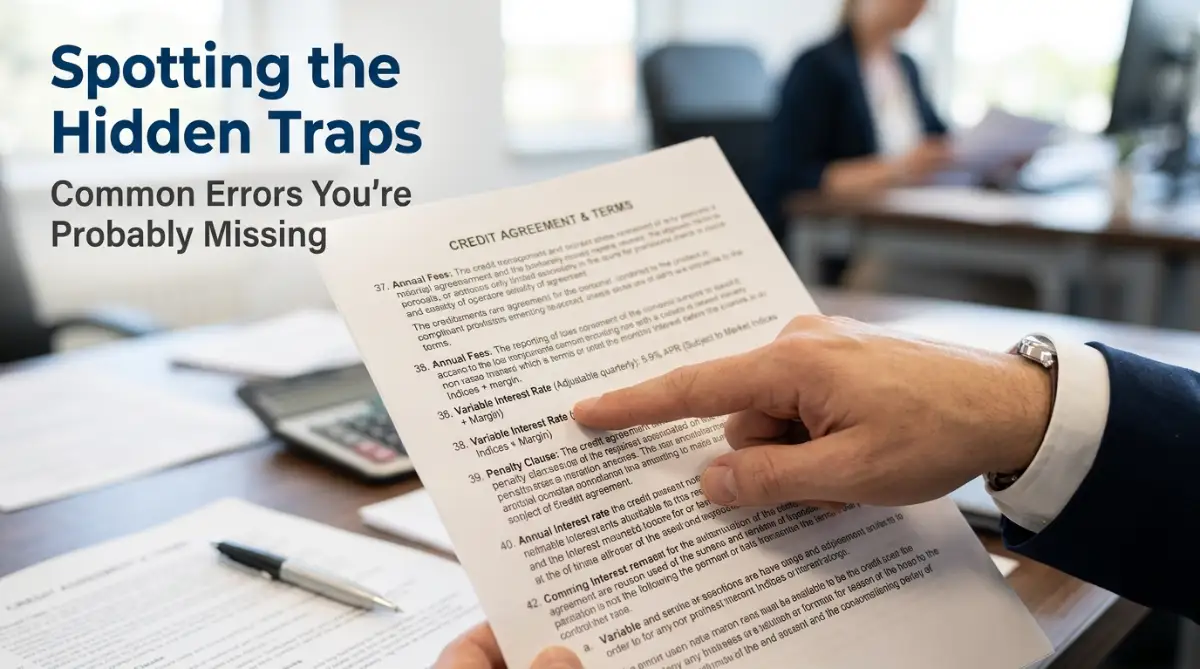
How to Audit Your Credit Report Like a Professional
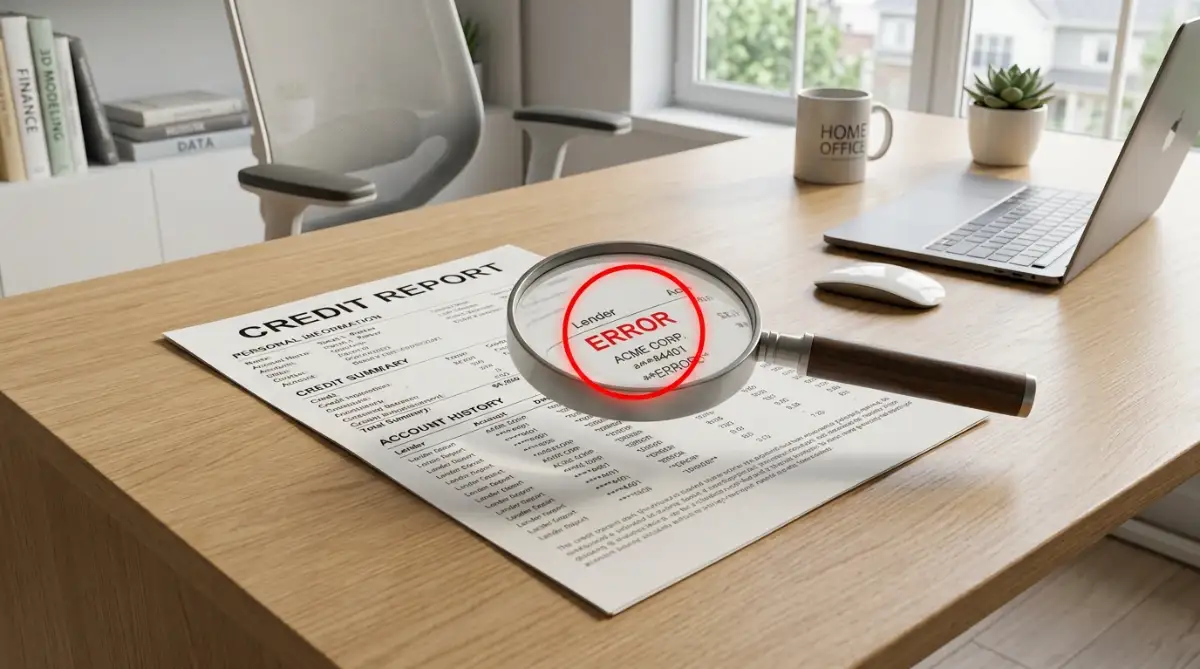
The first thing you need to do is get your hands on your actual reports. You have three main reports from Equifax, Experian, and TransUnion. Don't just look at the score; look at the actual data behind the score.
I recommend printing these reports out so you can look at them with a physical pen. There is something about seeing it on paper that makes mistakes jump out at you. You want to look for anything that doesn't look 100% familiar.
Check your personal information first, including every variation of your name. Sometimes a "Jr" or a "Sr" is missing, which can cause accounts to merge incorrectly. This is a very common way that other people's bad debt ends up on your clean report.
Pro Tip: When I first started cleaning my report, I found that calling the bureaus was a waste of time. I learned that writing physical letters and sending them via certified mail is the only way to get real results. It creates a paper trail that the law requires them to follow, making them take your request much more seriously.
Next, look at the account statuses very carefully. Is a "closed" account still showing as "open"? This can affect your credit age and your debt-to-income ratio. It might seem like a small detail, but it changes how a bank views your risk level.
The Danger of "Zombie" Debts and Ghost Errors
"Zombie" debt is an old debt that has been sold to a collection agency. Sometimes these debts are so old they shouldn't even be on your report anymore. If they pop up with a new date, they can kill your score instantly.
Ignoring a small collection of $10 or $20 is a huge mistake. A collection account, no matter the size, tells a lender that you might not fulfill your promises. It is a red flag that screams "high risk" to their automated systems.
I once found a "ghost" account on my report that belonged to someone with a similar name in a different state. It took me months to prove I had never lived there. Had I checked my report sooner, I could have stopped it before applying for a mortgage.
These errors don't just affect loans; they affect your everyday life. Many employers now check credit reports during the hiring process. A small, ignored error could literally cost you a job opportunity or a promotion.
Think of your credit report as your financial resume. You wouldn't leave a typo on your resume, right? So why would you leave an error on the document that controls your ability to borrow money?
Watch this video to understand exactly how to read the fine print on your report and spot those sneaky errors before they do damage.
The Logical Steps to Dispute and Win
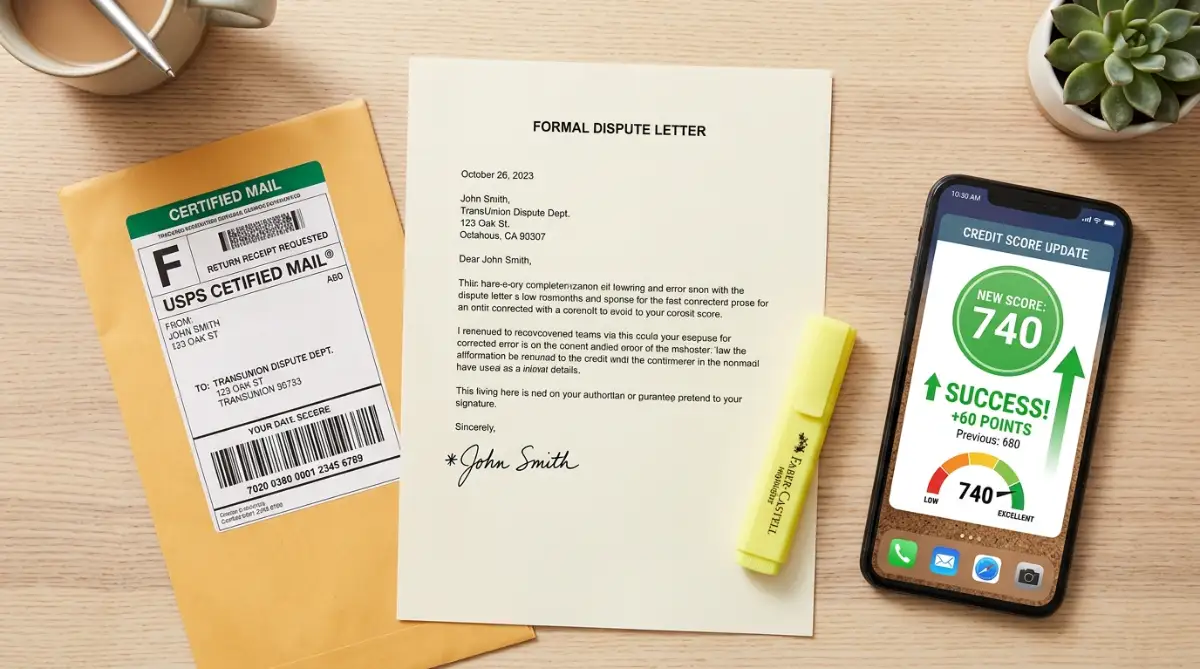
Once you find an error, you need to gather your evidence. This could be a bank statement, a cancelled check, or a letter from a creditor. The more proof you have, the harder it is for the bureau to ignore you.
Write a clear and simple letter explaining why the information is wrong. You don't need to use fancy legal words. Just state the facts: "This account does not belong to me" or "This balance was paid in full on this date."
Be sure to include a copy of the report with the error circled in red. This makes it very easy for the person processing your claim to see exactly what you are talking about. Remember, they handle thousands of these every day.
The bureau has about 30 days to investigate your claim. During this time, they will contact the creditor to verify the information. If the creditor can't prove the debt is yours or that the info is right, they must remove it.
This is a powerful tool given to you by the Fair Credit Reporting Act. Most people don't realize they have this much power over their own data. You are not at the mercy of the credit bureaus if you know the rules.
If the bureau refuses to fix the error, don't give up. You can add a "consumer statement" to your report. This is a short note where you can explain your side of the story to anyone who pulls your credit.
Why Time Is Your Greatest Enemy in Credit Repair
Credit errors are like mold; they only get worse if you leave them in the dark. The longer an error stays on your report, the harder it can be to find the old records needed to fix it. Banks delete old files after a few years.
If you wait until you need a loan to check your credit, you are already too late. Credit repair takes time, sometimes several months. You want your report to be perfect before you walk into a bank or a dealership.
Checking your credit once a year is simply not enough anymore. With identity theft on the rise, you should be looking at your accounts at least once a month. There are many free tools that allow you to do this without hurting your score.
I have made it a habit to check my report every first Saturday of the month. It only takes ten minutes, but it gives me total peace of mind. I know exactly what is going on with my financial identity at all times.
Every point on your credit score represents money in your pocket. A score that is 20 points higher can save you $100 a month on a mortgage. Over 30 years, that is $36,000 that stays with you instead of going to the bank.
Don't let a $10 error take $36,000 away from your family. It sounds dramatic, but the math doesn't lie. Being proactive is the only way to protect your hard-earned money and your future.
Understanding the "Butterfly Effect" of Credit Reporting
In science, the butterfly effect says a small change in one place can cause a big change somewhere else. Credit reporting works exactly the same way. A small error on a credit card limit can change your "utilization ratio."
The Real Cost of a "Small" 40-Point Drop
I want to show you the math. If you are buying a $300,000 house, here is how a tiny mistake on your credit report changes your life:
- Scenario A (Clean Report - 760 Score): 6.5% Interest = $1,896/month
- Scenario B (With One Small Error - 720 Score): 7.1% Interest = $2,016/month
- The Damage: You pay an extra
120everysinglemonth∗∗.Overa30−yearloan,thattinytypocostsyou∗∗
120everysinglemonth∗∗.Overa30−yearloan,thattinytypocostsyou∗∗
- 43,200.
Would you pay $43,200 for a misspelled name? Because that is exactly what is happening.
This ratio is a huge part of your score. If the bureau thinks your limit is $1,000 but it is actually $5,000, your score will drop. It looks like you are maxing out your cards when you are actually being very responsible.
This one small "limit error" then triggers a lower score. The lower score then triggers higher interest rates on your other cards. Suddenly, you are paying more in interest every month just because of one wrong number.
This is why "good enough" is not okay when it comes to your credit report. You need it to be 100% accurate. Even a 99% accurate report can be enough to trigger a chain reaction of financial problems.
I have helped friends look over their reports and found things they never suspected. One friend had an account listed as "late" when he had actually paid it early. That one "late" mark was the only thing keeping him from a top-tier credit score.
Once we got that one mark removed, his score jumped 60 points in a single month. He was able to refinance his car and save $150 a month. All of that happened just by fixing one "small" error.
When you ignore errors, you carry a hidden weight. You feel like a fraud or like the system is rigged against you. This stress can affect your work, your relationships, and your sleep.
Taking control of your credit report is a form of self-care. It is about respecting the work you put in to earn your money. You wouldn't let someone steal $50 from your wallet, so don't let a credit bureau steal your score.
The process of fixing errors also teaches you how the financial system works. You become a more educated consumer. You learn how to talk to banks and how to stand up for your rights.
This knowledge is something no one can take away from you. It makes you a more powerful person in the marketplace. You stop being a victim of "the system" and start being a master of your own finances.
Common Myths About Small Credit Errors
Many people believe that small errors "don't matter" if your score is already high. This is a dangerous myth. Even with a 800 score, a small collection or a late payment error can cause a massive drop.
The higher your score is, the further it has to fall. A single mistake can hurt a high-score person more than someone with a low score. This is because the system sees it as a major change in behavior.
Another myth is that errors will "fall off" automatically. While some items do expire after seven years, many stay much longer if they are reported incorrectly. You cannot rely on the bureaus to clean up their own mess.
Some people think that disputing an error will lower their score. This is completely false. The act of disputing an error does not hurt your credit rating at all. In fact, it is the only path to improving it.
I used to think that I needed a lawyer to fix my credit. I spent months being afraid to take action because I thought it was too complicated. I was wrong; the process is designed for regular people to use.
You don't need a degree in finance to read a report and spot a name that isn't yours. You just need a little bit of patience and a willingness to follow through. The rewards for this effort are massive.
The Relationship Between Credit Stability and Life Goals
Think about where you want to be in five years. Do you want to own a home? Start a business? Travel the world? All of these goals are much easier to reach with a perfect credit score.
A clean credit report is the foundation of a stable life. It gives you options when things get tough. If you have an emergency, you can get a low-interest loan instead of using a high-interest credit card.
Ignoring small errors is like building a house on a foundation of sand. It might look fine for a while, but eventually, the cracks will show. Those cracks will always appear at the worst possible time.
By fixing small errors now, you are investing in your future self. You are making sure that when an opportunity comes your way, you are ready to take it. You won't be held back by a mistake you didn't even make.
I have seen the difference a clean report makes in people's lives. It is more than just numbers on a screen. It is about the freedom to live the life you want without being held back by a computer error.
Take the first step right now. Log in to a trusted site and look at your report. See it for what it is—a map of your financial life—and make sure it is telling the right story.
Mastering the Art of Long-Term Credit Health
Now that you know how to find those pesky errors, we need to talk about staying ahead of the game. It is one thing to fix a mistake once, but it is another thing entirely to keep your report clean forever. I found out the hard way that credit reports are dynamic and constantly changing.
You should think of your credit report like a garden that needs regular weeding. If you turn your back for a few months, the weeds—or in this case, the errors—will start to grow back. I set a monthly alert on my phone to check my main accounts, and it has saved me so much stress.
One secret I learned is to keep a "Credit Evidence Folder" on my computer. Every time I pay off a debt or close an account, I save the confirmation letter or receipt in that folder. Having these documents ready makes the dispute process ten times faster if something goes wrong later.
Another high-level tip is to understand the difference between a dispute and a request for verification. Sometimes, simply asking a creditor to verify the details of an account can trigger them to fix a small mistake without a formal dispute. This keeps things friendly and often gets faster results than a long legal battle.
If you are worried about identity theft, consider putting a "Credit Freeze" on your files with the three big bureaus. This stops anyone from opening new accounts in your name without your permission. It is a free and very powerful way to protect the hard work you have put into your score.
I also recommend checking out this guide on navigating unsecured personal financing options to see how a clean report opens better doors. When your report is accurate, banks look at you as a partner rather than a risk. This shift in perspective is where the real financial winning happens.
Managing your credit isn't just about the numbers; it is about the story those numbers tell. You want that story to be one of responsibility and attention to detail. Small habits, like checking your limits every few months, make a massive difference over time.
For more technical details on how lenders look at your profile, you might find this information from the Consumer Financial Protection Bureau very helpful. They provide the actual rules that banks must follow when reporting your data. Knowing these rules gives you the upper hand in any disagreement.

Traps and Blunders That Can Reset Your Progress
When I first started trying to fix my credit, I made some really dumb mistakes. I thought that if I disputed everything at once, the bureaus would just give up and delete it all. That was a huge error that actually made things worse for me.
The bureaus have systems that flag "frivolous" disputes. If you send a list of twenty things that you claim are wrong all at the same time, they might just ignore you. It looks like you are using a robot or a shady credit repair company instead of being a real person with a real problem.
Another big mistake is closing old accounts right after you fix an error on them. You might think, "I finally fixed that account, now I want it gone!" But the age of your accounts is a big part of your score. Closing an old, now-clean account can actually make your score drop.
I have seen people get so angry with a creditor that they stop talking to them altogether. This is like pouring gasoline on a fire. Even if they made a mistake, you need to keep the lines of communication open to resolve the issue properly.
Some people also fall for "Quick Fix" promises from companies that charge thousands of dollars. Most of what these companies do is stuff you can do yourself for free with a few stamps and some patience. Trusting these "experts" without doing your own research can lead to even more errors on your report.
It is also a mistake to ignore the hidden loan fees that can pop up when you are applying for new credit. Even with a perfect score, not knowing the true cost of a loan can hurt your financial health. You have to look at the whole picture, not just the credit score number.
Lastly, never assume that a mistake is "too small" to matter. I once ignored a misspelled street name for a year, thinking it was no big deal. That small error caused my file to get mixed up with someone else who had a similar name, and it took months to untangle the mess.
The Power of a Proactive Financial Mindset
If you want to live a life free of financial stress, you have to be the CEO of your own credit. This means taking full responsibility for every single line on that report. It can feel like a lot of work at first, but it becomes a very simple routine over time.
I started looking at my credit report as a reflection of my personal integrity. If I say I paid a bill, the report should show I paid that bill. If it doesn't, I am going to stand up for myself and make sure the record is set straight.
This proactive mindset helps you avoid the pitfalls of emergency loans because you already have access to better options. When you aren't desperate, you make much better financial decisions. Good credit is like having an umbrella before it starts raining.
You should also understand that your income and your credit are two different things. Even people with very high salaries can have terrible credit if they ignore the small details. You can read more about the employment and credit connection to see how these two parts of your life interact.
I like to think of my credit score as a key. A small error is like a tiny bit of rust on that key. It might still work, but you have to jiggle it and fight with the lock. A clean report is a perfectly polished key that opens every door smoothly.
The peace of mind you get from knowing your financial house is in order is worth every minute of effort. You can walk into any bank with your head held high. You aren't asking for a favor; you are presenting a solid record of your reliability.
This level of confidence changes how you move through the world. You start thinking bigger because you know the financial foundation is strong. You stop worrying about the small stuff because you have already handled it.
Your Road Map to a Brighter Financial Future
The journey to a perfect credit report doesn't happen overnight. It is a series of small, consistent steps that lead to a massive result. I want you to feel empowered to take that first step today, even if it is just downloading your report.
When you see a mistake, don't get discouraged or angry. See it as an opportunity to improve your financial standing. Every error you fix is like finding a hundred-dollar bill on the ground—it is money coming back to you in the form of lower interest.
I recommend keeping a simple log of your calls and letters. Write down the name of the person you spoke to and the date of the conversation. This level of organization shows the credit bureaus that you are serious and that you are watching them.
Remember that you are part of a larger system, but you are not a victim of it. The law is on your side if you are willing to use it. The Fair Credit Reporting Act was created specifically to protect people like us from corporate mistakes.
If you ever feel overwhelmed, just take a break and come back to it. You don't have to fix your entire life in one weekend. Just stay consistent and keep moving forward one small step at a time.
I also suggest learning how to read financial statements so you can better understand your own bank's reporting style. The more you know, the less likely you are to be fooled by a mistake on your report. Knowledge is your best defense against errors.
Your future self will thank you for the work you are doing right now. Imagine being able to buy a home or start a business without any credit-related stress. That reality is closer than you think if you just stay focused on the details.
Answers to the Most Common Credit Concerns
How long does it take for a corrected error to show up?
Usually, once the credit bureau agrees to fix the mistake, it takes about 30 to 45 days. They have to update their own databases and then notify the other bureaus in some cases. I always check again after two months to make sure the change actually stuck.
Can a removed error come back onto my report later?
Yes, it can happen if the creditor re-reports the same bad data. This is why I keep my "Evidence Folder" ready at all times. If it pops back up, you can send your previous "Deletion Letter" to the bureau, and they are usually very quick to remove it again.
Does disputing a small error hurt my credit score?
Absolutely not. The act of disputing an error is a protected right. It doesn't look bad to lenders, and the dispute itself doesn't lower your score. In fact, if you win the dispute, your score almost always goes up.
Should I pay a collection that isn't mine just to get it over with?
I would never recommend doing that. Paying a debt that isn't yours is like admitting you were wrong. It can also restart the "clock" on how long that debt stays on your report. Always fight for the truth instead of taking the easy way out.
Is it better to use an online dispute tool or a letter?
While online tools are fast, I always prefer a physical letter sent by certified mail. It gives you a legal receipt that the bureau received your request. Sometimes online systems limit what you can say or what proof you can upload.
Taking Charge of Your Financial Destiny Today
You have all the tools you need to fix those tiny mistakes and save your credit score. It starts with awareness and ends with action. I have seen so many people turn their lives around just by paying attention to the small things.
Don't let another day go by where a bank is profiting from a mistake on your report. You worked hard for your money, and you deserve to keep as much of it as possible. A clean credit report is the first step toward true financial freedom.
I am so excited for you to start this journey and see the results for yourself. I remember the feeling of seeing my score jump up for the first time—it felt like a giant weight had been lifted off my shoulders. I want that same feeling for you, and I know you can get there if you just stay the course.
Disclaimer: This article is for informational purposes only and does not constitute professional financial or legal advice. Credit laws can vary by location, and it is always a good idea to consult with a certified financial planner or a legal expert regarding your specific situation.