
The Hidden Cost of Financial Uncertainty
Financial Freedom Roadmap
-
Automate Everything: Don't rely on willpower; set your savings to move the same day you get paid.
-
Stop the "Leftover" Trap: Save first, spend what remains. Never try to save what's left after spending.
-
Small Buffers Matter: Build a $1,000 emergency fund first to stop the cycle of using credit cards for minor emergencies.
-
Focus on the Gap: Your wealth isn't just your income; it’s the gap between what you earn and what you spend.
Ever feel like you’re running on a hamster wheel? You work hard, the paycheck hits your account, and poof—it’s gone before you can even take a breath. You aren't alone. I’ve been there, staring at a bank balance that made my stomach churn, wondering how I’d make it to the end of the month. Let’s stop pretending this is just about "budgeting" and start talking about how to actually keep the money you earn.
I vividly remember sitting on the edge of my bed at 2 AM, staring blankly at my phone screen as my banking app showed a balance of exactly four dollars. My chest felt incredibly tight because I had no idea how I was going to pay for groceries that week, let alone my upcoming rent. I used to think I was just terrible with money, constantly stressed and hiding my financial panic from my friends and family. It took hitting rock bottom for me to finally stop running from my money problems and learn how to actually fix them.
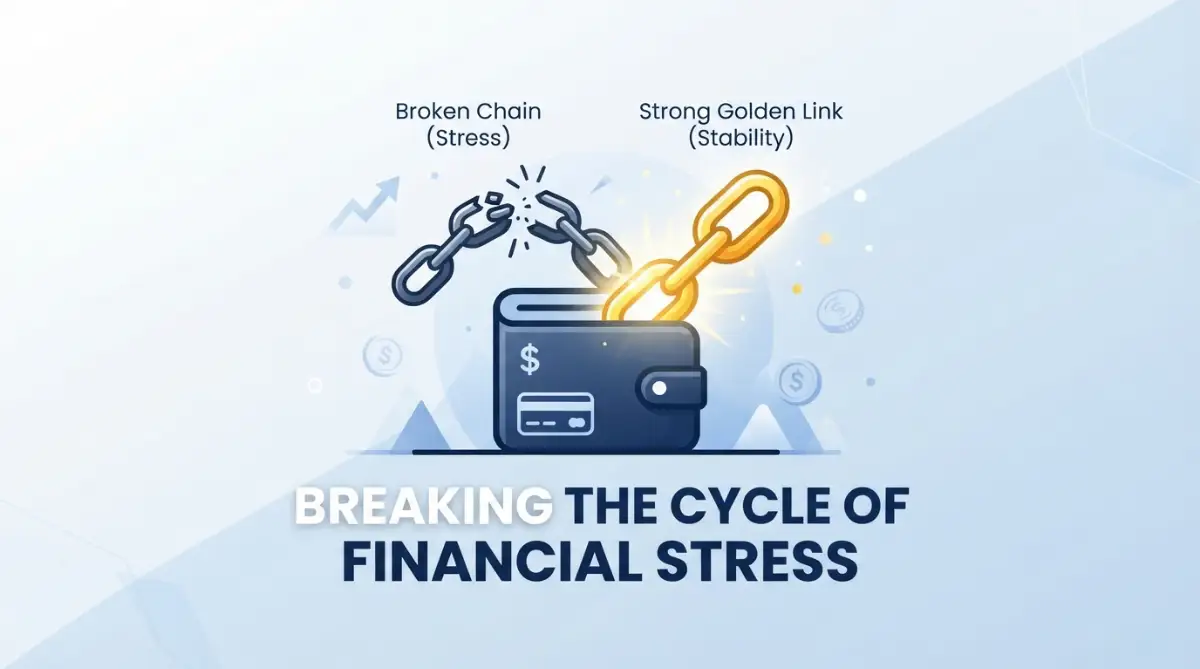
You might feel like you are working hard, yet your savings account remains empty. This creates a cycle where money becomes a source of anxiety rather than a tool for freedom.
When you struggle to manage your income, simple tasks like planning a vacation or buying a home feel impossible. You see others moving ahead and wonder what secret knowledge they possess that you lack. This disconnect between hard work and financial progress leads to feelings of inadequacy. It affects your sleep, your mood, and your ability to focus on your actual career goals.
- Overwhelming Information: You get bombarded with conflicting tips from random social media accounts.
- Lack of Personalization: Generic advice rarely considers your specific income, living costs, or debts.
- Fear-Based Marketing: Many platforms push products by scaring you about the economy instead of teaching you how to build a safety net.
The Mental Toll of Money Mismanagement
- Reduced Self-Confidence: Failing to hit basic savings targets makes you doubt your decision-making skills.
- Increased Anxiety: The "what if" scenarios—like a medical emergency or a car breakdown—become paralyzing threats.
- Decision Fatigue: Spending all your energy worrying about money leaves you with no willpower to pursue personal growth.
Building wealth is not about being lucky or having a massive inheritance. It is about understanding the mechanics of money and how it interacts with your habits. Most people stay stuck because they never learn how to organize their cash flow. They treat money like a mystery instead of a math problem that can be solved. By ignoring the basics, you are essentially letting your income slip through your fingers without knowing where it went. You deserve to feel secure, and that security starts with changing your relationship with your finances today.
Mastering Your Money: A Practical Roadmap
Taking control of your finances does not require a degree in economics. It requires honesty, a simple system, and the discipline to stick to that system. Let’s look at the first three steps to build a solid foundation.
Step 1: Track Every Penny to Understand Your Behavior

Before you can fix your finances, you must know exactly where your money goes. Most people think they know, but they are often wrong. Tracking your spending reveals hidden leaks that kill your budget.
Start by recording every expense for one full month. Do not judge yourself for buying that extra coffee or takeout. Just write it down. You will likely notice patterns that shock you. Maybe you spend a large portion of your income on subscription services you never use. Perhaps dining out is eating into your ability to save. Once you see the raw data, you can make informed choices instead of emotional ones.
My absolute biggest mistake was trying to save whatever money was left at the end of the month, only to find my bank account completely empty every single time. I finally realized that if I did not automate my savings to transfer the exact day my paycheck hit, I would always find a random excuse to spend that cash. Set up an automatic transfer right now, even if it is just twenty dollars, because it is the easiest way to trick yourself into building wealth.
The "Pay Yourself First" Math:
If you earn $3,000/month, trying to save "whatever is left" usually results in
300) the day you get paid, you’re left with $2,700 to live on. You will naturally adjust your spending to fit $2,700, and you’ll have $3,600 in the bank by the end of the year without ever "trying."
Step 2: Build a Small Safety Net First
Many people try to pay off all their debt or start investing before they have a financial buffer. This is a mistake. When an unexpected expense happens, you will be forced to use credit cards, which puts you back in debt.
Set a goal to save a modest emergency fund as your first priority. This is not for shopping or vacations. It is for those times when life throws a curveball, like a flat tire or a sudden medical bill. Knowing that you have cash set aside provides peace of mind. It allows you to breathe easier and prevents small problems from turning into financial disasters. Aim to save just a few hundred or a thousand dollars to start. This small cushion changes your mindset from "scarcity" to "preparedness."
Step 3: Stop Relying on Willpower and Use Automation

If setting up automatic bank transfers sounds a bit confusing, do not worry because you are definitely not alone! Watch this simple video below to see exactly how to put your savings on autopilot in five minutes, and then keep reading to learn how to crush your high-interest debt for good.
Willpower is a limited resource. If you wait until the end of the month to "decide" how much to save, you will likely find that there is nothing left. The most successful people use automation to manage their money.
Set up your bank account to automatically move a portion of your paycheck into a savings account the moment you get paid. If you do not see the money, you will not miss it. Treat your savings like a "bill" that you must pay to your future self. When your savings happen in the background, your wealth grows without you having to think about it. This removes the stress of having to "try" to save every month. Over time, these small, automated contributions grow into a significant safety net. This is the simplest way to move from financial struggle to stability.
Advanced Strategies for Long-Term Financial Growth
Once you have established your basic budget and emergency fund, you are ready to move to the next level. This is where you transform from a passive saver into an active manager of your own financial future.
Step 4: Master the Art of High-Interest Debt Repayment
Avalanche vs. Snowball
-
Debt Avalanche: Pay off the debt with the highest interest rate first. (Mathematically cheaper, saves you more money).
-
Debt Snowball: Pay off the smallest balance first. (Psychologically rewarding, builds momentum).
-
My Advice: If you feel overwhelmed, choose the Snowball method. The "win" of closing one account is often enough to keep you going.
Debt acts like an anchor on your progress. If you carry credit card balances, you are paying high interest that keeps you trapped. Use the "debt snowball" or "debt avalanche" method to clear these obligations.
Focus on paying off your smallest debt first to gain quick wins or tackle the highest interest rate debt to save money long-term. You can find more details on how to manage these burdens by understanding why your student loan balance is increasing. Consistency is your best tool here. Pay more than the minimum amount whenever possible.
Step 5: Diversify Your Knowledge and Income Streams
Relying on a single paycheck is risky in the modern economy. Start by sharpening your skills to earn more in your current role or by looking for side projects.
You should also spend time educating yourself on how to manage your personal budget effectively. When you have extra cash, consider putting it into low-cost index funds or high-yield savings accounts. Never invest in things you do not fully understand. Financial literacy is the best investment you will ever make.
Sustaining Your Momentum Over Time
Consistency is the quiet secret behind every success story. You do not need to be perfect every single day. You just need to show up and stay committed to your plan.
Periodically review your progress every few months. If your income changes, adjust your savings goals accordingly. Remember that applying for your first student loan requires careful planning, much like your daily spending. By maintaining these healthy habits, you build a foundation that supports your dreams for decades to come.

Common Mistakes That Sabotage Your Progress
Even with the best intentions, it is easy to stumble. Avoiding these common traps will save you years of unnecessary stress and hardship.
1. Falling for Lifestyle Creep
As soon as you get a raise or a bonus, your expenses tend to rise. This is called "lifestyle creep," and it prevents you from building real wealth. Keep your living costs steady even when your income grows.
2. Ignoring Long-Term Liabilities
Many young people focus only on daily expenses and ignore larger debt obligations. If you are dealing with government assistance programs, it is important to know about student loan forgiveness and how to qualify for it. Neglecting these details can cost you thousands in the long run.
3. Mixing Up Wants and Needs
Most people struggle because they treat "wants" as "needs." A new phone is a luxury, not a necessity, if your current one works fine. Differentiating between the two will instantly free up more cash for your savings.
4. Over-Relying on Credit
Using credit cards for things you cannot afford is a dangerous game. According to research from Forbes, high-interest debt is the leading cause of long-term financial distress. Treat your credit card like a debit card and pay it off in full every single month.
5. Lacking Clear Financial Goals
Without a destination, you are just wandering. Set specific, measurable goals like "saving for a home deposit" or "clearing debt by next year." Having a target makes it much easier to say no to unnecessary spending.
Your Path to Financial Freedom Starts Today
You hold the power to change your story starting right now. It does not matter where you are starting from or how many mistakes you have made in the past. What matters is the step you take the moment you finish reading this.
Start small if you have to. Even saving a tiny percentage of your income is better than saving nothing at all. You are building a habit, and habits are the bricks that build your future house. Do not wait for the "perfect time" because that moment does not exist.
Take control of your money today so that it does not control you later. You are capable of making smart, disciplined choices that will lead to peace of mind. Trust yourself, stay consistent, and keep learning as you go. You have everything you need to build the life you truly want.
Looking back, I can honestly say that finally facing my messy finances was the most rewarding thing I have ever done for my own mental peace. Do not let the shame of past money mistakes stop you from taking charge of your future right this minute. Grab a pen, write down your savings goals, and start building that safety net today, because you absolutely deserve to sleep soundly at night without worrying about your bills!